
A broken tee is a clue, not a swing diagnosis
You place a fresh wooden tee, hit your driver and watch the peg snap again. It is tempting to conclude that you must be swinging steeply into the ball. But tee breakage alone cannot establish a swing fault. Tee material, turf firmness, teeing height, strike location and clubhead delivery all affect what happens.
On October 21, 2026, Brittany Olizarowicz explored these possibilities for MyGolfSpy in “Why Do My Tees Keep Breaking?” The useful lesson is to treat the tee as one observation among several. Here is a structured way to investigate without rebuilding your swing around a broken piece of wood.
Five factors worth checking
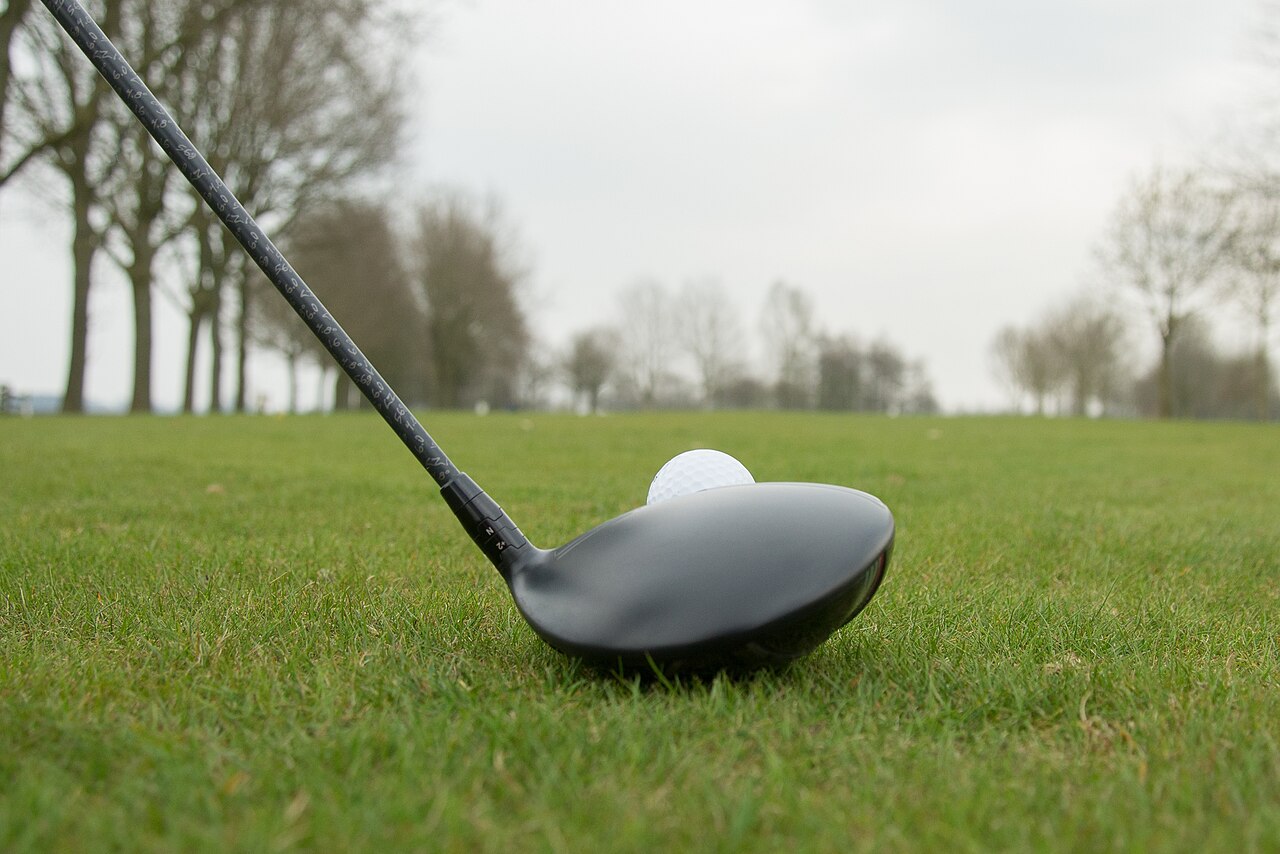
1. Tee height. When the ball sits low relative to the driver, the sole may strike the peg. A familiar starting reference is to see roughly half the ball above the driver's crown at address. It is not a universal fitting rule; driver design and individual delivery matter.
2. Club delivery. A descending angle of attack or the position of the swing's low point can contribute to contact with the tee. But an otherwise playable drive can break a wooden tee, too. A snapped peg does not measure angle of attack.
3. Ball position. Letting the ball drift back in the stance can change where the club meets it. With a driver, a common reference is near the inside of the lead heel, adjusted to the player's setup. Check consistency rather than forcing one position on everyone.
4. Face contact. Repeated heel or low-face strikes may suggest a need to check distance from the ball, teeing height or movement consistency. Impact tape or foot spray provides more useful information about strike location than the broken tee itself.
5. Tee and turf. A peg anchored in firm, dry ground reacts differently from one set in soft turf. Wood grain, tee diameter and insertion depth also matter. Switching to a flexible tee may reduce breakage without fixing—or revealing—anything about your swing.
How much can the broken end reveal?
A break near the ground may coincide with a low clubhead strike, while a break higher up may reflect contact nearer the ball. These are possibilities, not reliable diagnostic rules. Equally, an intact tee that flies out does not prove good mechanics. Ball flight, strike pattern and repeatability are the more useful checks.
An 18-ball A–B–A range experiment
This is an editorial self-check, not a scientifically validated intervention. Bring 18 balls, identical tees, a way to mark teeing height and, if possible, face-impact tape. Keep the club, target and turf conditions as consistent as possible.
A1: six drives at your normal tee height. For every shot, record whether the tee broke, contact location on the face, initial ball direction and the quality of the strike. Do not alter your motion merely to save the tee.
B: six drives at a slightly different height. Change tee height only. Keep ball position, grip and intended swing consistent. If you already tee very high, do not raise it indiscriminately; choose another reasonable height. Log the same observations.
A2: return to the original height for six drives. This repeat helps you spot whether a difference in B might be linked to setup rather than simple warm-up progression. It cannot prove causation: eighteen swings are a small sample and normal variability remains.
Compare centered contact and useful ball flight before the survival rate of your tees. A change that protects pegs but worsens your drives has little practical value.
When to involve a coach
If impact is scattered or ball flight is persistently erratic, a qualified instructor can help assess delivery and setup. If your motion is reasonably repeatable but a particular driver feels poorly matched, a fitting conversation may be appropriate. Do not rebuild a swing based on tee breakage alone.
Source: Brittany Olizarowicz, MyGolfSpy, October 21, 2026, “Why Do My Tees Keep Breaking?” — https://mygolfspy.com/news-opinion/instruction/why-do-my-tees-keep-breaking/.
Read more on this topic

The timing of ground force: TPI's Pelvic Punch drill and a 24-shot practice check
TPI explains why the timing of force against the ground matters as much as its magnitude. Dr Greg Rose's Pelvic Punch exercise, its limits, and an original 24-shot practice check.

Can a Smartwatch Analyse a Full Golf Swing? Evidence From 36 Golfers
A 36-golfer experiment tested full-body motion estimates from one wrist sensor. We explain the accuracy, limitations and a practical 18-shot observation log.

Launch Monitor Numbers vs. Real Golf Learning: A 24-Shot Self-Check
A launch monitor can measure a shot, but does that mean a skill was learned? We examine MyGolfSpy's October article and offer a careful 24-shot practice exercise.
Do High-MOI Drivers Really Help Poor Ball-Strikers More? What 99 Testers Reveal
A seven-year MyGolfSpy analysis of 99 testers found no special extra carry benefit for frequent mishitters, but about 6% tighter carry spread from more forgiving drivers. Here is how to interpret and test that.