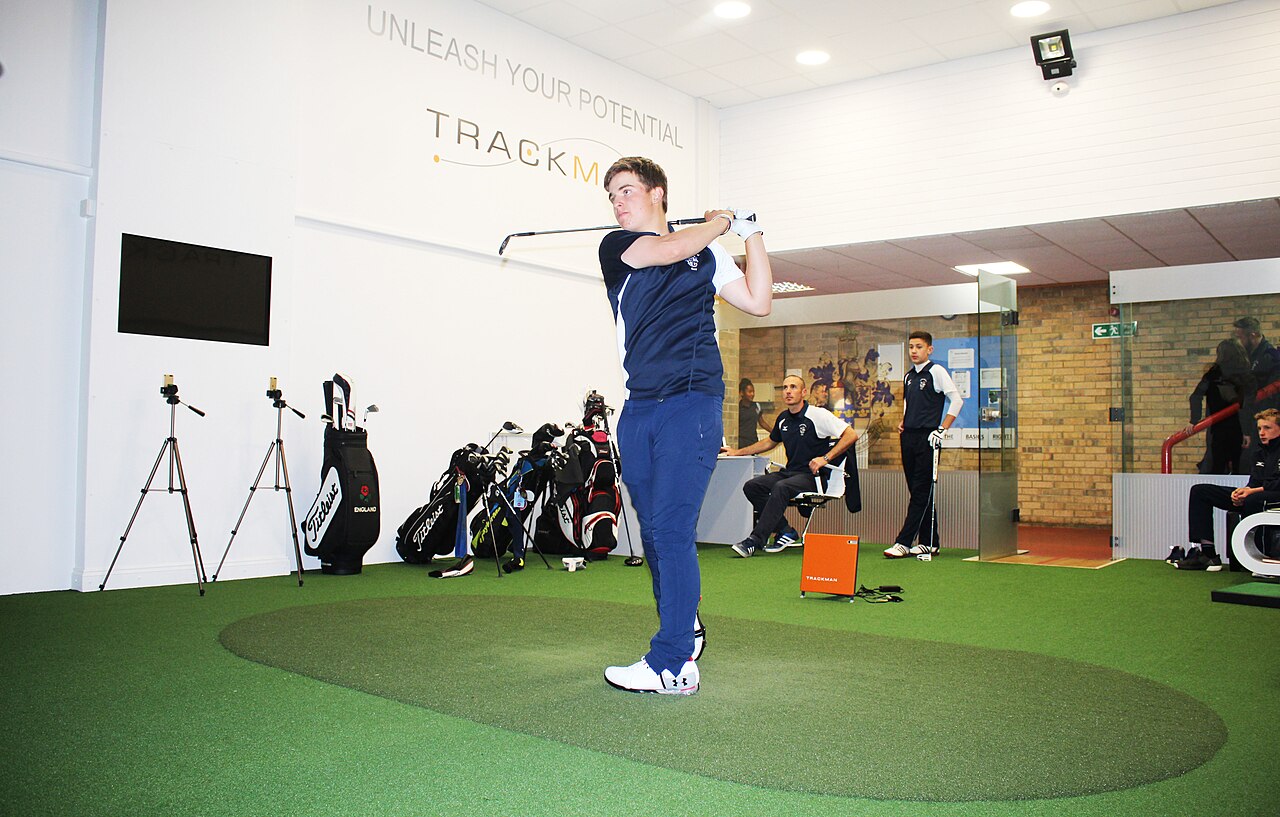
Are you practicing golf, or reacting to numbers?
A golfer hits a ball, checks a launch monitor, changes something, hits again and studies the next reading. Radar and camera systems can measure starting direction, carry, ball speed and sometimes club-delivery parameters. Those measurements can be helpful. Yet a great number after a single swing is not evidence that the golfer can reproduce the shot without the screen.
On 13 October 2026, Brittany Olizarowicz published “Are You Practicing Golf Or Practicing Your Launch Monitor Numbers?” in MyGolfSpy. She described a familiar temptation: reviewing swing video after virtually every shot while learning a new move. Her suggested change of emphasis was to predict what happened before looking at the data, then compare feeling with reality.
The commentary refers to a limited body of research into golf technology and motor learning. It does not prove that frequent feedback is universally harmful. Evidence is not strong enough to prescribe one optimal viewing interval for every player. Neither the original article nor the following editorial exercise should be mistaken for a new controlled trial.
Measurement, execution and retention
Ask three separate questions. What happened to the ball? Starting direction, carry and distance from the target describe outcomes. How did the club arrive? Club path, attack angle or face delivery may help if your monitor actually measures them reliably. Was a skill acquired? That requires a different test: consistency in another session, on a changed target, or without immediate prompts.
Two shots with equal carry may differ in contact and trajectory. One good shot cannot establish long-term learning, and one bad one cannot disprove a technical change. Trying to improve six launch numbers at the same time can also make it difficult to know which change mattered.
Predict first, inspect second
After impact, briefly avoid the display. State whether you think the ball started left, on line or right of the target. Estimate contact quality and carry. Then reveal the numbers. A disagreement between prediction and measurement says something about your perception, not automatically about the mechanical cause.
Imagine estimating a slightly leftward start and 145 metres of carry, while the monitor registers a rightward start and 136 metres. It would be premature to change your grip, stance and arm action simultaneously. Look for repeated patterns and consult an instructor when making technical adjustments.
GOLFTWITT's original 24-shot observation session
This is an editorial self-check, not a scientifically validated improvement protocol or a promised handicap reduction. Warm up before counting shots. Choose a single iron, consistent balls and a safe target. Concentrate on only starting direction and carry. Keep device accuracy and environmental conditions in mind.
Shots 1–6: calibration. Read both metrics immediately after each shot. Note perceived contact and your normal range, rather than chasing one perfect value.
Shots 7–12: prediction. Before reading the monitor, record your expected start and carry. Afterwards note your absolute carry-estimation error and whether the direction prediction was correct.
Shots 13–18: delayed review. Hit three balls without viewing the screen, then review the three stored records. Repeat. If the monitor does not keep shot history, use a helper or skip this block.
Shots 19–24: course-like objectives. Alternate between two safe targets or two shot-shape intentions. Judge the actual task outcome, not whether a favourite club-path number appeared. Review the batch as a whole.
Read your notes carefully
Keep prediction accuracy separate from successful execution. Accurately identifying a mishit may reflect self-awareness, not an improved strike. Hitting a good shot does not guarantee you understood how it flew.
The blocks run in a fixed order, so warm-up, fatigue and chance may distort comparisons. Six shots cannot establish that one feedback format causes better learning. Repeat the exercise another day if useful, and work with a qualified coach on new mechanics. Early in learning, frequent feedback may be appropriate; there is no reason to ban it on principle.
The takeaway: a monitor tells you what happened. Practice should also build your ability to choose a target, recognise the strike and make the next decision without constantly reacting to a screen.
Source: Brittany Olizarowicz, MyGolfSpy, 13 October 2026: https://mygolfspy.com/news-opinion/instruction/are-you-practicing-golf-or-practicing-your-launch-monitor-numbers/
Read more on this topic
Train the Strike, Not Just the Swing: Adam Young's 8 Practice Ideas and a 32-Shot Check
Coach Adam Young suggests eight ways to train impact, starting lines and shot selection. We explain the limits of the advice and offer an original 24-shot plus eight-putt check.
Two ways to hit a flop shot: Debbie Doniger's coaching keys and a 24-ball practice
A high, soft-landing flop shot can help when the flag is short-sided—but the safer option may be a chip. Explore Debbie Doniger's two setups, when to avoid the shot, and a measured 24-ball practice.

Driver vs. Irons: Four Resistance-Band Drills to Explore Different Body Movements
Golf fitness coach Ben Shear contrasts lateral shift and torso rotation for iron and driver swings. Here are four band exercises, their limits, and a measured practice check.

Is There a Perfect Putting Practice Difficulty? What a Trial of 150 People Found
A randomized putting study involving 150 people found no single optimal practice difficulty across three success-rate bands. We explain the limits and offer a careful 30-putt observation routine.