
Why do shots that feel dependable on the driving range sometimes disappear on the course? One useful question is whether the two settings ask us to do the same thing. On the range we can hit ten balls with the same club toward the same flag. During a round, the target, distance and club often change after every shot. In an article published on October 23, 2026, golf instructor Deb Spair recommends making practice resemble course play: select a target, rotate clubs and use your normal pre-shot routine.
Understand the distinction. Repetitive practice can be appropriate when you and a coach are working on a particular movement. Practice built around decisions serves a different purpose: rehearsing how you select and prepare for a new shot. Neither format is guaranteed to lower scores, and there is no reason to claim that one is best for every golfer.
Give every ball a purpose. Before placing a ball, choose a specific visible target, such as a flag, distance marker or patch of grass. Estimate the carry required and an acceptable miss area. Decide which club and flight you intend to use. Stand behind the ball, identify your starting line, complete your usual preparation and then swing. Do not redefine a successful shot after seeing where it lands.
Change clubs with a reason. Rather than hitting fifteen consecutive 7-irons, imagine playing a hole: choose a tee shot, then a plausible approach, then a shorter shot if needed. For the next imaginary hole, change the target or distance. Respect any driving-range restrictions on club selection and direction.
The GOLFTWITT nine-hole session. List nine familiar holes, or invent nine safe scenarios. Write down the intended tee target and the likely next-shot distance for each one. Hit one ball per decision and change clubs whenever the imaginary situation calls for it. Repeat your full routine before each attempt. Around 20–30 balls may be sufficient for this editorial exercise, but adjust the volume to your circumstances. The number is an illustrative practice format, not a scientifically validated prescription.
Use a simple scorecard. Record the imaginary hole, selected club, intended target, approximate start direction and quality of strike. Add two questions: “Did I follow my routine?” and “Where was the miss relative to my target?” If you cannot accurately measure carry, use honest categories such as short, near the intended distance or long. Avoid assigning an invented on-course score from range shots.
Know what is missing. A range session does not recreate uneven lies, changing wind, real hazards, putting or the pressure of counting every stroke. Nine imagined holes are not equivalent to nine holes on a course. Persistent strike problems deserve individual coaching; discomfort or pain calls for appropriate medical advice rather than swing experimentation.
Source: Deb Spair, “Practice Like You Play,” October 23, 2026: https://debspair.golf/blog/practice-like-you-play. Practice log and explanatory framework developed independently by GOLFTWITT.
Read more on this topic

Is Your Backswing Too Long? Three Warning Signs and a 24-Ball Test
Does your grip slip, your arms collapse late or your balance disappear? Explore a PGA coach's three checks and compare 24 iron shots.
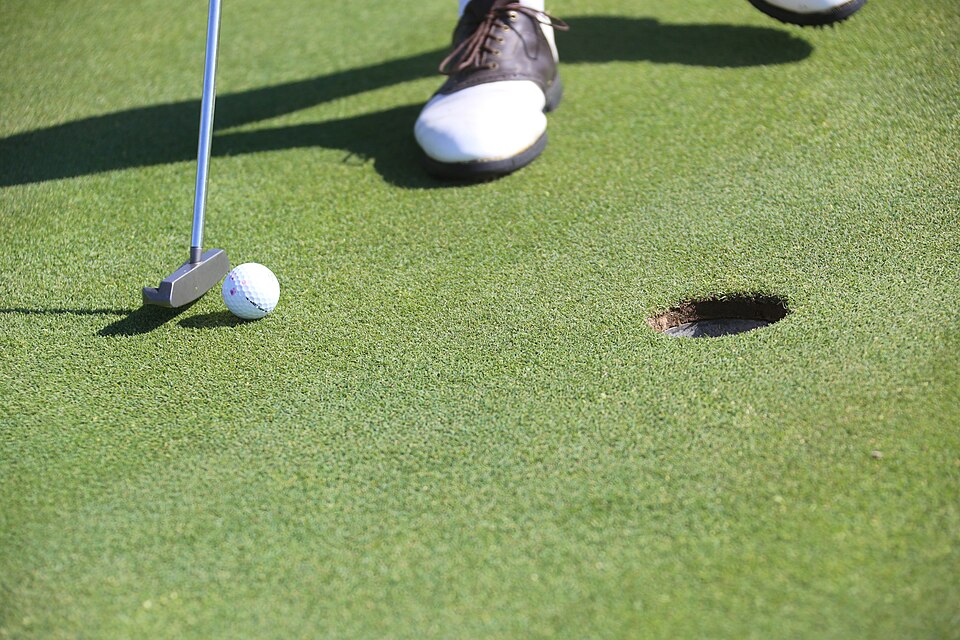
Ben Crenshaw's Putting Lesson: Check Ball Position Before Changing Your Stroke
Ben Crenshaw sometimes made tiny ball-position adjustments instead of rebuilding his putting stroke. Learn what the setup can influence and try a careful 18-putt comparison without guaranteed outcomes.
Beyond the Lob Wedge: How Adam Scott Chooses Clubs Around the Green
Adam Scott and Short Game Chef explain why the lob wedge is not the answer to every greenside shot. Learn how lie, loft, bounce and rollout affect club choice, then try an 18-ball comparison.

The lead-arm drill: explore iron control and tempo without swinging harder
A short one-handed rehearsal can reveal how your grip, lead wrist and chest move together. Here is a measured, no-ball version of a drill highlighted by MyGolfSpy and PGA instructor Dana Darley.