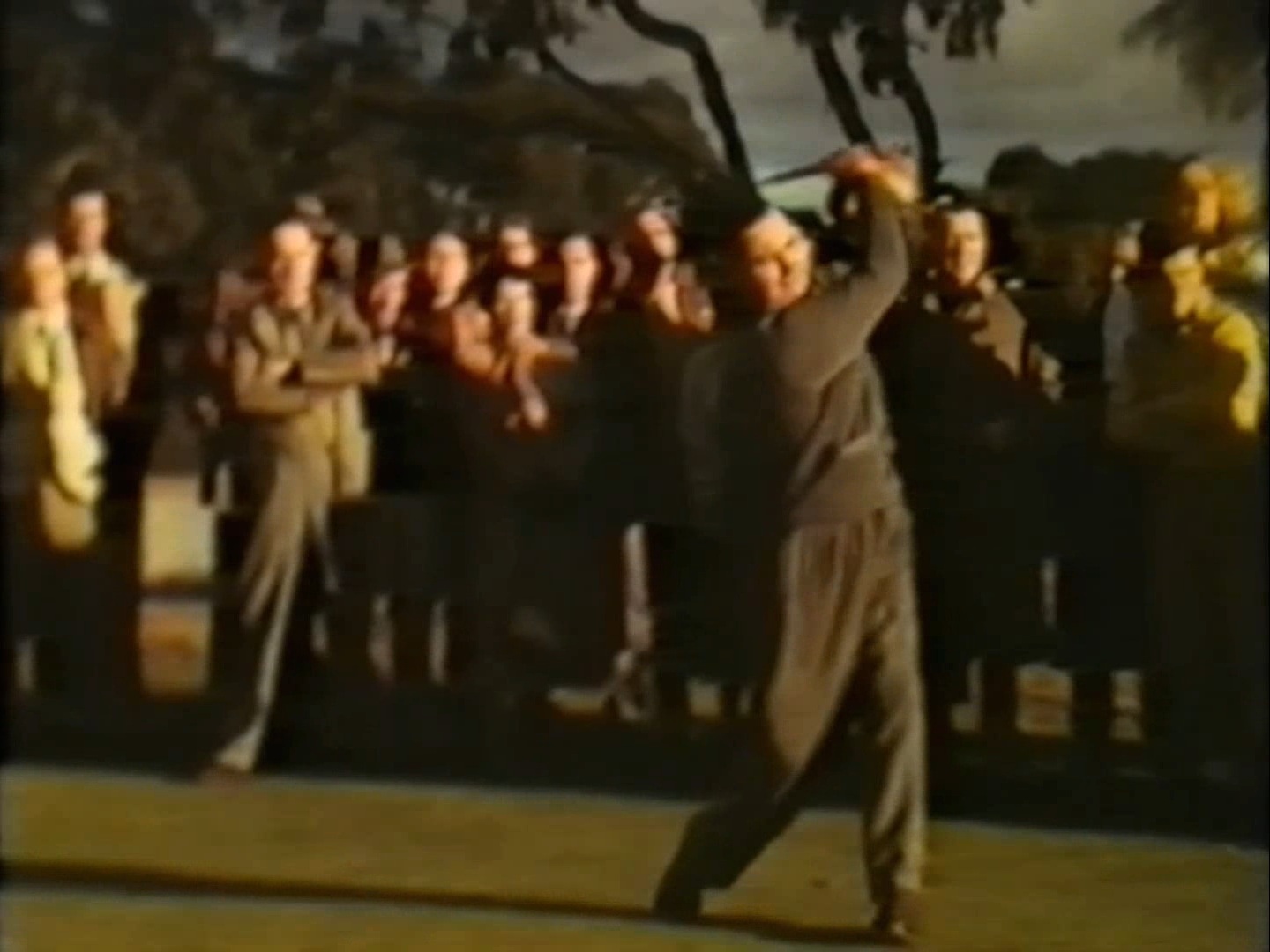
When a run of shots feels unusually clean, golf can seem effortless. The danger is what happens next: a player remembers that pleasant sensation and tries to manufacture it during the following practice session. Yet “effortless” is a description of how a swing felt, not an objective account of what the club and body did.
THE COACHING OBSERVATION
In an October 24, 2026 article for MyGolfSpy, former teaching professional Brittany Olizarowicz described watching her young son struggle to recreate the feeling of a particularly good week. His motion had become more tentative, with less visible body turn and less apparent pressure shift. As he returned to a more committed, complete motion, his shots improved. This is an individual coaching anecdote, not a controlled trial or proof that one swing pattern suits everyone.
FEEL IS NOT THE SAME AS MOTION
An effective swing may feel smooth because the player is moving at a familiar rhythm without unnecessary interference. But different golfers can interpret “easy” in entirely different ways: relaxed grip pressure, reduced clubhead speed or a shortened backswing. Those changes are not interchangeable. Less speed is not automatically bad—partial shots and deliberately controlled distances are essential skills. The problem is an unplanned change made in pursuit of a memory, without checking what it does to strike and ball flight.
Nor is a full finish a universal command for every shot. A full iron swing, a pitch and a specialty shot may have intentionally different finishes. Rather than copy a sensation, compare observable results: contact quality, starting direction, distance consistency and whether you finish in balance.
WHAT TO REMEMBER AFTER A GOOD ROUND
Replace “everything felt easy” with two or three specific observations. Which target did you pick? Did you follow your normal pre-shot routine? Could you complete the intended motion without steering the club through impact? Consistent preparation makes practice easier to compare. Avoid loading the next round with an elaborate set of mechanical reminders; pick one observable intention and let the rest of the motion happen.
GOLFTWITT PRACTICE CHECK: 24 BALLS
- Warm up first; do not count warm-up shots. Choose your usual 7- or 8-iron, a safe range target and the same ball type if possible.
- Hit eight shots using your normal routine and comfortable full swing. For each, record strike (solid/not solid), initial direction (left/centre/right) and finish balance (yes/no).
- Hit eight more with the intention of moving smoothly and without excess strain. Do not deliberately shorten the backswing or decelerate through impact. Keep your target, club and routine unchanged. Stop this variation if it feels uncomfortable or makes your motion unstable.
- Return to your normal rhythm for the final eight shots. Compare the three sets. If you have a launch monitor, record carry and shot dispersion as well, and keep carry separate from total roll-out distance.
- Judge the pattern, not the single longest or prettiest shot. Which set produced reliable contact and a manageable miss area?
WHAT THE TEST CANNOT PROVE
Twenty-four shots are a small sample. Practice effects, fatigue, series order and subjective strike ratings may distort the comparison. The exercise is an editorial self-check, not a scientifically validated intervention and not a replacement for tailored coaching. A weaker second set does not establish that a smooth tempo is wrong; it may simply mean the instruction changed your intention. Stop if you experience pain.
The useful lesson is to preserve a dependable process and observable shot quality, rather than chase the memory of how an excellent swing felt.
Source: MyGolfSpy, Brittany Olizarowicz, October 24, 2026 — https://mygolfspy.com/news-opinion/instruction/the-dangerous-lesson-golfers-learn-from-their-best-rounds/ Photo: Pk smi, “Martin Smith Golfer Swing,” Wikimedia Commons, CC0 1.0 — https://commons.wikimedia.org/wiki/File:Martin_Smith_Golfer_Swing.jpg
Read more on this topic

Driver Speed or Accuracy? A 24-Ball Practice Test for Three Swing Intentions
A small MyGolfSpy test found more carry but wider dispersion with faster drives. Here is a cautious 24-ball self-check for speed, accuracy and playable misses.

Is Your Backswing Too Long? Three Warning Signs and a 24-Ball Test
Does your grip slip, your arms collapse late or your balance disappear? Explore a PGA coach's three checks and compare 24 iron shots.

When an Iron Gets 'Stuck': Tim Cooke’s Swing-Plane Drill and a 30-Rep Check
Tim Cooke uses a 60° padded guide for an overly flat downswing. Learn what the cue can and cannot show, plus a safe baseline-based iron practice test.

Lower Wedge Flight: Tom Hoge on Partial Swings and Distance Control
Tom Hoge and Short Game Chef discuss lower wedge shots. Understand carry, dynamic loft and spin, then try a cautious 18-ball comparison exercise.