Beyond the Lob Wedge: How Adam Scott Chooses Clubs Around the Green
Adam Scott and Short Game Chef explain why the lob wedge is not the answer to every greenside shot. Learn how lie, loft, bounce and rollout affect club choice, then try an 18-ball comparison.
Beyond the lob wedge: how Adam Scott chooses clubs around the green
In a Titleist video published October 8, 2026, Masters champion Adam Scott joins short-game coach Parker McLachlin (Short Game Chef) to discuss wedges from tight turf. Their point is not that the lob wedge is wrong; it is that a missed green does not automatically require the highest-lofted club in the bag. On tightly cut and grainy turf, Scott sometimes trusts a 54-degree wedge. That is one professional's choice in specific circumstances, not a prescription for every golfer.
Four questions before you choose the club
1. What is the lie? Tight grass, soft turf and deep rough change how the club interacts with the ground. 2. What must you carry? A bunker, ridge or uneven patch can make a longer airborne flight necessary. 3. How much green is available? Ample room allows a low shot with rollout; a tucked pin may not. 4. What will the ball do after landing? Slope, firmness, moisture and green speed influence the outcome.
Choose a realistic first landing area before choosing the club. Practice should measure where the ball lands as well as where it finishes.
Why more loft is not always easier
Under comparable conditions, less loft often produces a lower flight and more roll. Yet there is no fixed carry-to-roll ratio: quality of contact, speed, spin, slope and the green all matter. A lob wedge can be useful over an obstacle or when very little landing area is available. Conversely, a delicate high shot from extremely tight turf can demand more precise contact than a running chip.
Bounce describes part of the wedge sole geometry affecting ground interaction. The stamped bounce number is only one variable; sole width, grind, face opening, handle position and turf firmness matter as well. Titleist instructors discuss matching bounce to conditions. Forcing the handle dramatically forward to manufacture a crisp strike changes effective loft and sole behavior and should not be treated as a universal fix.
Three common situations
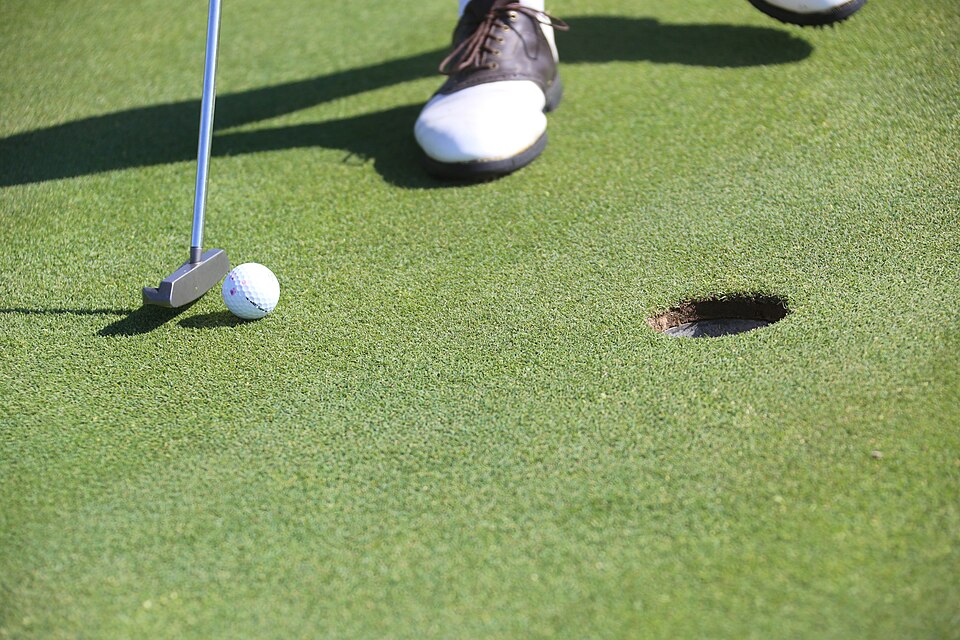
Ball just off an open, level green with no obstacle. Compare a putter, an iron and a pitching wedge. When the ball has room to run, a lower shot may be a practical alternative to a demanding pitch.
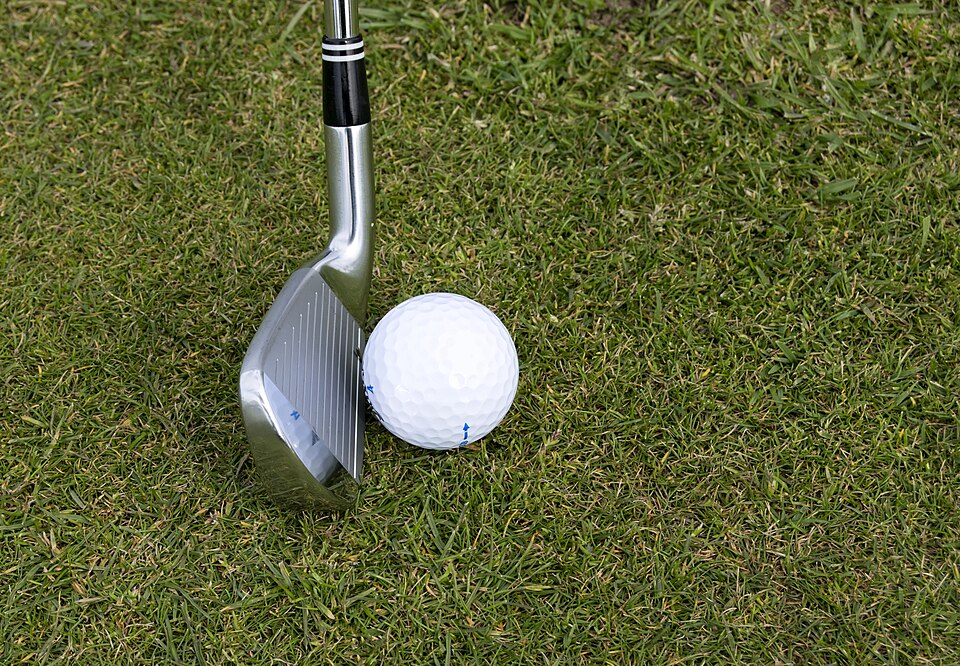
Tight, grainy turf with moderate green to use. Compare clubs you actually carry, perhaps 50–54 degrees against a more lofted wedge. Judge strike quality and landing consistency. Scott shows a preference for 54 degrees in certain conditions, but your ideal choice may differ.
A bunker separates the ball from a tucked pin. Additional carry and a softer landing may be needed. If the high shot is unreliable, aiming toward a safer portion of the green may be wiser than chasing a spectacular flop.
GOLFTWITT's original 18-ball test
This is an editorial practice exercise, not a scientifically validated training intervention.
- Choose a designated practice area, a hole and a landing target.
- From a flat, tight lie, play three shots each with three clubs of differing loft: nine balls to the same target.
- Repeat nine shots from a second permitted lie, such as light rough. If unavailable, change the distance and explicitly note the difference.
- Record clean/poor contact, landing-zone hits, final distance to the hole and obvious short or long misses.
- Compare the spread of all results, not just the best one. Seek a reliable option suited to the particular shot.
Avoid copying a tour player's exact grip, posture or loft decision: mobility, equipment and turf differ. Stop if the movement is painful and seek appropriate professional advice.
What the source does—and does not—establish
The video documents choosing among wedges, Scott's 54-degree example on tight, grainy lies and his body-motion consideration when contact is inconsistent. It does not show that any single loft, or this 18-ball exercise, reliably lowers every amateur's scores.
Primary source: Titleist — Adam Scott and Short Game Chef, October 8, 2026. Technical background: Titleist — Choosing the Right Wedge Bounce, March 24, 2020.
Photo: Ipegasu / Wikimedia Commons, CC0 1.0. Illustrative image; Adam Scott is not pictured.
Read more on this topic