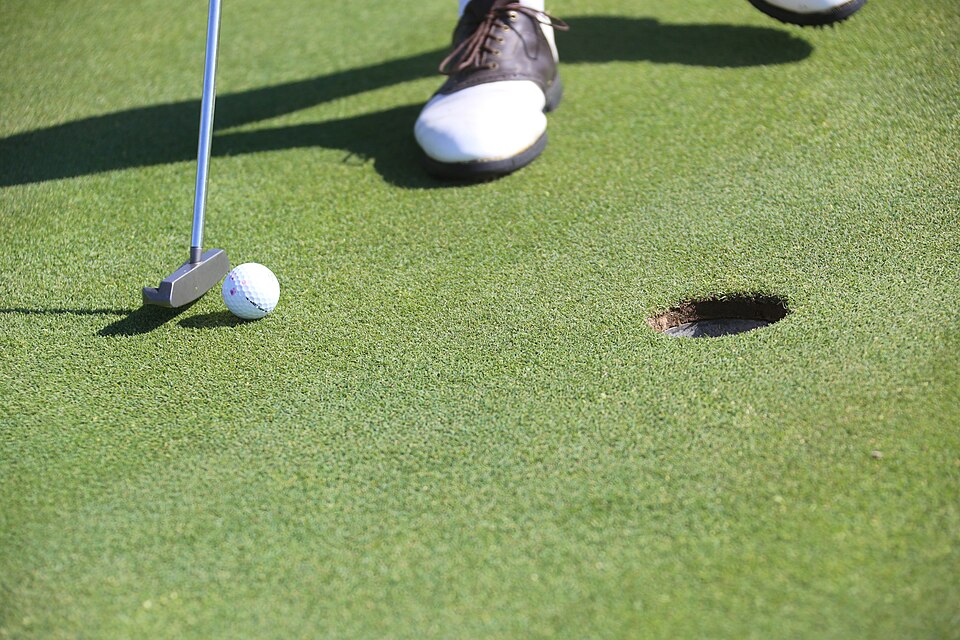
Getting a chip onto the green is useful, but it does not necessarily mean you can reproduce a precise carry distance. On 29 October 2026, MyGolfSpy presented a practical Player Development Index (PDI) assessment: 12 chips, three landing zones and a simple way to measure whether you can fly the ball the intended distance.
Measure the first landing, not the rollout
For this exercise, the result is the ball's first landing point, not where it stops. This separates carry control from the effects of green speed, bounce and subsequent roll. It does not claim to measure every element of short-game skill: in a real round, the final resting position matters too.
Set up three landing zones
Use a designated short-game area where chipping is permitted. From one hitting position, mark targets 3, 10 and 20 yards away. The target diameters are 3 feet, 6 feet and 12 feet, respectively. Low-profile practice rings or safe flat markers are suitable if they do not interfere with other golfers.
Play four chips to each target, for a total of 12. Count a success only if the ball first lands inside the marked zone. Record misses as short or long. A lucky bounce or roll after landing outside the target does not count.
What a score out of 12 means
MyGolfSpy reports PDI observations involving 2,408 golfers. Approximate group averages in this dataset are 3 of 12 for beginners, 5 for double-digit handicappers, 7 for strong junior and scratch amateurs, nearly 8 for NCAA Division I players, and around 10 for touring professionals. These are observed group reference points—not universal standards, and not a promise that any player will reach them.
In the same observations, golfers landing three or fewer chips in the targets reported average scores of roughly 93 strokes per round, versus about 76 for those landing ten or more. That roughly 17-stroke difference is an association, not a causal result. More accomplished golfers generally perform better in other parts of the game as well. Passing this test will not automatically reduce your score by 17 strokes.
Turn the result into useful practice
Repeat the test on another day with similar clubs, balls and conditions. Start by improving contact and landing-distance control, rather than changing several swing variables at once. If you consistently reach the near zone but leave chips short at 20 yards, work on matching stroke length to the farther target. If a different turf lie changes the result, practise that lie separately and avoid treating the two sets of scores as directly comparable.
The practical point: this is a diagnostic for one short-game skill, not a certificate of tour-level ability. In addition to the 12-chip score, monitor rollout, landing-spot choice and how many strokes you need to finish each hole.
Based on Brittany Olizarowicz's 29 October 2026 MyGolfSpy report of Player Development Index data. Analysis and practice guidance by GOLFTWITT Editorial.