Distance control can become inconsistent when a golfer changes both stroke length and tempo from one short putt to the next. LPGA professional Kelly Brooke suggests a measurable starting point: connect the putter's backswing length to the distance of the putt. Her demonstration appeared on Women & Golf on 10 July 2026. It is a coaching drill, not a universal formula for green speed.
What the one-inch rule means
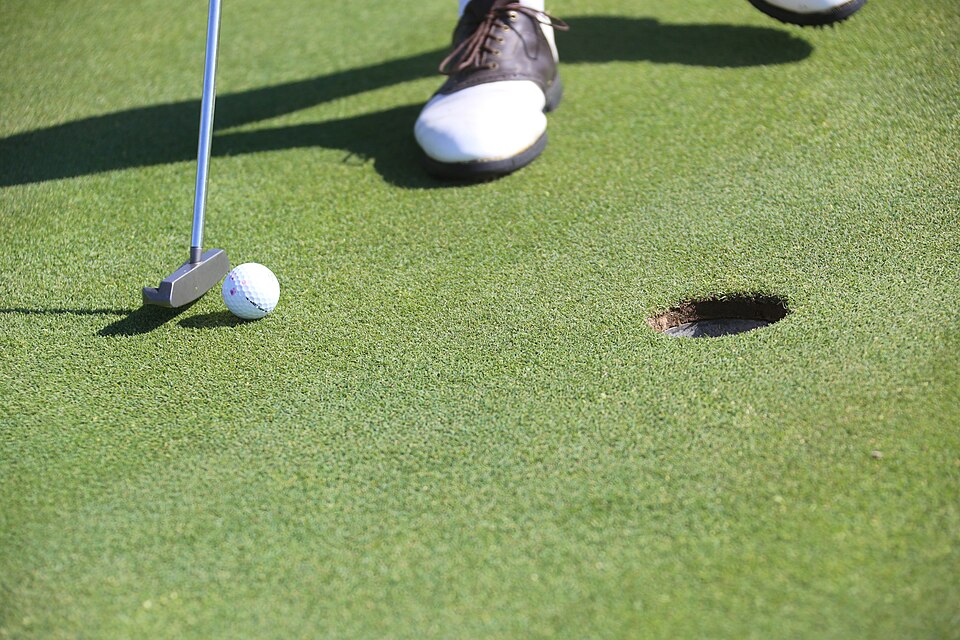
Brooke's starting cue is one inch of backswing for every foot of putt. On a three-foot putt, the putter moves back about three inches; on a six-foot putt, about six inches. Measure the motion of the putter head backwards from the ball, not the golfer's stance width or hand position.
These measurements are practice reference points. Actual rollout varies with green speed, slope, surface conditions, stroke tempo and how the putter travels through impact. A six-inch backswing does not have to produce the same result at two different courses.
A practical session
Choose a reasonably level section of the practice green. Lay a ruler alongside the intended putting line, clear of the ball and putter, and work from roughly three and six feet. Start with relaxed strokes, using the ruler to gauge the backswing instead of trying to force the ball into the hole. Brooke recommends a smooth follow-through at least as long as the backswing, often slightly longer.
Hit five putts from each distance and note where they finish. Do they consistently stop short, run too far, or gather around the target? Resist adding an abrupt wrist hit. Adjust stroke length, then retest while keeping a broadly consistent rhythm.
Read the feedback, not the slogan
The purpose is to build your own calibrated distance feel, not to guarantee more holed putts. If most six-foot attempts finish long, six inches may be too much for your stroke on that particular green. Faster greens, slower greens and significant slopes demand different calibration. A downhill putt's effective pace is not represented by its measured distance alone.
Keep starting direction separate from distance control: the ruler helps measure backswing amplitude, but does not by itself square the putter face or read the break. Work out what travels the right distance on the practice green, then carry that feel into the round.