Why Katsuragawa stopped changing putters and started examining his wrists
On 30 October 2026, Japanese golf publication GDO reported on Yuto Katsuragawa's preparations at Miyoshi Country Club's West Course in Aichi Prefecture ahead of the Vantelin Tokai Classic. Since beginning work with putting coach Alejandro Larrazábal in September, the player had simplified his equipment choices. Rather than bringing two or three putters to successive events, he settled on one that suited his alignment.
A separate issue was the wrist flip just before impact. When the hands release too abruptly, the effective loft of a putter and the face orientation delivered to the ball may change. The goal is not to freeze the wrists completely, but to identify motion that makes the starting direction and contact less repeatable.
The ball-between-forearm-and-grip drill
Larrazábal gave Katsuragawa a simple feedback exercise: hold an extra golf ball between the left forearm and the putter grip during a short putting stroke. A pronounced separation between the forearm and handle can make the ball drop, drawing attention to the movement the player is trying to moderate.
This is a feel-based practice cue, not a measuring device. Squeezing the ball forcefully or locking the arms rigidly would miss the point. Nor does keeping the ball in place prove that impact loft, face angle, or putting accuracy has improved. Different golfers can react differently to the constraint.
An editorial 12-putt comparison
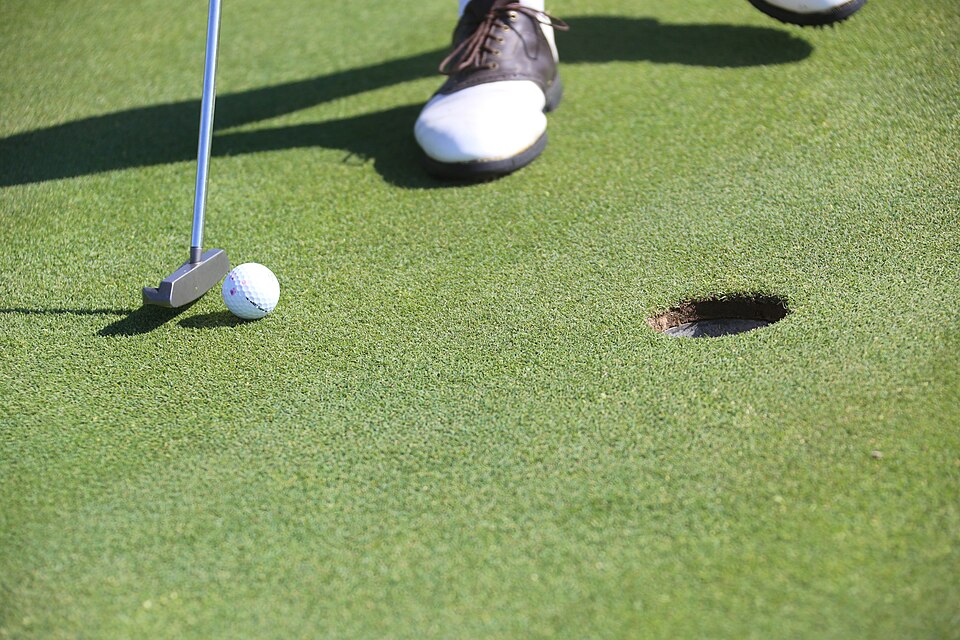
On a practice green, choose a putt of roughly 1.5–2 metres (5–6½ feet), preferably with a manageable break. Make four putts with your normal technique and note the starting direction and quality of strike. Next rehearse the motion slowly without hitting a ball, holding the extra ball gently between the lead forearm and grip. If the position feels comfortable, play four more putts using the constraint, then finish with four normal putts without it.
Compare consistency of the initial roll and whether the stroke remains relaxed. This 12-putt sequence is a GOLFTWITT observation exercise, not a validated performance test. Stop if holding the ball produces discomfort or forces an unnatural motion.
What comes after the drill?
Katsuragawa did not build his entire putting practice around one cue. GDO reported that, after settling on a single putter and addressing unwanted flipping, he increasingly devoted practice time to distance control on longer putts. The drill is therefore best understood as one form of feedback within a broader routine, not a guarantee of tournament success. His opening 65 at the Vantelin Tokai Classic on 29 October should not be attributed to this drill alone.
Source: GDO's report from Miyoshi Country Club, 30 October 2026. The 12-putt comparison above is an original editorial adaptation, not a test conducted by Katsuragawa or his coach.