Winter golf changes more than your ball flight
On October 26, 2026, Golf Monthly published equipment writer and former professional golfer Sam De’Ath’s advice on dressing for winter golf. The useful observation is that bulky or soaked layers may restrict comfortable movement, while insufficient traction can make a stance less secure. Its headline suggests recovering “15 yards”, but the article presents no controlled measurements establishing that number. It is not a reliable promise for individual golfers.
Disclosure: Golf Monthly explicitly labels its feature as a paid partnership with Adidas Golf, while saying the editorial opinions are independent. We discuss the transferable ideas rather than recommend a brand or assume that expensive clothing improves a swing.
Three variables worth separating
Temperature and distance. Cold conditions, ball temperature and weather can change ball flight. Wet, soft fairways may reduce rollout after landing. Separate carry distance from total distance: a shot finishing shorter in winter does not automatically mean that your mechanics deteriorated.
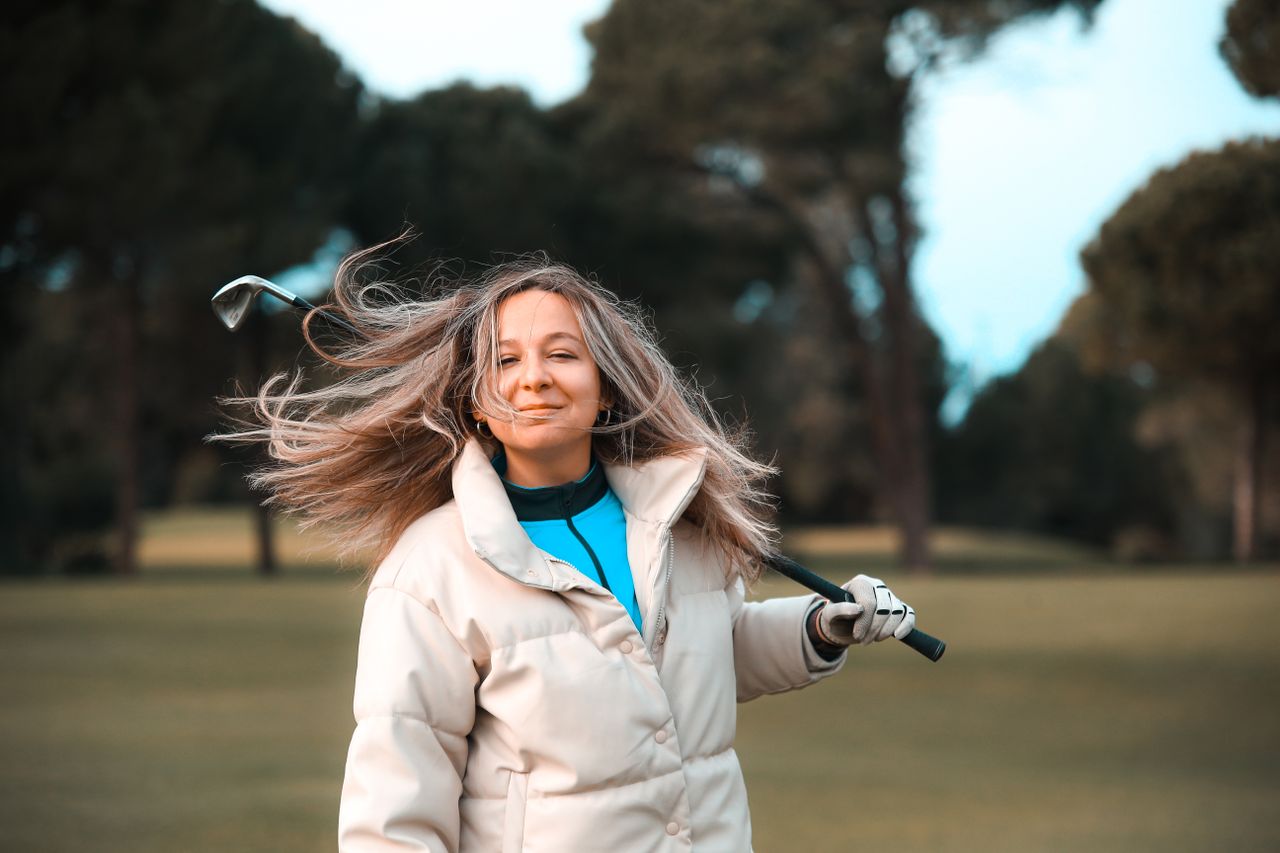
Movement through the swing. A thick sweater or restrictive waterproof shell may feel uncomfortable at the top of the backswing or during the follow-through. Conversely, wearing too little to stay warm is no solution. Look for a combination of base layer, insulation and rain protection that keeps you comfortable while allowing an unforced shoulder and torso turn. A “golf” label alone cannot confirm the fit.
Footing. Suitable footwear matters on soft or wet grass, although no shoe can make slippery, icy ground safe. Check your balance with a slow rehearsal before taking a full swing. If the ground is frozen, dangerously slick, or the club has closed the area to play, do not practice there. Trying to push harder against an unstable surface is not an appropriate fix.
GOLFTWITT's 16-ball comparison
The following is an original observation exercise, not a scientifically validated intervention. You need a safe practice area, one familiar mid-iron, a notebook and two weather-appropriate clothing combinations. Both must be warm enough for the conditions. If you only have one comfortable outfit, use it for the whole exercise and note your sensations rather than invent a comparison.
Before hitting: Warm up gradually in your usual way. Make five easy, ball-free swing rehearsals in each outfit. Notice whether you can turn smoothly, keep your balance and finish without resistance. Stop if you feel pain, numbness or instability.
Balls 1–4: establish a reference. Wear the first comfortable combination and hit four normal shots at the same target. Record carry if a trustworthy measurement is available, your starting direction, strike quality and perceived freedom of movement on a 1–5 scale.
Balls 5–8: change only your outer layers. Switch to the second safe clothing combination—for example, a lighter waterproof shell instead of a bulky one. Keep the same club, target, ball position and intended effort. Write down the same observations.
Balls 9–12: return to the original clothing. Repeat four shots in the first combination. This second pass may reveal a warm-up or familiarisation effect. Do not treat one great or poor shot as proof.
Balls 13–16: rehearse on-course decisions. Pick two realistic landing targets and play two shots to each, wearing whichever combination feels safer and more comfortable. Record whether the ball lands in your chosen zone, not your longest drive.
What the numbers can—and cannot—say
Look at typical contact, dispersion and comfort, not the single longest shot. Four balls per block are far too few to establish that one jacket adds distance. Wind, warming up, ball temperature and normal shot variability all matter. If clothing restricts you, first check fit and layering before changing your technique.
On the course, use distances you have actually observed under current conditions and allow for altered rollout on wet fairways. The goal is a safer, more comfortable, better-informed round—not a guaranteed extra 15 yards.
Source: Sam De’Ath, Golf Monthly, October 26, 2026, “Why You Lose 15 Yards In Winter (And How to Get It Back)”, https://www.golfmonthly.com/features/why-you-lose-15-yards-in-winter-and-how-to-get-it-back. The source is an Adidas Golf paid-partnership feature; the 16-ball exercise is an independent GOLFTWITT editorial suggestion, not an experimentally validated training method.