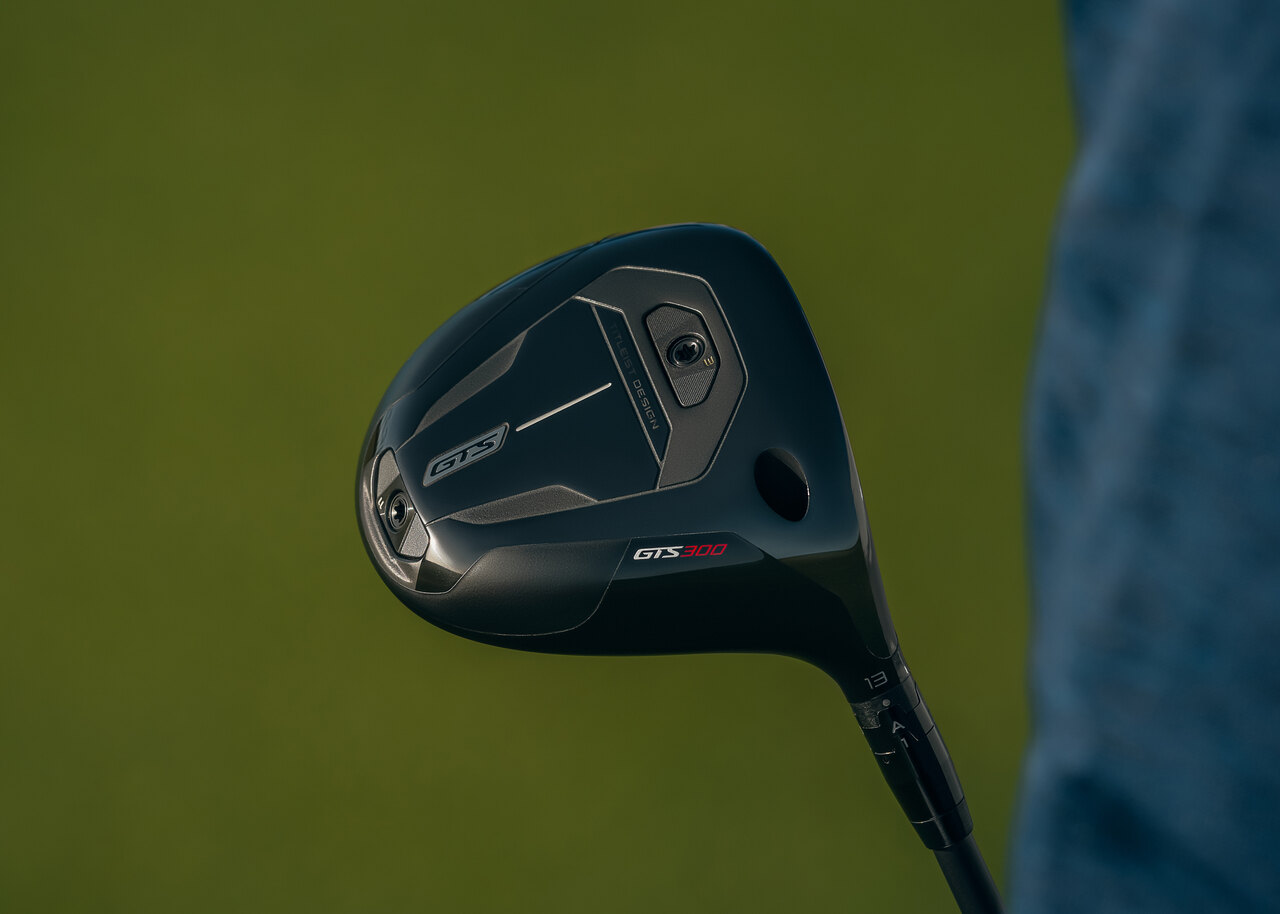
On October 26, 2026, Matt Saternus published an independent, hands-on review of the Titleist GTS300 mini driver at Plugged In Golf. This is not a new product launch. Titleist unveiled the club on July 14 and worldwide retail began on July 23. What is new is a fresh account of how its enlarged head behaves both from a tee and a tight fairway lie, and how moving its weights changes the shot.
The 305cc proposition
A mini driver occupies a space between the normal driver and a 3-wood. Titleist lists a 305cc head, 13° loft, 43.5-inch standard men's length, and 56° lie. Women's 42.5-inch and junior 41.5-inch lengths are also specified, with right- and left-handed versions. These dimensions describe a specific compromise, not a guarantee of additional distance or fairways hit.
Compared with GT280, the new design has a larger footprint and deeper center of gravity. Titleist says its moment of inertia increased by around 15–20%. That percentage is a manufacturer statement; the October review provides no independently measured inertia figure. A forged L-Cup face is designed to maintain ball speed on low-face impacts, although the new test offers no controlled speed table proving a numerical benefit.
What the October test adds
Saternus described GTS300 as visually more like a scaled-down driver than an expanded fairway wood. He could launch shots from close-cut turf in spite of the 13° loft and substantial head, though he observed comparatively low, running trajectories. That outcome may help on a firm long hole but cannot be assumed for a player who delivers less speed or struggles to lift a low-lofted club.
Off the tee the reviewer found the head reassuringly stable on imperfect contact. Most interesting was the effect of the two sole weight ports. Putting greater mass behind the face helped him keep intentional fades and draws smaller and more predictable. Shifting the heavier weight forward produced lower spin and a more penetrating flight in his experience, yet increased curvature and made shaped shots harder to manage. These are personal test observations, not averages from a large sample.
The fit matters more than one impressive drive
Titleist specifies 11g at the rear and 3g forward as the standard weighting, with other weights and an adjustable SureFit hosel. Changing the distribution of mass and hosel setup affects launch conditions, but neither setting automatically adds yards. Reduced spin can cost carry if launch is already insufficient. A meaningful fitting should compare repeated shots with the same balls and record carry, total distance, dispersion, miss pattern and performance from turf.
Intended player and limitations
For some golfers the GTS300 could be a controllable second tee club or an occasional option for long, low fairway shots. It does not inevitably replace both a full-size driver and a 3-wood. The U.S. launch MSRP was $549 with a stock shaft and $749 with a premium shaft; regional pricing varies.
The October article contains no broad player trial, blind comparison against GT280, or published launch-monitor dataset covering each weight position. Claims of a fixed yardage improvement or universal forgiveness would overstate the available evidence. The credible takeaway is that weight placement is a significant fitting variable worth testing personally.
Sources: Plugged In Golf, October 26, 2026 (https://pluggedingolf.com/titleist-gts300-mini-driver-review/); Titleist's official technical release, July 14, 2026 (https://mediacenter.titleist.com/en-US/267629-titleist-introduces-new-gts300-mini-driver/).
Read more on this topic

GameGolf Explore opens 36,000 golf courses to everyone: what changes for GPS shot tracking
Game Your Game launched Explore Golf Course on 26 October 2026, offering free access to hole maps, recorded rounds and leaderboards. We separate the new web feature from KZN AI hardware, subscriptions and unverified performance claims.
Do High-MOI Drivers Really Help Poor Ball-Strikers More? What 99 Testers Reveal
A seven-year MyGolfSpy analysis of 99 testers found no special extra carry benefit for frequent mishitters, but about 6% tighter carry spread from more forgiving drivers. Here is how to interpret and test that.

2026 Lexus Masters: Two Past Champions Won Their First KPGA Titles — Can Kim Jae-ho Defend?
The KPGA's Lexus Masters returns to Incheon on 29 October with a ₩1bn purse, defending champion Kim Jae-ho and a remarkable history of first-time winners.
Asia-Pacific Amateur 2026: seven-player country cap, 5.4 handicap exception and four-year representation rule
Ahead of the Asia-Pacific Amateur in New Zealand, official 2026 regulations explain 120 places, the 6 August WAGR cutoff, a limited 5.4-handicap nomination exception and a four-year nationality rule.