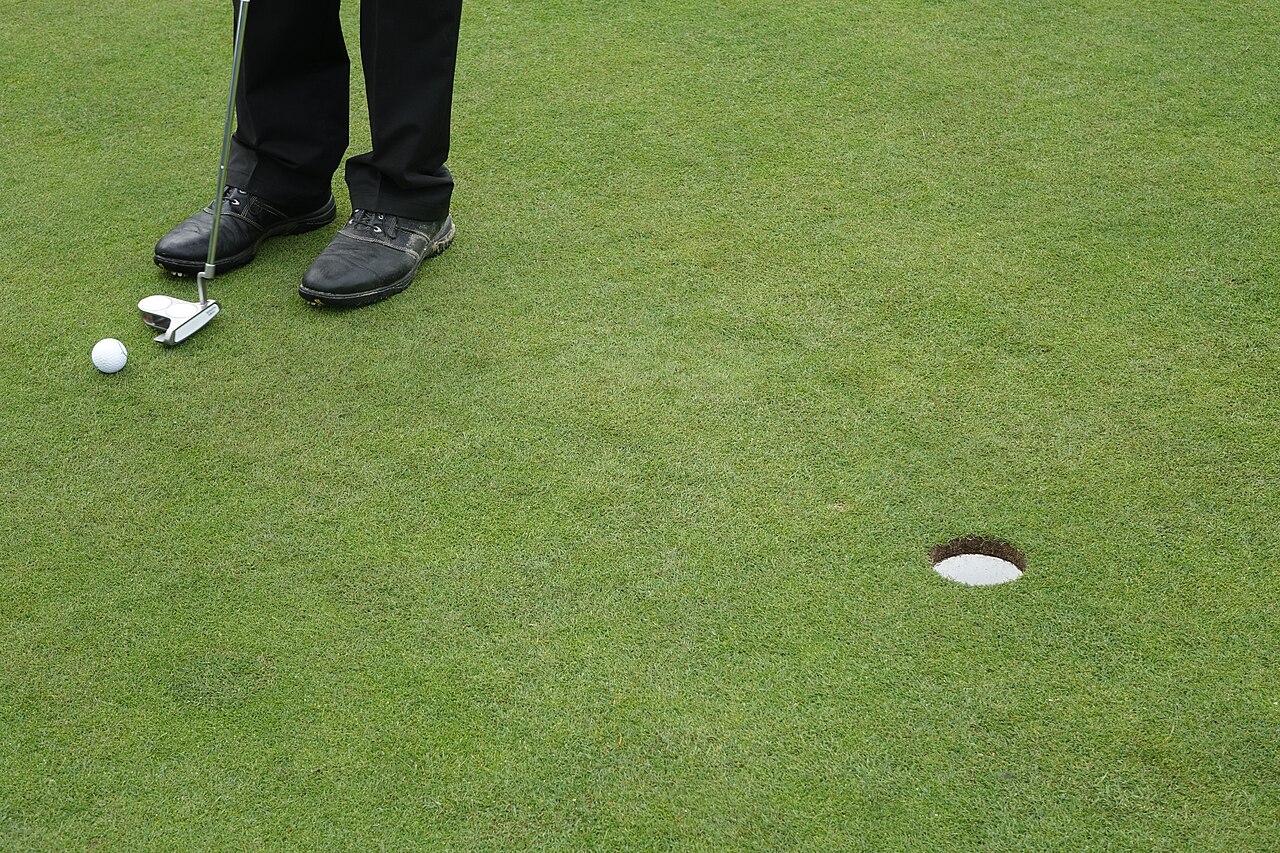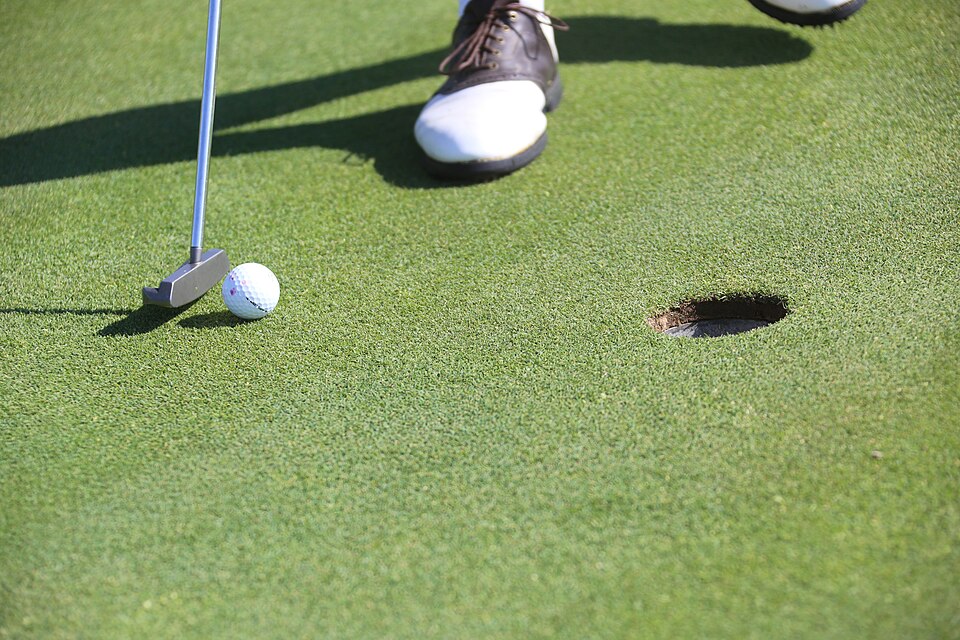
A long lag putt rarely needs an aggressive strike. The more useful goal is to control the ball's pace and leave a manageable second putt. In a lesson published on 30 October 2026, Meredith Kirk, an LPGA Class A teaching professional based in Myrtle Beach, South Carolina, highlights three connected skills: visualising a useful target, keeping a steady rhythm and adjusting the putter's backswing.
1. Visualise pace, not an obligatory make
For a long putt, Kirk recommends picturing a point just beyond the hole. That is not an instruction to deliberately roll every ball past the cup. The visual cue encourages a committed stroke instead of decelerating from fear of a miss or focusing solely on holing a low-percentage putt. A successful lag putt leaves the ball near the hole.
Keep starting line and pace separate. On a sloping green, the correct starting line may point some way away from the cup. The imagined spot beyond the hole is a pace cue; it does not replace reading the break.
2. Lengthen the backswing rather than forcing the follow-through
Kirk's second emphasis is an even, smooth tempo. An abrupt shove through impact can make contact and distance less predictable. Instead, increase the length of the putter's backswing for longer putts while preserving a flowing forward movement. Greater distance requires a suitable stroke amplitude, not necessarily an aggressive burst of force.
There is no universal backswing length for a given distance. Green speed, moisture, slope and grass conditions change how far the ball rolls. Calibrate the movement on the practice green rather than relying on an exact formula.
3. A six-putt distance exercise
This routine is a GOLFTWITT editorial suggestion based on Kirk's principles; it is not presented as her personal study or test. If there is enough room on the practice green, choose two distances, perhaps around eight and twelve metres. Play three putts from each. Read the break, select the starting line and picture the pace needed before every stroke. Preserve a comfortable tempo and adjust mainly the backswing length at the greater distance.
Assess where each group finishes: consistently short, far beyond, or clustered near the cup? Pay attention to the spread of stopping points, not just how many putts drop. Change one element at a time rather than answering every miss with a harder hand action.
Different from an inches-per-foot exercise
Some putting drills link a measured backswing to a particular putt length. Kirk's emphasis is different: visual intention, repeatable tempo and adapting amplitude to the actual green. These approaches can complement each other, but neither is a universal rule for every putting surface.
The practical lesson is to treat lag putting as a first-putt distance-control task, not a make-at-all-costs attempt. Structured practice can build pace awareness but does not guarantee the elimination of three-putts.
Primary source: Meredith Kirk's Women & Golf lesson, 30 October 2026. Technical cross-check: Titleist instructor Trillium Rose on lag putting.