Why “keep your head down” may miss the problem
A thin iron shot or poor contact often invites the familiar instruction to keep the head down. But head position alone cannot explain how the pelvis, chest and club move. Tucking the chin into the chest may restrict a comfortable turn. In its “Maintain Golf Swing Posture” lesson, RotarySwing instead asks golfers to look at changes in body inclination during the downswing.
The RotarySwing page is dated October 26, 2026, while its comment section contains feedback from 2012. It should therefore be treated as a coaching lesson presented on a recently dated page, not as newly published scientific research.
What early extension actually describes
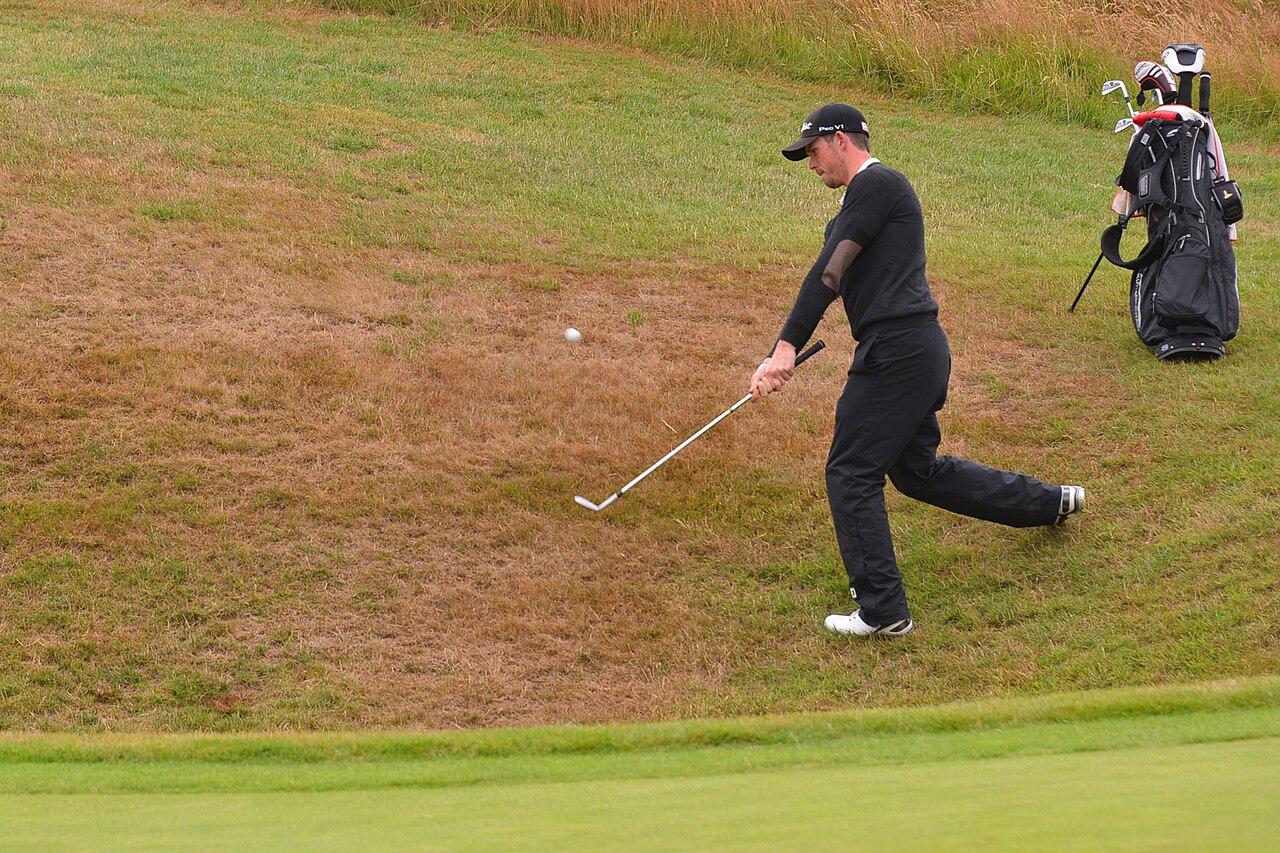
Early extension is a movement pattern in which the pelvis moves closer to the ball during the downswing and the torso may rise earlier than intended. That can alter the space available for the arms and club. Thin contact, a heavy strike or an offline shot can accompany it, but none of these outcomes uniquely diagnoses early extension. Setup, ball position, balance, clubface control and club selection also matter.
Maintaining usable posture does not mean freezing the spine or head at a mathematically fixed angle. A golf swing is a three-dimensional sequence of rotations and extensions. A static pose copied from a tour professional is not a universal target.
A more useful video checkpoint
Place a phone securely behind the player along the target line, far enough away to see the full body. Record several ordinary swings before changing anything. Note the rear edge of the pelvis at address and observe whether it moves significantly closer to the ball in transition and through impact.
Coaches sometimes call that reference a “tush line.” It is a rough visual checkpoint, not a diagnostic instrument. Camera height, perspective and clothing can distort the appearance. Avoid drawing conclusions from a single frame or treating another player’s swing geometry as a prescription.
Try the Merry Go Round rehearsal
RotarySwing demonstrates a movement rehearsal with a club held across the chest, not used to strike a ball. Set up in a comfortable golf posture, turn gently as though making a backswing, then rotate back through an imagined impact area. Notice whether the chest can keep turning without an abrupt thrust of the hips toward the ball. Breathe normally; do not pin the chin down or force the lower back into a rigid position.
The club across the chest is a training cue; its position is not the actual club position at impact. The original lesson makes this distinction. Stop if the exercise creates back, neck or hip pain and seek appropriate professional advice when needed.
An original 18-ball observation session
Use one familiar short or mid-iron, a consistent target and safe practice conditions. Hit six baseline balls with your normal swing, noting contact and direction; film a couple from a fixed position if possible. Make four to six slow Merry Go Round rehearsals without a ball. Hit six more balls, retaining only a comfortable feeling of rotation rather than trying to force a pose. For the final six, remove the cue and return to the normal swing. Compare the frequency of solid strikes, balance and typical dispersion.
Pay attention to normal variability rather than celebrating one exceptional shot. Wind, fatigue and lie changes can make a tiny test misleading. This 18-ball sequence is an editorial self-check, not a scientifically validated method or a promise of lower scores.
What to take away
A better question than “Did I lift my head?” is “How did my pelvis and chest move during the downswing?” When poor contact persists, a qualified coach can interpret the video in the context of setup, club delivery and personal mobility. There is no single mandatory posture for every golfer.
Source: RotarySwing, “Maintain Golf Swing Posture 2026: Stop Losing Spine Angle,” page dated October 26, 2026. The lesson does not establish a guaranteed performance benefit.