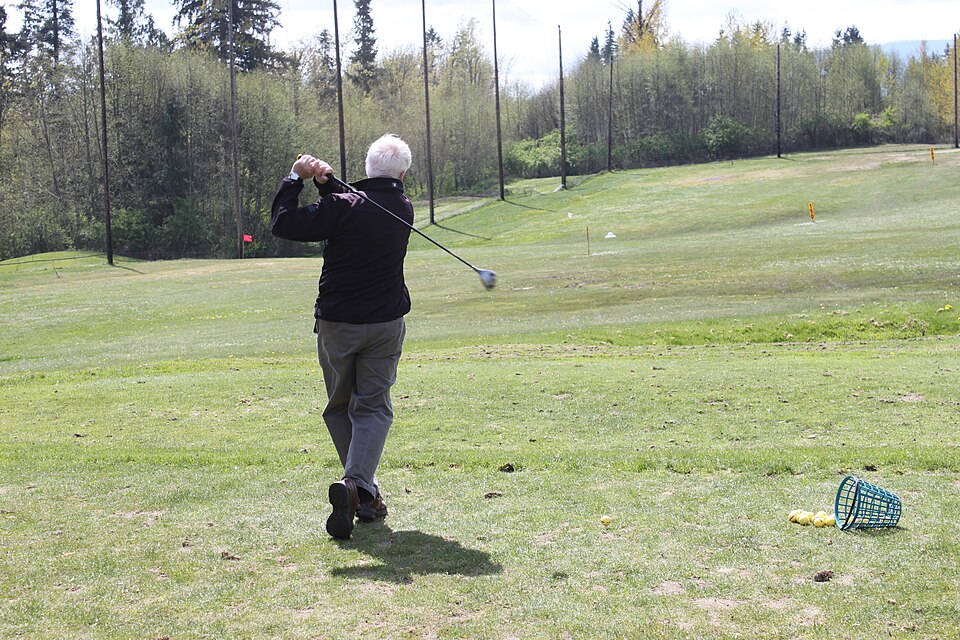
Why a good-looking swing may still produce uneven strikes
Two shots can appear almost identical on video while differing in clubface impact location, turf contact and the ball's initial direction. Those small, often invisible differences are central to coach Adam Young's approach to practice. In a 7 October 2026 Golf Digest article by Luke Kerr-Dineen, the Best in State instructor outlined eight ways to develop control over contact and shot outcomes rather than only rehearse a swing shape.
These are coaching suggestions, not the findings of a newly reported controlled trial. Although the source calls the methods evidence-based, it does not provide a separate controlled study for every individual drill. No specific improvement in distance, accuracy or handicap should be assumed.
Measure the result before prescribing a fix
For an iron shot, record three different things: where the ball meets the clubface (high or low, toe or heel), where the club meets the turf (before or after the ball), and where the ball starts. A central strike does not guarantee an accurate shot, and a shot starting right can have more than one cause. A launch monitor can add detail, but basic observations can be useful without buying new equipment.
Eight ideas to vary your practice
1. Explore vertical impact location. With a comfortable iron and reduced swings, try contacting the ball a little lower on the face, then a little higher. The purpose is to develop awareness, not to claim you can strike a particular groove perfectly on demand. Begin with short, controlled movements.
2. Make impact visible. Approved impact tape or another removable, club-safe marking method can show where the ball met the face. Note centre, toe, heel, high or low after each attempt. Follow range rules and avoid products that might harm a club's finish.
3. Compare slight toe and heel contact. Young describes deliberately exploring the two sides of centre, then returning to a normal strike. Small variations are enough: there is no need to attempt a dangerous shank. Keep everyone clear of the hitting area.
4. Practice intentional starting lines. Choose broad, safe corridors left and right of a central target. Try to launch a ball into each corridor, then back towards the middle. Without measured club data, do not describe your face angle as exactly two or four degrees open: face orientation, swing path and strike location can all influence flight.
5. Change where the clubhead starts. Make rehearsal swings with the head hovering, then starting somewhat behind an imagined ball. See whether you can brush the same ground location. This is an awareness task for low-point control, not a reason to chop steeply into the ground.
6. Mix clubs and targets. After a brief technical block, rotate tasks: a wedge at a short target, a mid-iron at a wider distant area, then a different wedge shot. Changing tasks more closely resembles course decisions, although immediate practice scores may look worse than when hitting identical balls repeatedly.
7. One putt, then change location. Put one ball down, read its slope and distance, use your routine, putt and move somewhere different. Count both holed putts and the distance left after a miss. A handful of attempts cannot prove that a training method works.
8. Vary landing spots around the green. For chips and pitches, identify several suitable landing areas and alternate between them. Track first landing as well as the final resting place: rollout changes with grass, slope and club selection.
The GOLFTWITT 24-shot and eight-putt check
This is an original editorial practice format inspired by Young's ideas, not a research protocol or a drill attributed to him verbatim.
- Hit six normal mid-iron shots towards one generous target and log strike marks, contact quality and initial direction.
- Hit six controlled variation shots with the same iron, exploring slightly higher, lower, toe-side or heel-side contact before returning to centre. Use shorter swings and avoid forced motions.
- Hit six starting-line shots, alternating safe left, right and middle corridors; record actual starts rather than expected ones.
- Hit six shots switching club and target on every attempt; note whether each stayed in its chosen corridor.
- Hit eight putts from eight positions, re-reading the putt and logging the outcome and leave distance each time.
If strike position cannot be seen reliably, record it as 'unknown' rather than inventing precision. Compare distributions over several sessions in similar conditions instead of celebrating the single best ball. Stop if pain occurs, and take breaks when tired.
What you can and cannot conclude
The value of this approach is that every shot has a clear purpose and some form of feedback. It does not establish that every golfer will gain yards or lower scores, nor can a short personal session isolate cause and effect. If you continue to struggle with contact or a movement feels uncomfortable, seek individual guidance from a qualified teaching professional.
Original source: Luke Kerr-Dineen, “8 evidence-based practice methods that actually work, according to a top coach,” Golf Digest, 7 October 2026; coaching explanations by Adam Young.
Read more on this topic

Two gates on the green: how to investigate a missed putt
Tour putting coach Stephen Sweeney uses two gates to reveal where a breaking putt strays from its intended line. Learn the setup, limitations and an optional 24-putt self-check.
Launch Monitor Numbers vs. Real Golf Learning: A 24-Shot Self-Check
A launch monitor can measure a shot, but does that mean a skill was learned? We examine MyGolfSpy's October article and offer a careful 24-shot practice exercise.
Putting and neurofeedback: what 12 trials involving 424 golfers really found
A review of 12 randomized trials (424 participants) found encouraging putting-training results, but 94% heterogeneity makes sweeping claims unsafe. We examine EEG neurofeedback and a practical 24-putt observation routine.

Driver vs. Irons: Four Resistance-Band Drills to Explore Different Body Movements
Golf fitness coach Ben Shear contrasts lateral shift and torso rotation for iron and driver swings. Here are four band exercises, their limits, and a measured practice check.