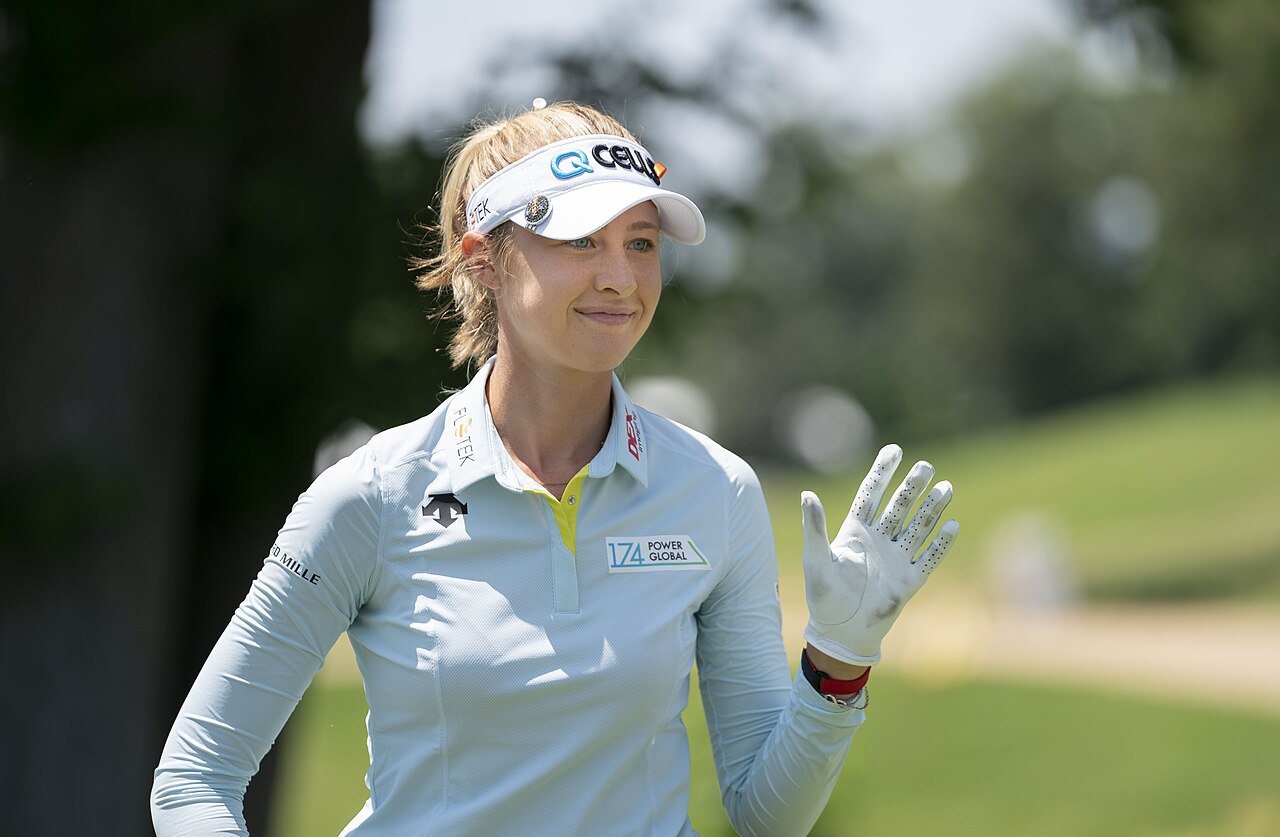
29 October 2026. Why do Nelly Korda's arms stay organised relative to her body during an iron swing, rather than running far behind her? In a new PGA of America Swing Lessons episode, PGA coach Justin Kraft examines Korda's motion and introduces a practical cue using a cap and a small strip of tape. The intended audience is golfers whose downswing travels excessively over the top, often contributing to a slice.
Turning the shoulders without losing the arms
Korda makes a substantial shoulder turn in the backswing, Kraft explains, while keeping her hands and arms in front of her torso instead of allowing them to wrap excessively behind her head. He also highlights the pelvis, which remains relatively centred rather than sliding uncontrollably away from the target.
During the transition, Korda begins shifting pressure towards her lead foot and moves her pelvis targetward while the upper body remains comparatively back. The analysis describes the horizontal separation between the pelvis and chest as the sway gap. It is a way of describing movement—not a universal measurement that every golfer should try to copy in inches.
The lead shoulder and the chin
Kraft points out that golfers who come over the top may move their upper body towards the target too early, with the lead shoulder seemingly stuck beneath the chin. That can make it harder to deliver the club from a less steep approach.
In Korda's motion, the lead shoulder moves away from the chin as the downswing unfolds. This does not mean keeping the head fixed forever: after impact her head turns naturally towards the ball's flight and she finishes in balance.
How to try the cap-and-tape cue
Place a short piece of tape towards the front of a cap so it is visible in a face-on recording. Rehearse a few slow swings without a ball. Review whether the tape and head lunge towards the target early, while the lead shoulder remains connected to the chin, or whether the shoulder can separate as the pelvis begins its targetward movement.
As an editorial practice comparison, hit five controlled half-swings with an iron and then five normal-tempo shots, recording ball starting direction and quality of contact. The ten-shot sequence is not a prescribed PGA test and is not evidence of guaranteed improvement. It is simply a way to see whether an altered cue makes your delivery more repeatable.
Avoid forcing a tour player's positions
Do not hold your head artificially behind the ball through the finish, strain your neck or chase an exact amount of pelvis movement. Set-up, club length, mobility and individual swing characteristics vary. If the cue worsens contact, return to your normal swing and have a qualified coach assess the cause.
Takeaway: the tape offers a visual checkpoint for sequencing; it does not diagnose every slice. Primary source: PGA of America, Nelly Korda | Swing Lessons, presented by Justin Kraft.