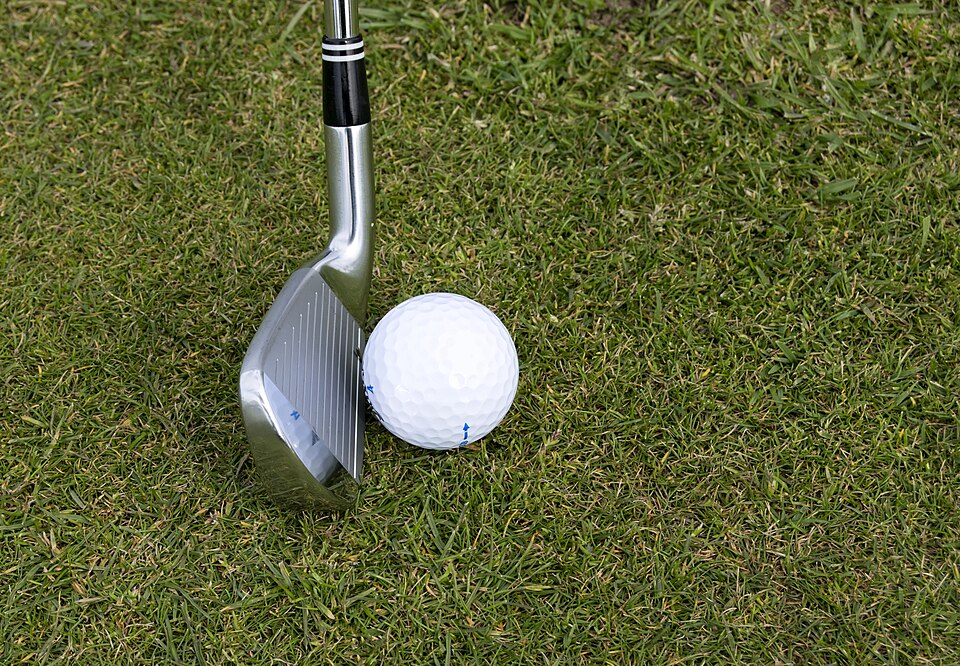
Lower wedge flight: control matters more than a dramatic trajectory
In a Titleist video posted October 7, 2026, PGA Tour player Tom Hoge joins short-game coach Parker McLachlin (Short Game Chef) to discuss wedge shots. Hoge prefers a lower flight that takes a bounce and stops, and explains why he almost never makes a full wedge swing. This is a professional's personal approach, not evidence that every golfer should hit every wedge low.
Three outcomes, not one instruction
Carry is the distance to first landing. Trajectory is the ball's path through the air. Rollout is its travel after landing. Lower flight alone does not guarantee a quicker stop: spin, descent angle, green conditions and contact all matter. A flag guarded by a bunker may call for a deliberately higher shot.
Dynamic loft describes the clubface's vertical orientation at impact, which need not equal the number stamped on the club. TrackMan explains that attack angle, release, face position and strike location can affect it. Too much dynamic loft may create excessive height; too little can produce uncontrollable rollout. Artificially reducing it is not a universal fix.
Spin loft is the three-dimensional angle between clubhead movement and clubface orientation. TrackMan identifies it as an influence on spin. Consequently, “lower flight means more spin” is not a reliable rule. Contact from wet grass or rough also differs from a clean fairway lie.
What to learn from Hoge
Some wedge distances may be managed through a smooth partial swing rather than maximum effort. The useful goal is a repeatable shot length, not replicating the launch-monitor numbers of a PGA Tour professional. Appropriate swing length, club and rhythm depend on the golfer, the lie and the landing target.
Avoid abruptly decelerating before the ball, forcing the grip forward or digging the clubhead into the ground in pursuit of “compression.” These adjustments can worsen strike quality. Persistent contact problems are best discussed with a qualified coach.
GOLFTWITT observation drill: 18 balls
This is an editorial comparison exercise, not a scientifically validated training programme. Choose a safe practice area, one familiar wedge and an attainable landing zone. Keep the lie and target consistent.
Balls 1–6: play normal, comfortable wedge shots. Record the first landing spot, contact quality and approximate rollout.
Balls 7–12: use the same club with a somewhat shorter but continuous swing. Do not expect identical carry; compare the feel and dispersion of landing points.
Balls 13–18: alternate the two swings. State the intended landing zone before every shot. Count reasonable hits and notable misses, then repeat the comparison on another practice day.
If a launch monitor is available, compare launch angle, carry and spin rate alongside where shots actually finish. Matching a tour player's numbers is not a performance goal in itself.
Takeaway
Hoge's useful message is to develop options for trajectory and distance, not to force every shot low. The right choice depends on hazards, the lie, the green and what you can strike consistently. Neither this practice exercise nor a professional demonstration guarantees a better score.
Sources: Titleist / The Golfer’s Journal, October 7, 2026; TrackMan: Dynamic Loft; TrackMan: Spin Loft.
Read more on this topic

Driver vs. Irons: Four Resistance-Band Drills to Explore Different Body Movements
Golf fitness coach Ben Shear contrasts lateral shift and torso rotation for iron and driver swings. Here are four band exercises, their limits, and a measured practice check.

Where should a chip land? A 24-shot practice test for your short game
Successful chipping involves choosing a landing spot as well as a final target. We examine a 23 October MyGolfSpy practice idea and offer a measurable, safety-conscious 24-shot self-test.
When Your 5-Iron Adds Almost No Distance: Lessons From 495 Tester-Years
A MyGolfSpy analysis of 495 tester-years (2017–2026) found that slower swings do not necessarily make 5-irons harder to strike, but can shrink their carry advantage over a 7-iron. The evidence, caveats and a practical 24-shot check.
Putting and neurofeedback: what 12 trials involving 424 golfers really found
A review of 12 randomized trials (424 participants) found encouraging putting-training results, but 94% heterogeneity makes sweeping claims unsafe. We examine EEG neurofeedback and a practical 24-putt observation routine.