A mat and a green teach different things
On October 26, 2026, X-Golf Rockwall published eight year-round putting drills. The author, Paul Copioli, operates X-Golf franchises in Texas. This is a practical guide from a golf venue, not a controlled research trial or proof that any drill will lower your scores. Its most useful principle is to choose work that matches the miss you are seeing instead of repeating the same stroke without a purpose.
A flat mat at home can help you examine setup, initial ball direction and where the putter face meets the ball. It cannot fully reproduce real-grass pace, slope or changing green conditions. A neat line of putts on your carpet does not establish that you can read a breaking putt on the course.
Four skills, four different questions
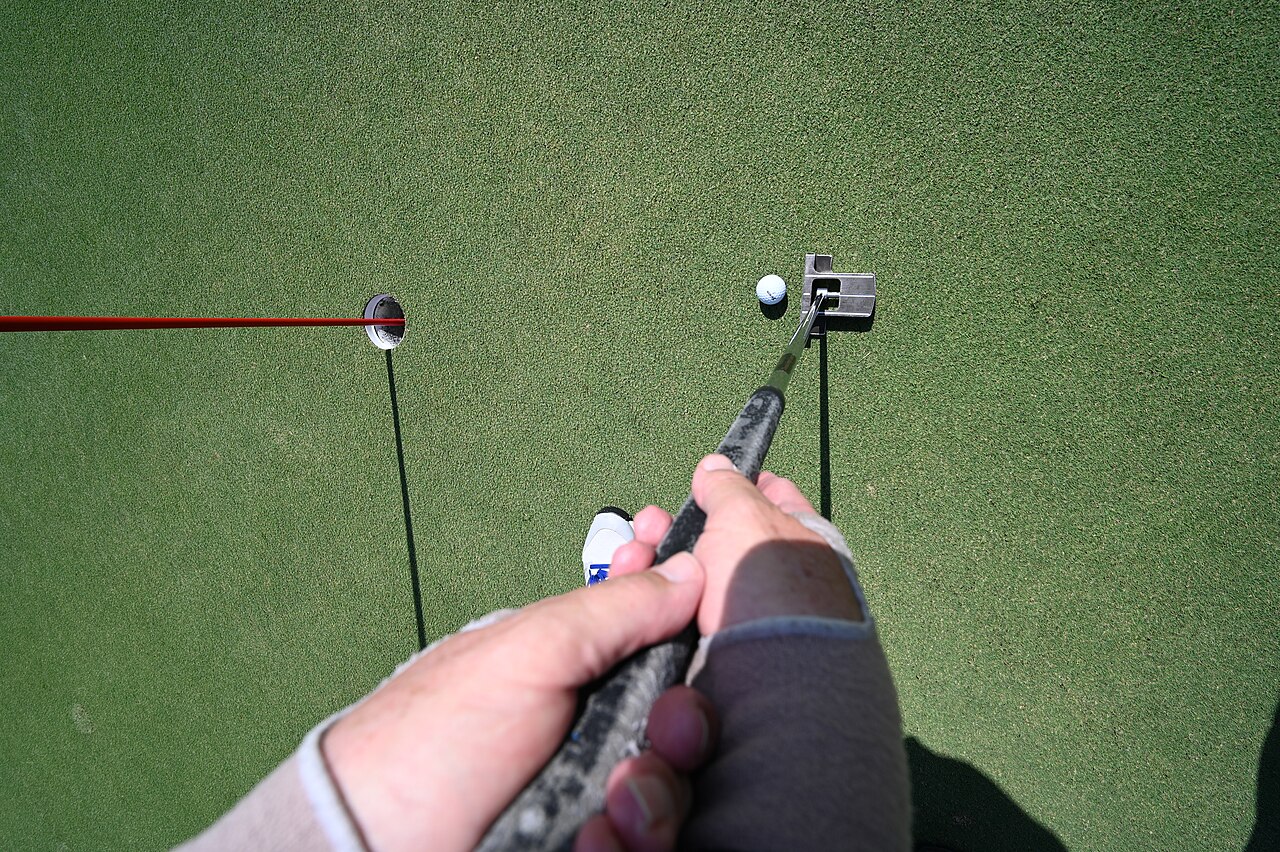
1. Start line. Find a reasonably straight putt from roughly five feet. Put two non-damaging markers 8–12 inches ahead of the ball, leaving a gap initially a little wider than the ball. Can you start eight consecutive attempts toward the gap without steering the club? Hitting a marker indicates an issue with the launch direction, but it does not uniquely identify a face-angle fault: aiming and strike location may also contribute. Use flat markers indoors and only permitted markers on practice greens.
2. Strike location. Off-centre contact can affect how a putt feels and how far it rolls. If available, use appropriate impact tape or a safe marker to see whether contacts cluster around the centre of the putter face. Do not conclude that one imperfect strike reveals a persistent mechanical defect. An occasional lead-hand-only stroke can be a feel exercise, not a rule about how everyone should putt.
3. Distance control. On a real green, choose several stopping zones at different distances. Rather than chasing the hole on every attempt, try to finish inside each zone. A ladder drill—successive balls stopping progressively farther away—provides a simple challenge for pace. Mix the distances after a few repetitions so the session contains decisions, not just a memorised motion.
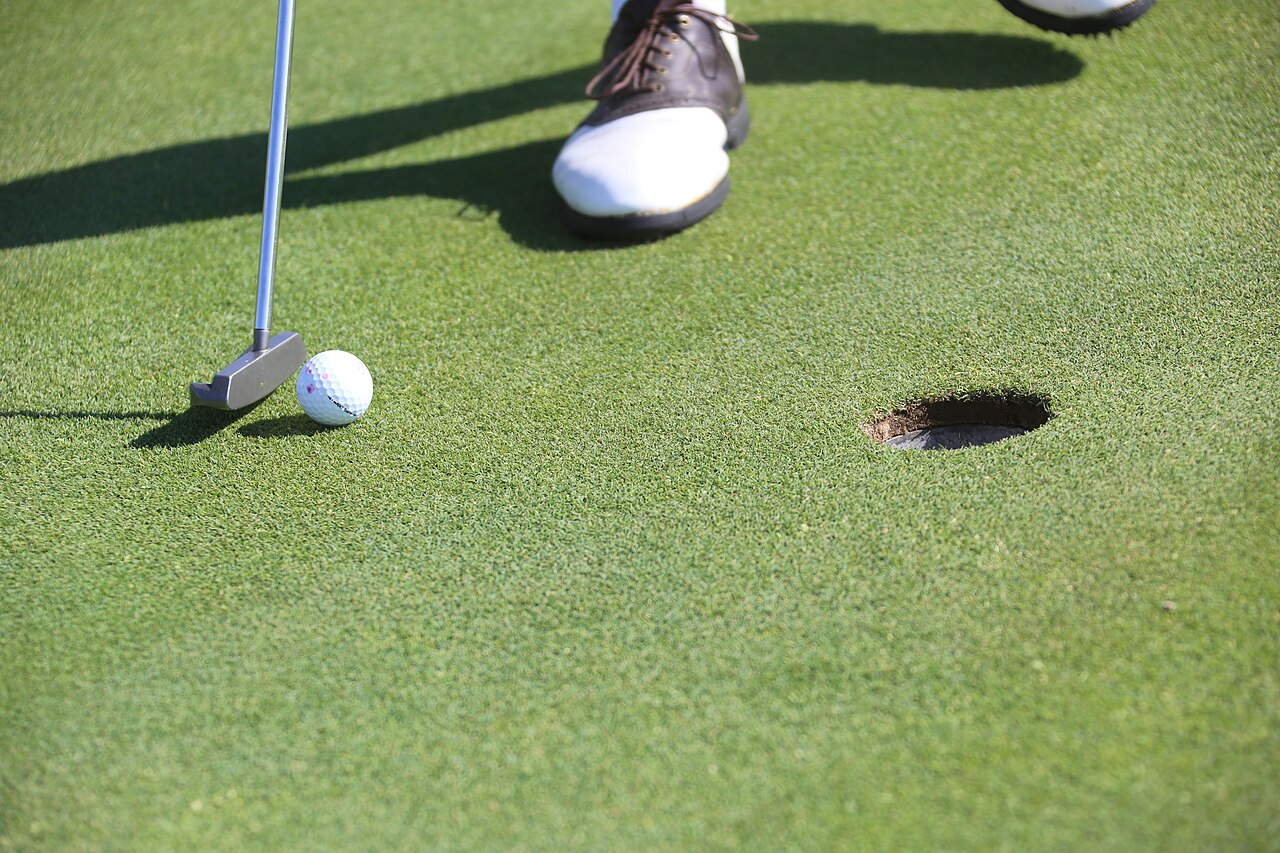
4. Short putts from changing positions. Mark four locations roughly three feet around one practice hole. Play one ball from each location, reading the putt anew. A slight slope will make the situations different. Record makes rather than calling a missed putt a failure of confidence. Making ten in a row is an optional pressure challenge; a more approachable version is to complete two four-ball circuits.
GOLFTWITT's original 32-putt check
This is an editorial self-test, not a validated scientific protocol or an exercise sequence claimed by the source.
Putts 1–8: a start-line gate; count clean starts. Putts 9–16: observe impact location on short putts; count near-centre strikes. Putts 17–24: two passes through four changing distance targets; count balls stopping inside the agreed zones. Putts 25–32: two circuits from four positions around a hole; count successful putts. Keep four separate scores out of eight. A single total would conceal which skill changed.
If you only have a home mat, complete the first two blocks and postpone the pace and slope challenges. When you repeat the check, use comparable starting conditions before making the targets harder. A strong score on one afternoon is not evidence of long-term skill retention.
Transfer the observation, not the routine
Before each course putt, choose a plausible line, pace and intended finish. Afterward, ask where the ball started, what it did on the slope and where it stopped. Several observations are more informative than an instant diagnosis after one miss. Stop an exercise that causes pain and seek qualified advice if discomfort persists.
Source: Paul Copioli, X-Golf Rockwall, “Golf Putting Drills: 8 Drills to Practice Year-Round,” October 26, 2026. The eight-drill framework and distinction between home and green practice come from the source; the 32-putt assessment and limitations are independent GOLFTWITT editorial work. Read the original.