Why the flagstick is not always the best target
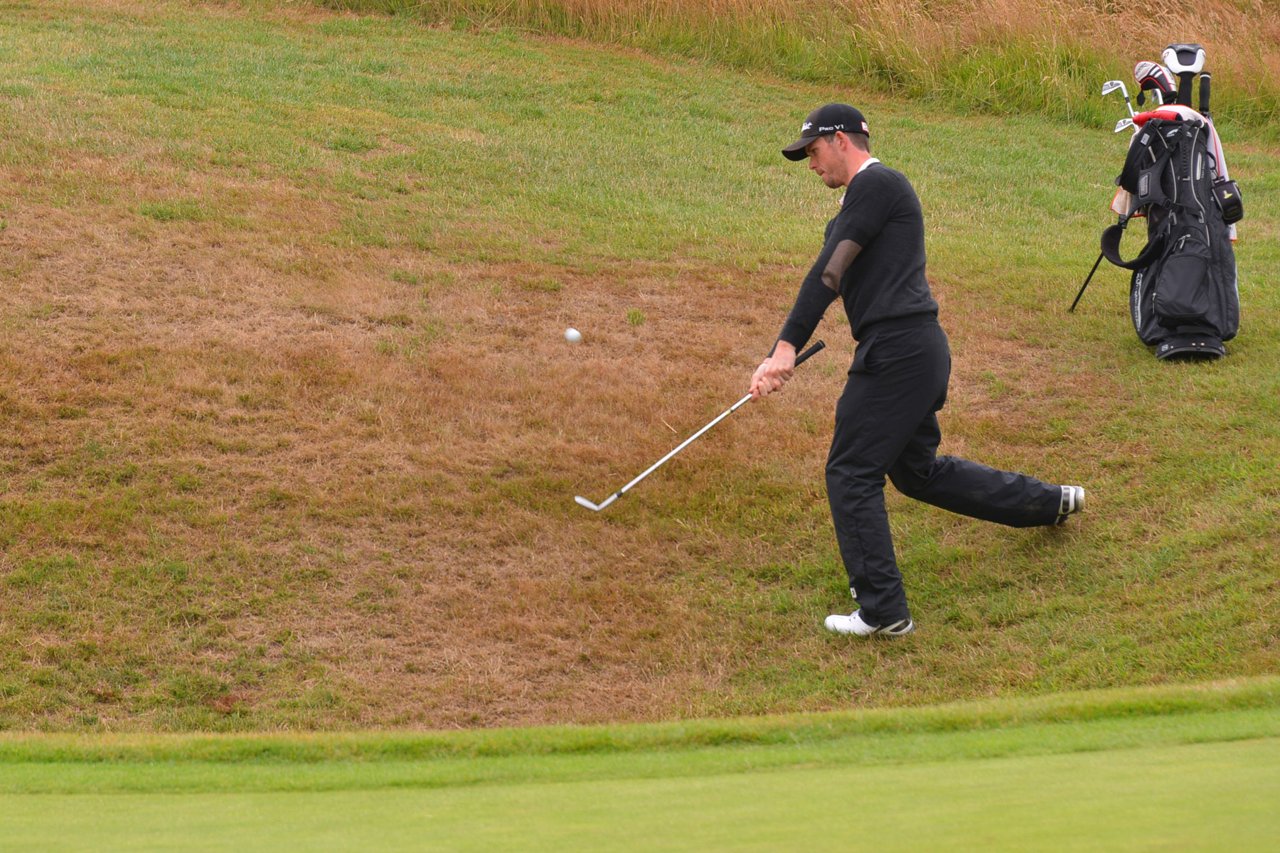
Picture an approach shot to a green with the flagstick tucked on the left, just beside a bunker or steep run-off. Aiming directly at the hole may seem ambitious. But if your normal iron miss also finishes left, even a reasonably struck shot could leave a difficult recovery. A target farther into the green may offer a better margin for error.
That is the central lesson from GOLF Top 100 Teacher Mark Durland, writing with Zephyr Melton for GOLF.com on October 27, 2026. His advice is to account for your own shot dispersion—the pattern of where shots finish around the intended target—and combine a conservative target with a committed swing. It is coaching advice, not a guarantee of a lower score.
Separate the intended target from the result
No golfer hits every approach exactly as planned. Shots finish left, right, short or long. A ball that stops next to the flagstick does not necessarily demonstrate that the original aim was correct.
Durland illustrates the distinction with a playing-lesson anecdote. He aimed at a palm tree behind the center of the green even though the flag was farther right. His shot pulled slightly and stopped roughly three feet from the hole. To an observer who had not heard the announced target, it might have looked like a perfect shot at the flag. In fact, he had missed his chosen line. The favorable outcome was compatible with the safer strategy. One anecdote cannot establish that the same choice will work every time.
Four things to assess before an approach
Your usual lateral miss. If you regularly miss left, a left-side flag next to trouble deserves extra caution. Reverse that reasoning when your predominant miss is right.
Your carry-distance distribution. Carry is the distance to the ball's first landing point, not the total distance after roll. A shot that comes up short may find water or a front bunker even if its direction was good. Consider the entire front-to-back spread, not just one average number.
The dangerous side. Favor a landing area where a normal miss is still playable. The best safe target is not automatically the geometric center: the green's shape, slopes and nearby trouble all matter.
The actual lie and conditions. Wind, uphill or downhill terrain, rough and imperfect ball contact affect the outcome. Do not treat dispersion measured from a flat driving-range mat as identical to dispersion on every course lie.
A related concept is becoming short-sided: missing the green on the side nearest a tucked flagstick. With little green between the ball and the hole, the next chip or pitch becomes more demanding.
A 24-shot observation session
The following practice structure is an editorial exercise, not a scientifically validated intervention.
Shots 1–12: map your pattern. Choose one iron and a safe target on the range. Hit twelve normal shots. Record whether each landing point finishes left, right, short or long of the intended target. A launch monitor can provide carry data, but simple written notes or a rough sketch of landing locations will do.
Shots 13–24: make decisions before swinging. Imagine different flag positions with one hazardous side. Before each shot, state an intended target and why you chose it: “Middle of the green, because my common miss is left and the bunker is on that side.” Make your usual swing rather than steering the club in an attempt to force a perfect result. Afterwards, record two separate outcomes: how close the ball was to the selected target, and whether its finishing area was reasonably safe.
Review the proportion of shots that stayed in a playable area, came up short, or finished on the wrong side. Twenty-four shots cannot reliably predict scores on the course; they may simply reveal patterns worth tracking over multiple sessions.
Conservative target, committed swing
Durland's phrase does not mean swinging at maximum effort. “Committed” means making a club and target decision, then executing a familiar motion without last-second indecision.
On your next approach, ask two questions rather than one: “Where is the flagstick?” and “Where can my ordinary miss finish without creating unnecessary trouble?” That habit will not replace individual coaching or guarantee fewer strokes, but it can help you distinguish sensible planning from hoping for a perfect strike.
Source: Mark Durland with Zephyr Melton, GOLF.com, October 27, 2026.