Greg Norman’s three driving keys—and why you should not copy them blindly
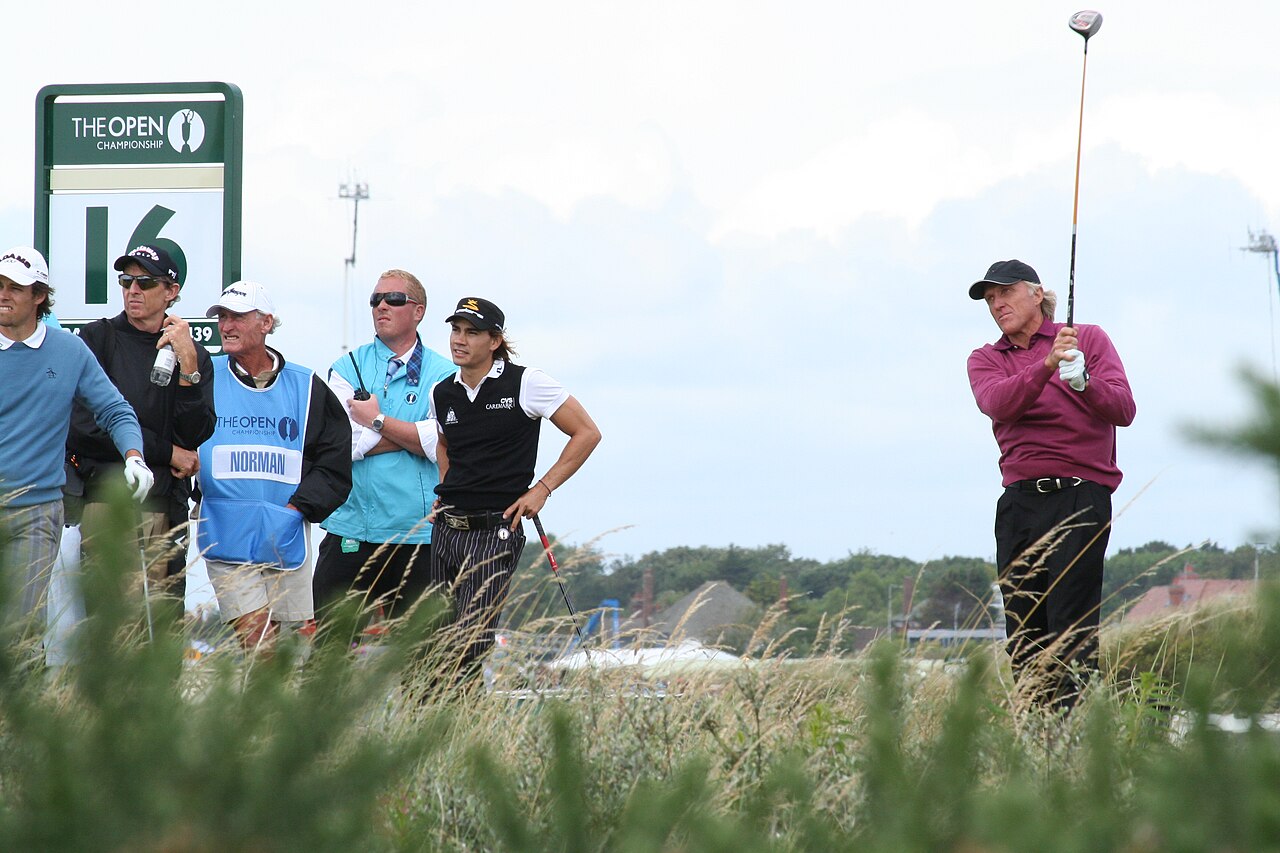
On October 27, 2026, GOLF.com revisited a Greg Norman lesson originally published in the October 1995 issue of GOLF Magazine. The distinction matters: this is not a new biomechanics study or a newly recorded coaching session. It is a contemporary revisit of the personal swing changes Norman described after struggling with driving consistency.
Norman wrote about working with Butch Harmon following a difficult 1991 season. Their diagnosis included a stance that was too narrow for him, an excessively long and steep swing, and too much lateral hip motion. His response centred on three things: grip, stance width, and how the hips moved. These were individual solutions, not universal positions every golfer must imitate.
1. A stronger grip is not a tighter squeeze
Norman used a personal variation he called the intermesh grip: the trail-hand little finger sat between the lead-hand index and middle fingers. He also rotated his lead hand into a slightly stronger position.
In golf, stronger refers to hand orientation on the handle, not to gripping with greater force. A change in grip can alter clubface delivery, start direction and shot curvature. That might help a golfer whose clubface is consistently too open, but it could worsen a hook for someone whose face already closes too much. Norman’s preference is not a universal cure for a slice.
Try observing first: at address, check that your hands can hold the club comfortably and note your typical ball flight. Adjust one element at a time, rather than attempting to twist the wrists deliberately during the strike.
2. A wider stance is useful only if it supports motion
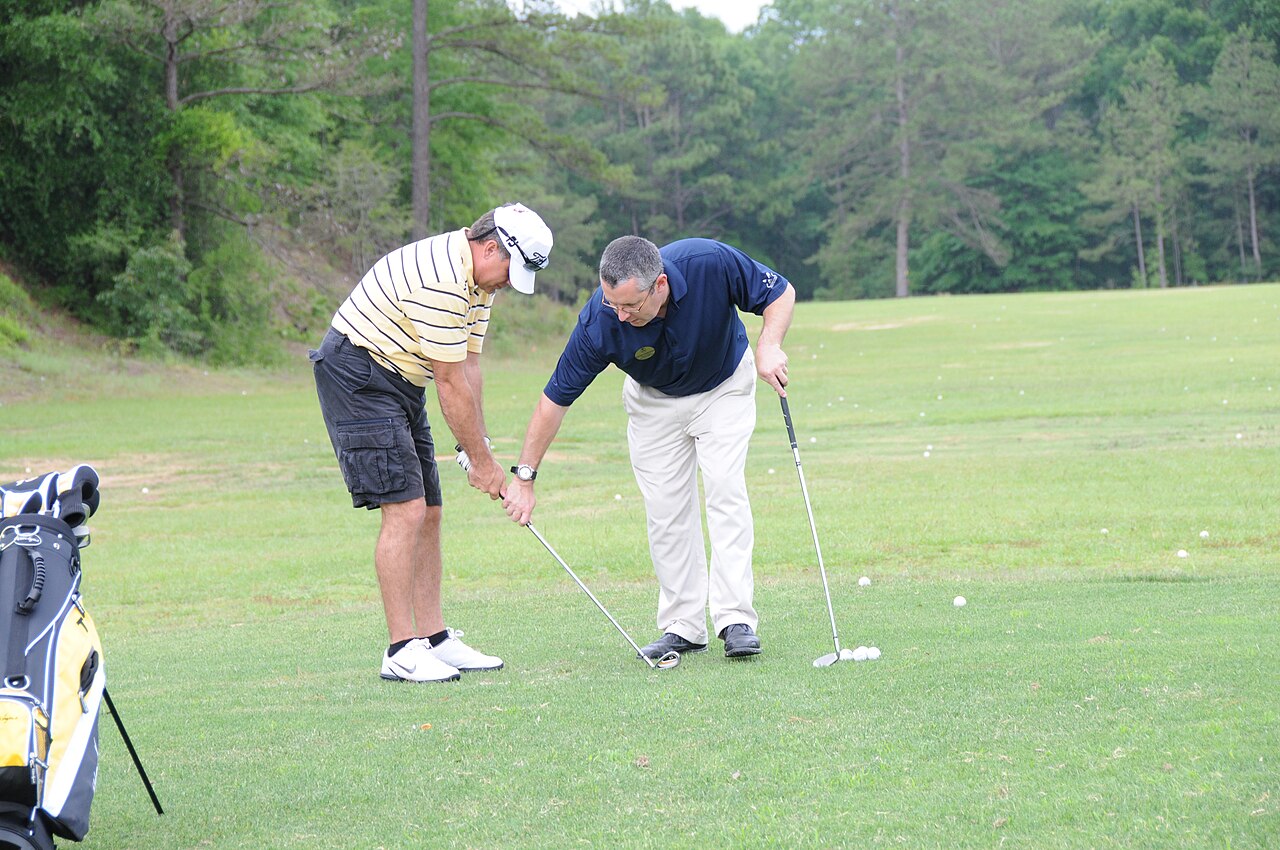
Norman described an extra-wide stance, suggesting roughly shoulder-width spacing measured between the inside edges of his heels. What mattered to him was the function: a more stable base helped reduce unwanted sway, shorten an overlong backswing, and allow a better hip turn.
A stance that is too narrow may compromise balance; one that is too wide can restrict rotation or make shifting pressure to the lead side more difficult. Stance width depends on the individual, the club and the intended shot. A photograph of a champion is not a personalised fitting guide.
Try observing first: make slow, ball-free practice swings with your usual stance and then a slightly wider one. Compare balance and freedom to turn. Do not judge an adjustment by one unusually long drive.
3. Shifting toward the lead side is not the same as spinning the hips
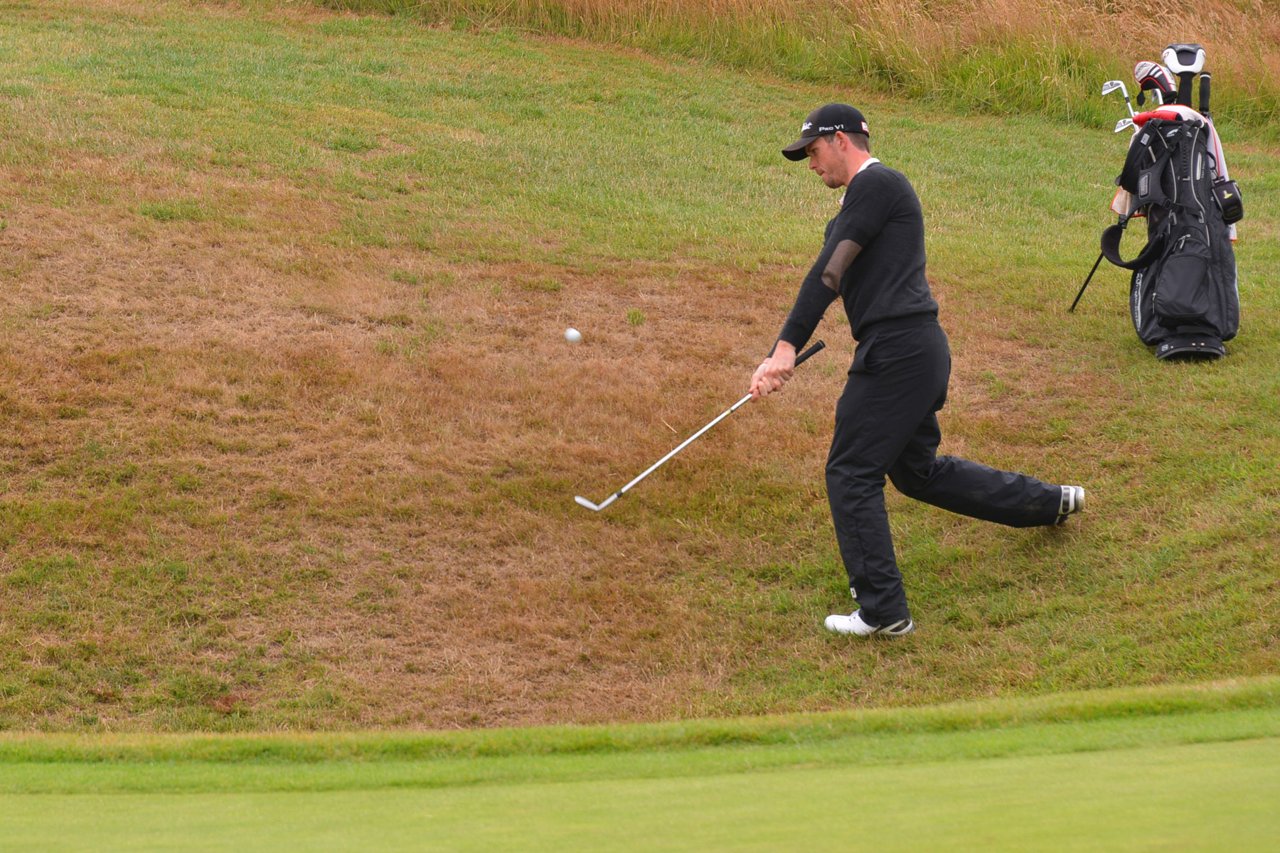
Norman also discussed reducing excessive lateral hip sliding and developing a more coordinated turn. The 1995 lesson described a rotation rehearsal while holding a ball. That is an illustration of his coaching feel, not a scientifically validated training programme.
In a functional downswing, pressure shifting toward the lead foot and pelvis rotation can occur together. The instruction to turn should not be interpreted as spinning the hips violently in place or eliminating every degree of lateral motion. Individual mobility and technique matter. Pain or physical limitations warrant advice from a qualified professional.
Try observing first: rehearse a comfortable turn without a club or heavy medicine-ball throws. Then check whether you can finish a relaxed swing in balance.
A 24-drive A/B check for the practice range
This is an editorial comparison exercise, not a research-validated test. Choose one idea to explore, such as a small adjustment to stance width. Changing grip, stance and hip action at the same time would make feedback difficult to interpret.
- Drives 1–6: baseline. Record start direction, curve (draw or fade), approximate carry and lateral miss.
- Drives 7–12: one change. Make a few slow rehearsals, then hit shots at a comfortable effort level.
- Drives 13–18: return to baseline. This helps guard against treating one lucky drive as proof.
- Drives 19–24: repeat the change. Compare ordinary misses across both sets, not just the best ball.
Use the same target, ball type and as-consistent-as-possible conditions. With a launch monitor, note carry and dispersion; without one, track start direction, fairway/left/right outcome and approximate landing area. Twenty-four drives remain a small, weather-dependent sample; they cannot establish that a swing change works. They can help you ask a better question in your next coaching session.
The lasting lesson
The useful takeaway from Norman’s 1995 account is not that everyone needs his grip or his stance width. It is the method: identify a recurring miss, test a specific adjustment, and judge the pattern rather than a single highlight shot. Norman himself described changes that were developed for his game, alongside Butch Harmon.
Source: Zephyr Melton, GOLF.com, October 27, 2026, revisiting Greg Norman’s October 1995 GOLF Magazine instruction.