A landing target is not the same as the finishing position
A pitch can land on the intended spot yet run past the hole. The final position combines airborne carry and what happens after the first bounce, including slope, firmness, moisture and spin. Practising solely against the final resting place can conceal which part of the shot you have actually controlled.
On 23 October 2026, Women & Golf published a short lesson by LPGA Professional Kelley Brooke on the setup and technique behind longer pitch shots. The accompanying explanation asks golfers to review their address and practise with a clear landing target. It does not present trial results, fixed yardages or a universal wrist-position rule. The exercise below is therefore an original GOLFTWITT editorial check, not a drill or numerical prescription attributed to Brooke.
What should be measured?
For each shot, distinguish first landing distance (carry to the first bounce) from total distance (where the ball stops). Both matter on the course, but the first measure isolates a different part of the task. Decide where the ball should land before taking your stance.
Start with one familiar wedge and the same type of ball. Keep lie, target and general effort reasonably consistent. Changing the club, grip, stance and swing length all at once makes observations hard to interpret. Wet turf and gusting wind introduce additional variation.
The editorial 24-ball test
Select three reachable, safe first-bounce targets, for instance 12, 20 and 28 metres, adjusting the numbers to your own ability and practice area. Use visible markers. After a few ball-free rehearsals, hit a near, middle and far shot in that order, repeating the cycle four times. These are the first 12 shots.
Before the second half, review only your initial address, ball position and target selection; do not attempt a wholesale swing reconstruction. Repeat four more near–middle–far cycles. You now have eight attempts at each distance and 24 shots overall.
For each shot, record the intended carry, approximate first-bounce location and an obvious left/right miss. A spotter or safe side-on video may help. If the first bounce cannot be seen, label it unmeasured rather than substituting the final resting distance. Optional notes can include whether the strike felt clean, heavy or thin.
Interpreting the notes
Before starting, define a landing window—for example within two metres of each target. Count how many shots enter that window and compare the first four against the final four for each distance. Do not treat one better series as proof of a technical cure: a 24-ball session has no control group, and normal variability or familiarity with the task may explain changes.
A consistent long or short miss offers a concrete question to bring to another practice session or qualified coach. It does not automatically diagnose a faulty wrist angle, weight distribution or club. Avoid changing several variables based on one cluster of shots.
What the lesson can—and cannot—claim
Brooke's contribution is professional coaching guidance, not a randomized experiment. The 24-ball method is an editorial self-observation activity, not a validated treatment or guaranteed way to lower a handicap, improve spin or save strokes. Only practise where the flight and landing areas are clear of people.
Source: Women & Golf, “How to Control Distance When Pitching,” LPGA Professionals / Kelley Brooke, 23 October 2026. https://womenandgolf.com/instruction/pitching-distance-control/
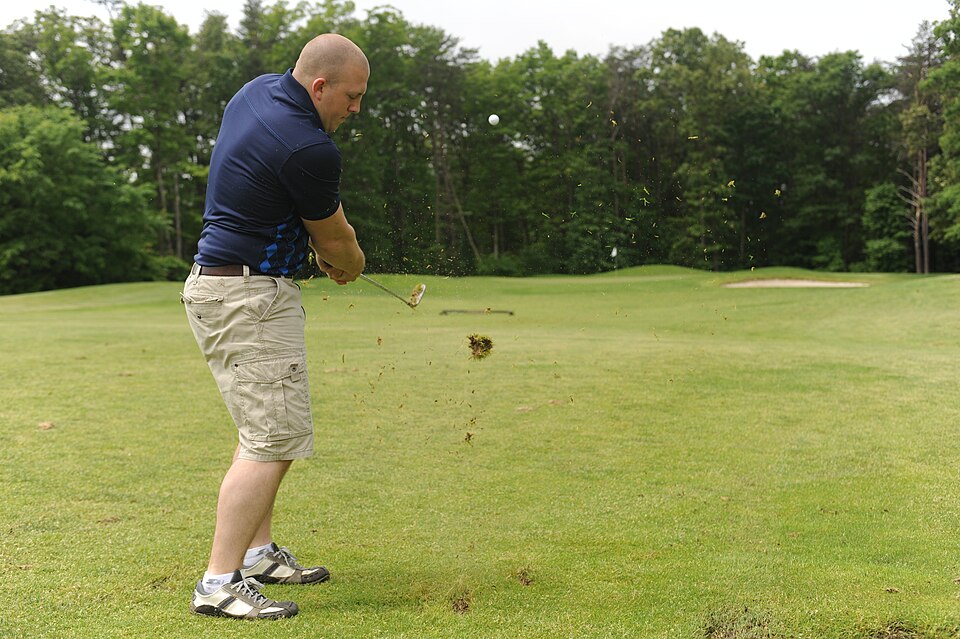
Image: A separate archival photo shows Jake Oldham using a pitching wedge in a 2010 golf tournament; it does not depict Kelley Brooke’s lesson. Photograph by Cpl. Joseph Cabrera / U.S. Marine Corps, Wikimedia Commons; work of a U.S. federal employee in official duties, public domain in the United States. https://commons.wikimedia.org/wiki/File:USMC-100519-M-4046C-001.jpg
Read more on this topic
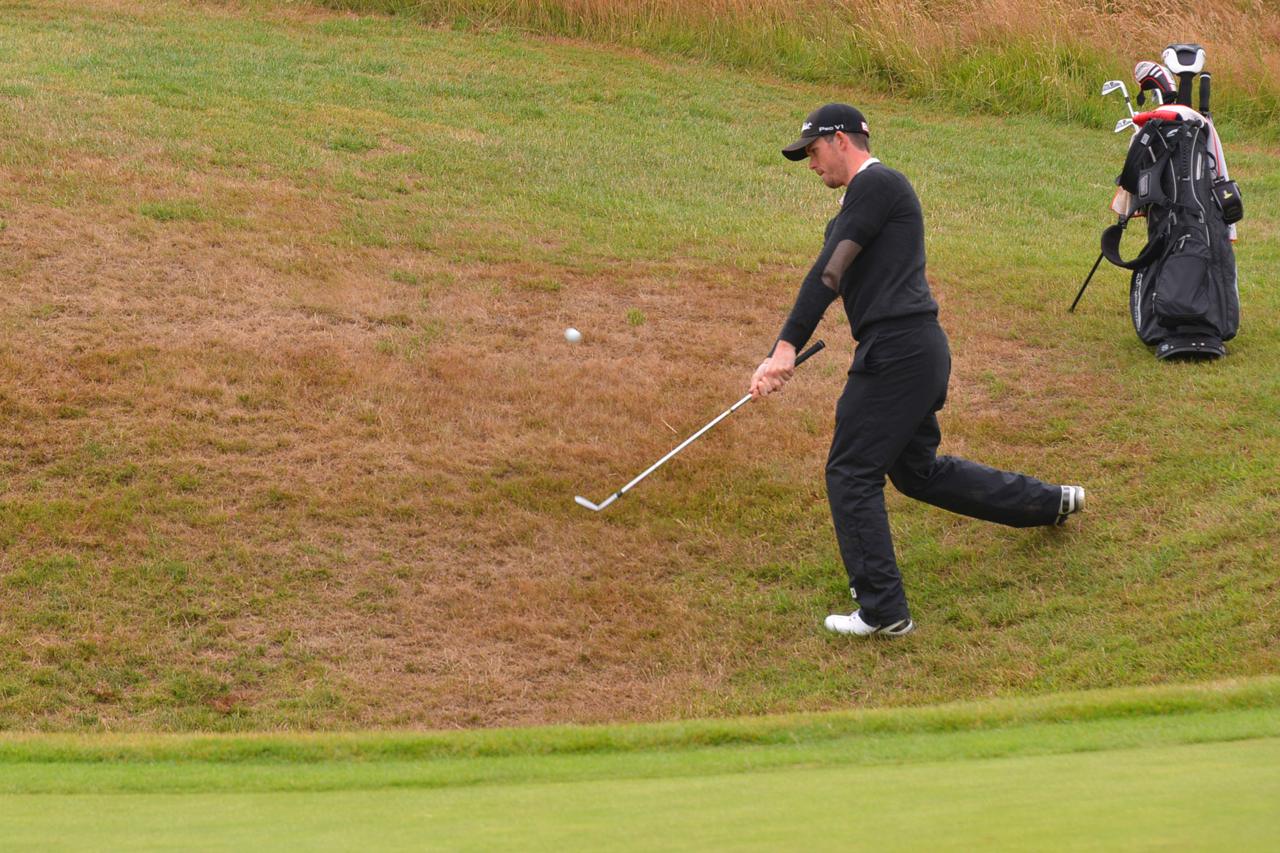
Two ways to hit a flop shot: Debbie Doniger's coaching keys and a 24-ball practice
A high, soft-landing flop shot can help when the flag is short-sided—but the safer option may be a chip. Explore Debbie Doniger's two setups, when to avoid the shot, and a measured 24-ball practice.
When Your 5-Iron Adds Almost No Distance: Lessons From 495 Tester-Years
A MyGolfSpy analysis of 495 tester-years (2017–2026) found that slower swings do not necessarily make 5-irons harder to strike, but can shrink their carry advantage over a 7-iron. The evidence, caveats and a practical 24-shot check.
Putting and neurofeedback: what 12 trials involving 424 golfers really found
A review of 12 randomized trials (424 participants) found encouraging putting-training results, but 94% heterogeneity makes sweeping claims unsafe. We examine EEG neurofeedback and a practical 24-putt observation routine.

Two gates on the green: how to investigate a missed putt
Tour putting coach Stephen Sweeney uses two gates to reveal where a breaking putt strays from its intended line. Learn the setup, limitations and an optional 24-putt self-check.