
How Do Golf Courses Assign Stroke Index to Each Hole?
The stroke index on golf holes is not just random numbers. A complex system of rules and recommendations, designed to ensure fair play with handicaps, lies behind their distribution. From the triad system to the influence of local knowledge, learn how golf courses determine where players need extra strokes most.
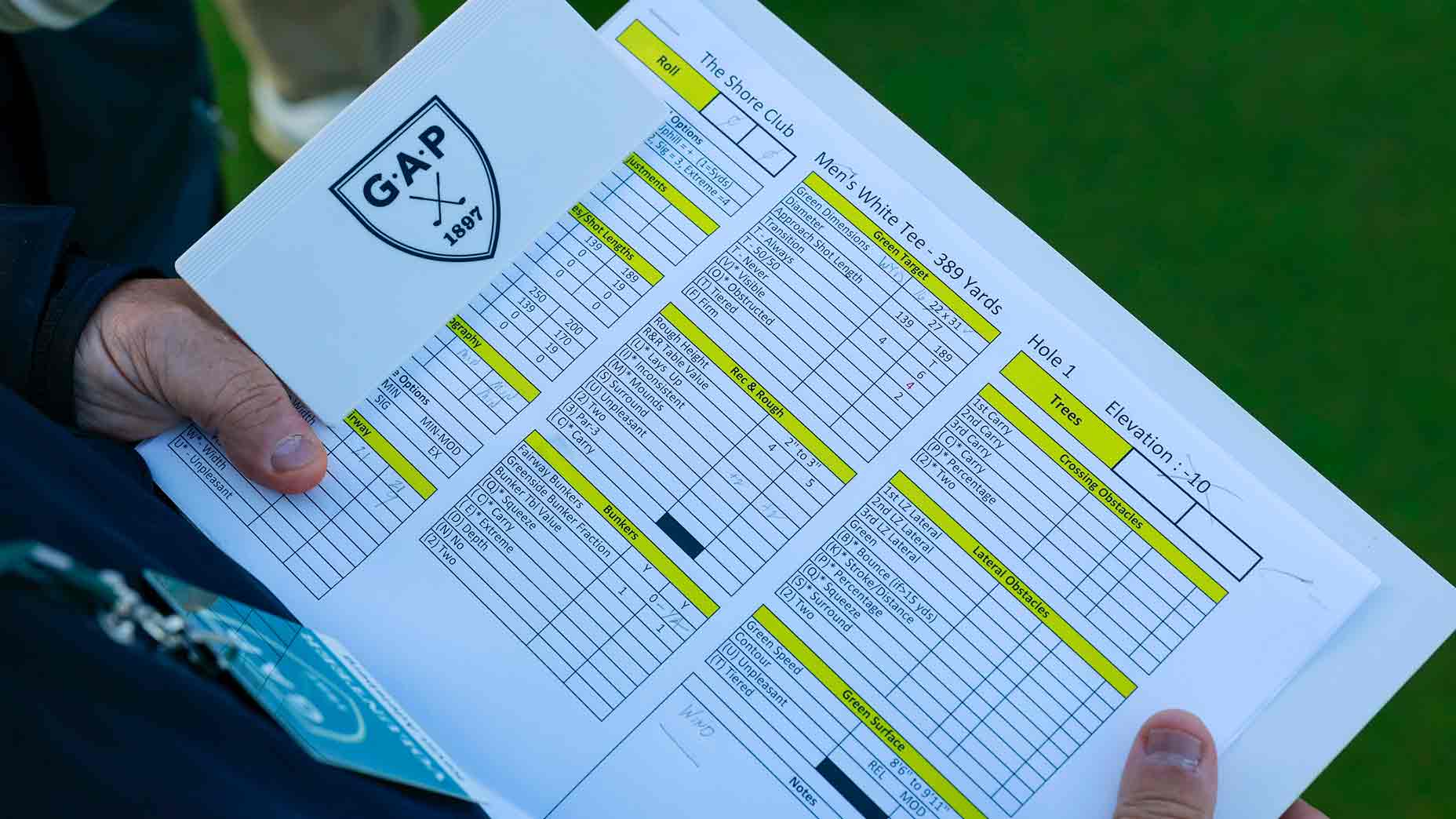
- However, with the advent and implementation of the World Handicap System WHS , this process has become standardized and more objective, though an element of local knowledge and "artistry" still plays a crucial role.
- The Triad System: An 18-hole course is divided into six "triads" groups of three holes .
- Indexes 1, 2, 3 are distributed among the holes of one triad, then 4, 5, 6 for the next triad, and so on.
- Front and Back Nine Separation: For each nine the front 9 holes and the back 9 holes , indexes should be distributed relatively evenly.
Determining the stroke index for each hole on a golf course is a more complex and scientific process than it might initially appear. While many players take these numbers on their scorecard for granted, there's an entire system of rules and recommendations designed to ensure the fairest possible play when handicaps are considered. The purpose of the stroke index is to distribute the extra strokes a handicapped player receives relative to a scratch player evenly across the entire course, rather than concentrating them on only the toughest holes.
Historically, stroke index allocation often came down to the subjective opinion of a club committee or even a single professional. However, with the advent and implementation of the World Handicap System (WHS), this process has become standardized and more objective, though an element of local knowledge and "artistry" still plays a crucial role.
Key Principles of Stroke Index Allocation:
-
The Triad System: An 18-hole course is divided into six "triads" (groups of three holes). Indexes 1, 2, 3 are distributed among the holes of one triad, then 4, 5, 6 for the next triad, and so on. This helps to spread the "toughest" (low indexes) and "easiest" (high indexes) holes evenly across the course.
-
Front and Back Nine Separation: For each nine (the front 9 holes and the back 9 holes), indexes should be distributed relatively evenly. Typically, odd indexes (1, 3, 5...) are used on the front nine and even indexes (2, 4, 6...) on the back nine, or vice versa. This ensures that if a match ends early (e.g., after 9 holes), the stroke distribution will still be fair.
-
Avoiding Consecutive Low Indexes: It's important that holes with the lowest stroke indexes (e.g., 1 and 2) are not positioned consecutively. This prevents a situation where a handicapped player receives two or more extra strokes on two adjacent holes, which could significantly impact the outcome.
-
Distribution by Difficulty: The stroke index primarily reflects where a high-handicap player would most need an extra stroke. This isn't necessarily the longest holes or those with the most challenging obstacles for a professional. For instance, on a very long par-3, even a good player might struggle, whereas a high-handicap player might simply not reach the green. On a short but technical par-4, requiring precision, a handicapped player might lose more strokes due to errors.
-
Consideration of Hole Par: While not a rigid rule, the most difficult holes (low indexes) are rarely par-3s. They are often long par-4s or challenging par-5s, where there are more opportunities for a handicapped player to pick up extra strokes.
-
Local Knowledge and Statistics: Despite all mathematical and statistical models, the experience of club committee members and local professionals plays a key role. They are best acquainted with which holes pose the greatest difficulties for most players, especially those playing with a handicap. Statistical data from played rounds can also help identify where players most frequently post high scores.
The Goal of Fair Distribution:
The ultimate goal of this entire process is to ensure fair competition among players of varying skill levels. If the stroke index is incorrectly distributed, a handicapped player might gain an unfair advantage or, conversely, be unfairly disadvantaged. For example, if all the most difficult holes for a handicapped player have high indexes (meaning they don't receive extra strokes on them), they will be at a disadvantage. Conversely, if the easiest holes have low indexes, they will gain an undeserved advantage.
A correctly determined stroke index allows handicapped players to receive their extra strokes precisely where they need them most, creating an even playing field for all participants in a match or tournament, regardless of their handicap. This is one of the most crucial elements that makes the golf handicap system unique and universal.
Read more on this topic


