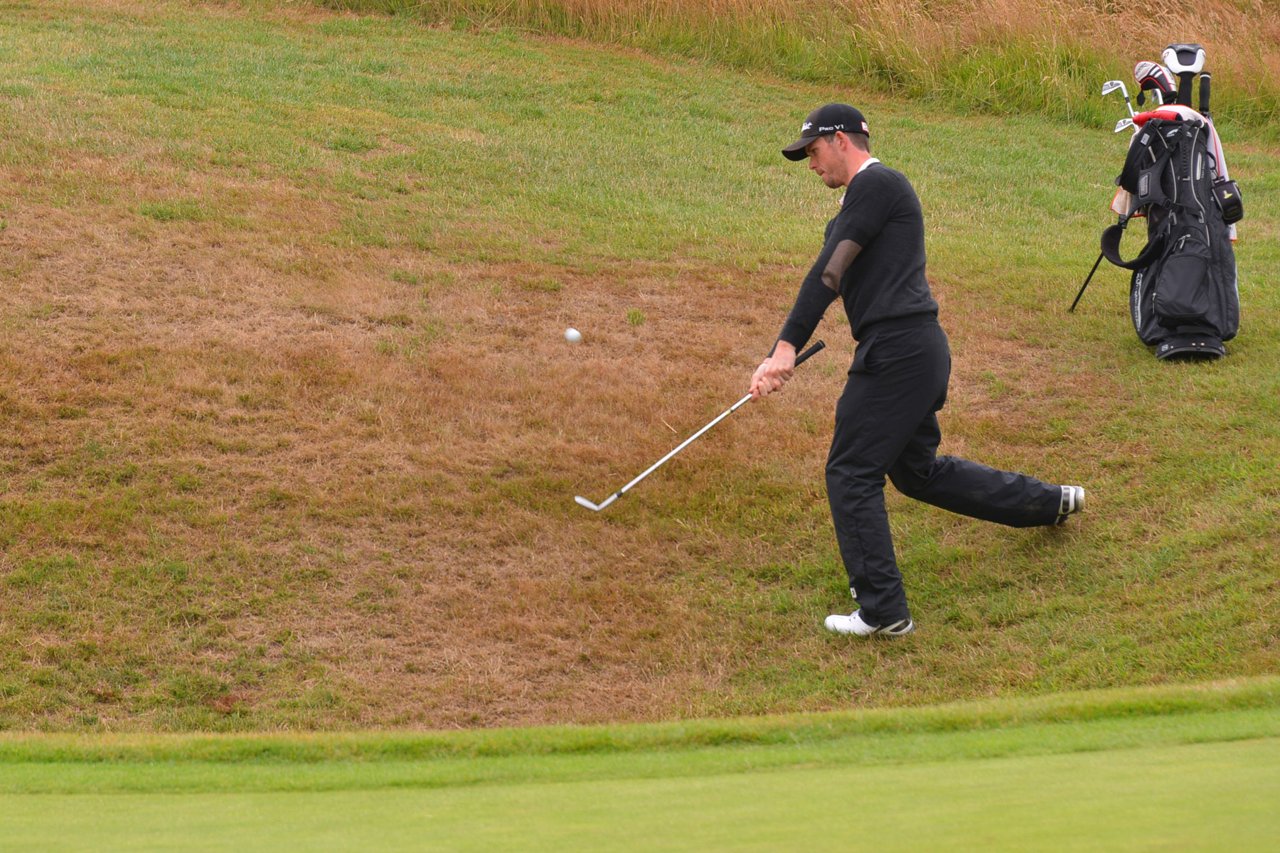
On 23 September 2026, Titleist released a three-minute lesson by coach Joe Plecker, titled “Cradle Drill for Pitch Shots.” The lesson addresses a familiar short-game mistake: trying to lift the ball over trouble by scooping it upward with the clubface. Instead of producing controlled contact, that action can leave a golfer vulnerable to thin strikes, bladed shots or hitting the ground before the ball. Plecker's Cradle Drill is intended to help players coordinate the chest, shoulders and hands through a short pitch.
Why scooping can undermine contact
The loft of a wedge already helps launch the ball when the club makes suitable contact. If a golfer moves the upper body away from the target and tries to flip the clubhead upward, the low point of the swing may become unreliable. The lesson describes that particular pattern; it does not establish a single impact posture that every golfer must copy.
A pitch generally uses more carry than a low-running chip, but neither the label nor a fixed yardage determines the best shot. The ball's lie, turf, landing area and trajectory all matter. Wedge loft and bounce affect the club differently and should not be confused with the ball's launch angle.
Four elements of Plecker's Cradle Drill
1. Setup. Place the clubface behind the ball with pressure favoring the lead foot. This is not an invitation to lunge toward the target or lock the hips.
2. Body motion. Rehearse a short movement without a ball. Feel the chest and shoulder rotation helping the sweet spot travel through the strike zone. Avoid deliberately lifting the ball with the wrists.
3. Handle path. Plecker describes the hands traveling along a J-shaped path: after moving through the ball, the handle rises and moves inward with the body's rotation. This is a coaching image, not an instruction to force the club along a rigid geometric track.
4. Balanced finish. Let the trail shoulder continue around toward the target within a comfortable range. There is no need to freeze the head or push through pain.
An 18-ball practice check
The following is an original GOLFTWITT practice comparison, not a test conducted or validated by Titleist. Choose a safe short-game area, one wedge and a realistic landing spot. Keep the lie and surface as similar as possible.
Balls 1–6: your normal pitch. Observe whether the club strikes the turf before the ball, how often contact feels thin, and whether the ball lands beyond or short of the chosen spot. Do not change your technique halfway through.
Balls 7–12: a Cradle Drill rehearsal first. Before each shot, make one or two slow, ball-free rehearsals, turning the chest and allowing the handle to move along a gentle arc. Then play the shot at a comfortable tempo.
Balls 13–18: return to a natural shot. Keep only a cue that appears useful, rather than overthinking the rehearsal. Compare the groups for clean contact, landing dispersion and physical comfort.
Six balls per group cannot prove improvement. They can reveal a pattern worth discussing with a qualified coach. If contact deteriorates, return to the movement you can control.
Conditions that change the answer
Deep rough, a sloping lie, soft turf and bunkers each alter the interaction between club and ground. Do not assume a cue practiced on level turf applies everywhere. For a pitch over a hazard, confirm that the practice area is safe and the planned landing spot is realistic.
Bottom line: Plecker's lesson is not a promise of instant short-game improvement. It offers a way to notice whether the body and club are working together or whether you are trying to scoop the ball into the air. Judge the idea by repeatable contact and measured results, not by how dramatic a rehearsal looks.
Source: Titleist, Joe Plecker, “Cradle Drill for Pitch Shots,” 23 September 2026.