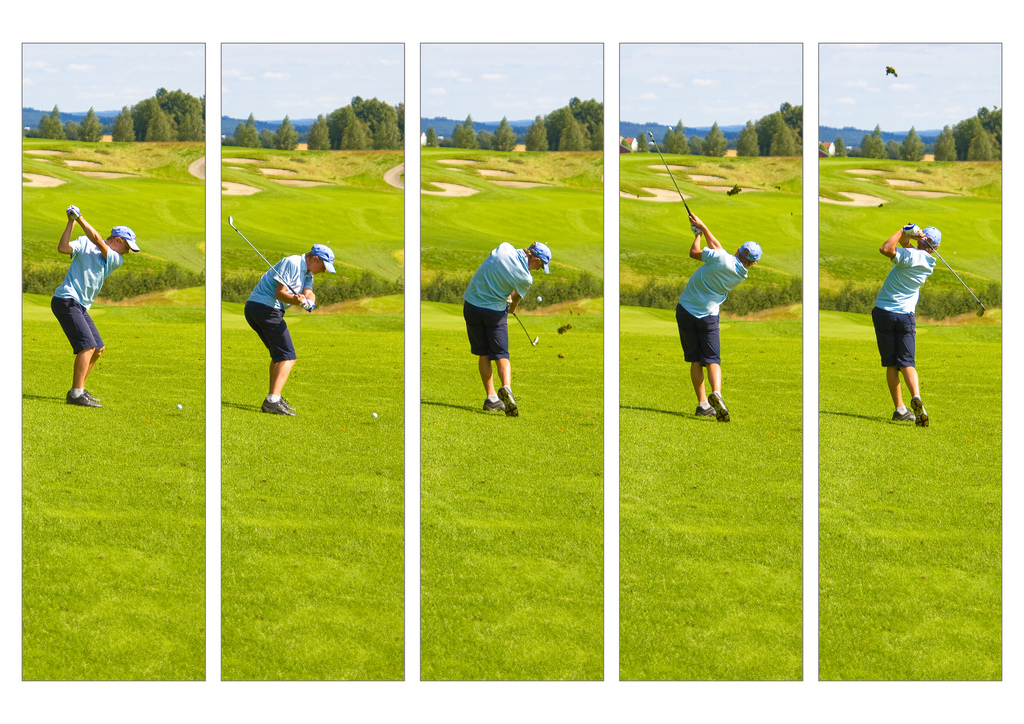
Driver vs. 5- and 7-irons: a study reveals different lower-body movement patterns
A new study compares driver, 5-iron and 7-iron swings in 15 skilled golfers. Learn what foot-force and knee-motion measurements show, what they cannot prove, and how to observe your game.
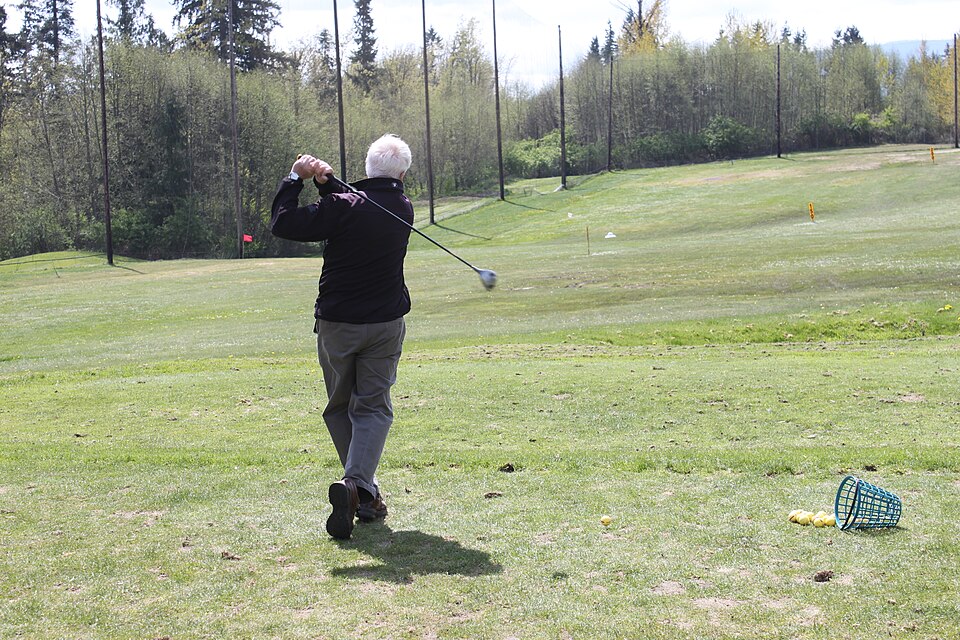
Why lower-body movement is not identical across clubs
“Make the same swing with every club” is a useful simplification only up to a point. Club length, ball position and the purpose of the shot differ. On 24 September 2026, the International Journal of Sports Medicine published Lower Limb Biomechanical Characteristics During Swing in High Skilled Male Golfers. Heng Liu and colleagues measured differences in lower-body mechanics with a driver, 5-iron and 7-iron. The findings can inform coaching conversations, but they do not offer a universal distance fix.
What was actually measured?
The study examined 15 highly skilled male Division I college golfers. Motion-capture and force-measurement methods tracked pelvic movement, knee movement and how force was applied through the feet at different swing phases.
The distinction between mechanics and results matters: the team did not directly measure clubhead speed, power output or shot accuracy. The paper describes how this specific group moved. It does not establish which movement would make any other golfer faster, straighter or safer.
The three club-specific patterns
Driver. With the driver, golfers showed greater early loading through the lead foot and a larger range of pelvic rotation. The authors suggest that this pattern might relate to generating and transferring power. Crucially, that is an interpretation, not proof of extra yards: the relevant performance measures were not part of the experiment.
5-iron. The 5-iron produced a mixed pattern, including particular characteristics of control during the finish and greater trail-knee movement through follow-through. This does not mean golfers should deliberately twist the trail knee. Isolating one joint movement without considering the full swing can create unwanted compensations.
7-iron. Researchers saw a generally steadier ground-force pattern. Greater upward force through the lead foot occurred later in the motion, alongside a distinct rotational demand at the trail knee during follow-through. Any suggestion that this directly improves precision remains tentative because shot accuracy and muscle activity were not measured.
A practical way to observe your own swing
The useful lesson is not “push down earlier with your lead leg.” It is to judge each club on its own terms. Drivers are commonly played from tees while irons are often played from the ground, so starting conditions already differ.
You can try a simple GOLFTWITT editorial observation exercise. This is neither the researchers’ protocol nor a scientifically validated coaching intervention. Warm up, then make four comfortable swings with a driver, 5-iron and 7-iron, using each club normally. Do not force pelvic rotation or deliberately increase pressure on either foot. For each club, record contact quality, initial ball direction, approximate dispersion and your balance at the finish. If filming is permitted, use the same safe camera angle for several attempts.
Compare how repeatable the shots are within one club, not how closely frozen video frames match across all clubs. Ordinary video cannot accurately measure foot pressure or ground-reaction forces. A qualified coach can help relate repeated misses to the complete movement and ball flight.
What this study does not prove
The sample is small and consists solely of highly skilled young men. No long-term training programme was tested, and the findings should not be extrapolated directly to women, juniors, beginners or people with limited mobility. Copying the reported movements has not been shown to increase distance, improve accuracy or prevent injury. Stop movements that cause pain and seek a professional assessment.
Takeaway: skilled golfers may use different lower-body strategies with different clubs. Understanding the variation supports individual assessment, not rigid imitation of one ideal swing.
Source: Liu H. et al., International Journal of Sports Medicine, published online 24 September 2026; DOI 10.1055/a-2965-7293, PMID 42785368. https://pubmed.ncbi.nlm.nih.gov/42785368/
Read more on this topic