Address Is Not Impact: A Practical Iron-Strike Rehearsal Inspired by Dave Phillips
TPI co-founder Dave Phillips explains why address and iron impact differ. Try a slow rehearsal and an editorial 12-ball comparison without forcing shaft lean or claiming guaranteed gains.
On 22 October 2026, Titleist published an instructional video with Dave Phillips, co-founder of the Titleist Performance Institute (TPI), explaining why a golfer's setup should not look identical to the position reached at impact. The lesson also references the impact fix drill associated with Ben Hogan. The useful takeaway is not a single perfect pose: impact is produced by motion, not by freezing the body in an impact position at address.
What changes between address and impact?
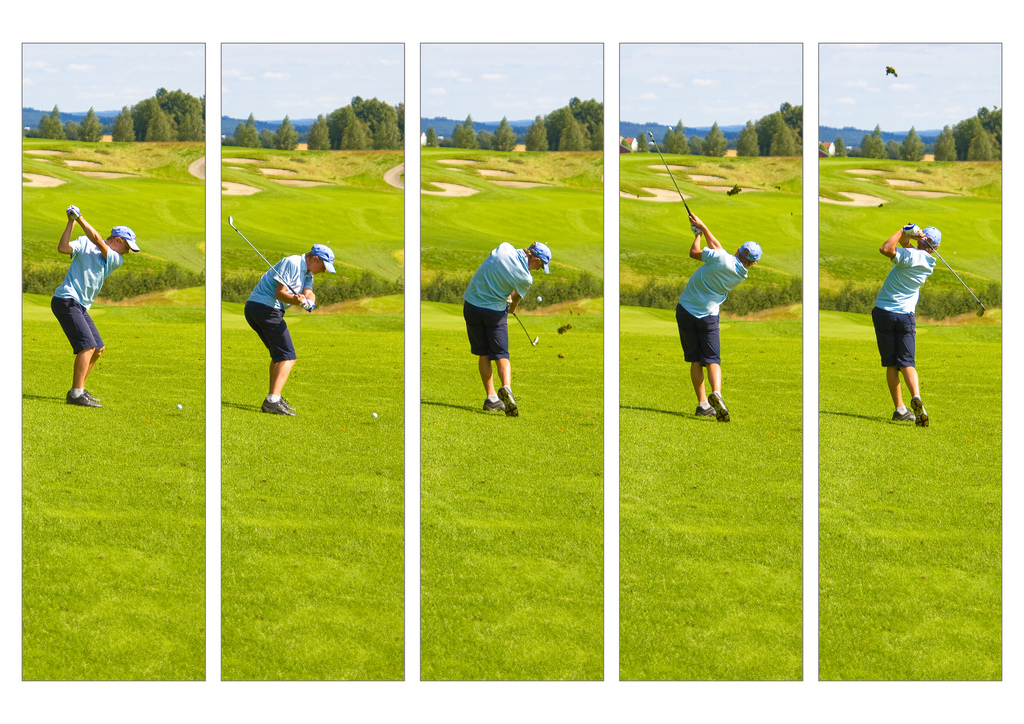
At address, a golfer establishes distance from the ball, posture and balance so the club can move freely. By the time an iron reaches the ball, the picture is typically different. Pressure has shifted more toward the lead side, the pelvis and torso have rotated toward the target, and the handle may be somewhat ahead of the clubhead. Those features emerge during a coordinated swing; they are not rigid requirements that every golfer must match.
For a right-handed golfer the lead side is the left; for a left-handed golfer the positions reverse. How far the body rotates and how much the shaft leans vary with club, intended shot and individual mobility. A still photo of a tour professional is therefore not enough to diagnose another golfer's movement.
Why copying the impact pose at setup can backfire
Shoving the hands far forward or opening the hips toward the target before taking the club away may make the starting position awkward. The opposite mistake is trying to force the hips suddenly toward the ball during the downswing to imitate an image. Neither shortcut guarantees improved contact.
Phillips' lesson encourages golfers to recognise the difference between the two moments. A mirror or a short video can show changes in body alignment, but it cannot accurately measure ground-pressure distribution. Without force-measuring equipment, describe what you feel beneath your feet rather than claiming exact percentages.
A gentle rehearsal without a golf ball
The following is a GOLFTWITT editorial adaptation of the principle, not a word-for-word demonstration from the Titleist video.
- Hold a 7-iron and take your normal address position in front of a mirror on a non-slip surface. Keep a comfortable, balanced stance.
- Make a short, slow backswing, then move toward an imaginary impact position. Do not strike the floor.
- Notice the support beneath your lead foot and the natural turn of pelvis and chest toward the target. The handle may be slightly ahead of the clubhead for an iron; do not wrench your wrists or force shaft lean.
- Let the motion continue into a small finish and check whether you can hold your balance. Repeat five times at an easy speed.
The purpose is to connect the phases of motion, not to hold a static position as long as possible. Stop if you experience pain and seek individual advice if you have mobility limitations.
Exploring the Hogan-style impact fix
The Titleist lesson refers to a drill made famous by Ben Hogan: rehearsing the feeling around impact so it can be integrated into a shorter swing. Start with a few slow, ball-free rehearsals. In a safe practice area, you can then try a small number of half-swings with an iron, using comfortable speed and allowing the club to release naturally. Avoid consciously locking the wrists at impact.
On a normal fairway lie with an iron, a useful sign is ball contact followed by turf contact. The divot need not be large, and artificial mats may show no visible mark at all. Judge strike quality and balance rather than trying to produce a particular-sized divot.
The GOLFTWITT 12-ball check
This comparison exercise is an editorial practice suggestion, not a scientifically validated training protocol.
- Hit four balls with your normal short swing toward one target. Mark each strike as clean, heavy or thin.
- Before each of the next four balls, make one slow address-to-impact rehearsal. Then hit without adding further technical instructions.
- Hit the last four balls normally. Compare starting direction, quality of contact and how well you maintained your balance.
One good shot cannot establish a dependable improvement. If results are mixed, revisit the exercise another day or show your swing to a qualified coach. The aim is to collect observations, not to claim that one motion suits everyone.
Do not apply iron advice automatically to the driver
A teed-up driver creates a different task, with a different ball position and potentially a different angle of attack. Excessive forward shaft lean could make launch conditions worse. The examples here concern mainly a conventional iron strike.
Source: Titleist, “Golf Legend's Swing Impact Drill to Strike the Ball Better,” 22 October 2026. Phillips supplies the central address-versus-impact explanation; the 12-ball comparison is original GOLFTWITT editorial material.
Read more on this topic