Why the claw grip is back in focus
A 4 November 2026 MyGolfSpy feature revisits putting difficulties experienced by Mark Calcavecchia, Chris DiMarco and Bernhard Langer. All experimented with different ways of holding a putter when unwanted hand movements disrupted their stroke. Their experiences do not establish one solution for everyone; they are also not evidence that every missed short putt has the same cause.
Here we focus on the claw grip as a practical technique, using the hand-placement guidance of PGA professional Alex Elliott. It offers a way to assess how much the lower hand influences the putter, not a promise of more holed putts.
Positioning the hands
For a right-handed player, place the left hand toward the top of the putter grip, with the handle resting mainly in the palm and the back of the hand facing the target. Place the right hand below it. Rather than wrapping the right hand fully around the handle, make a gentle pincer between the thumb and the grouped fingers, cradling the grip from the side. Reverse the arrangement for a left-handed player.
This follows Elliott’s teaching. The point is not to squeeze the putter tighter. Changing the lower hand’s contact can reduce the temptation to steer the club with the wrist. The arms and shoulders should move together, while putter-face orientation, strike quality and pace remain central.
A simple comparison on the practice green
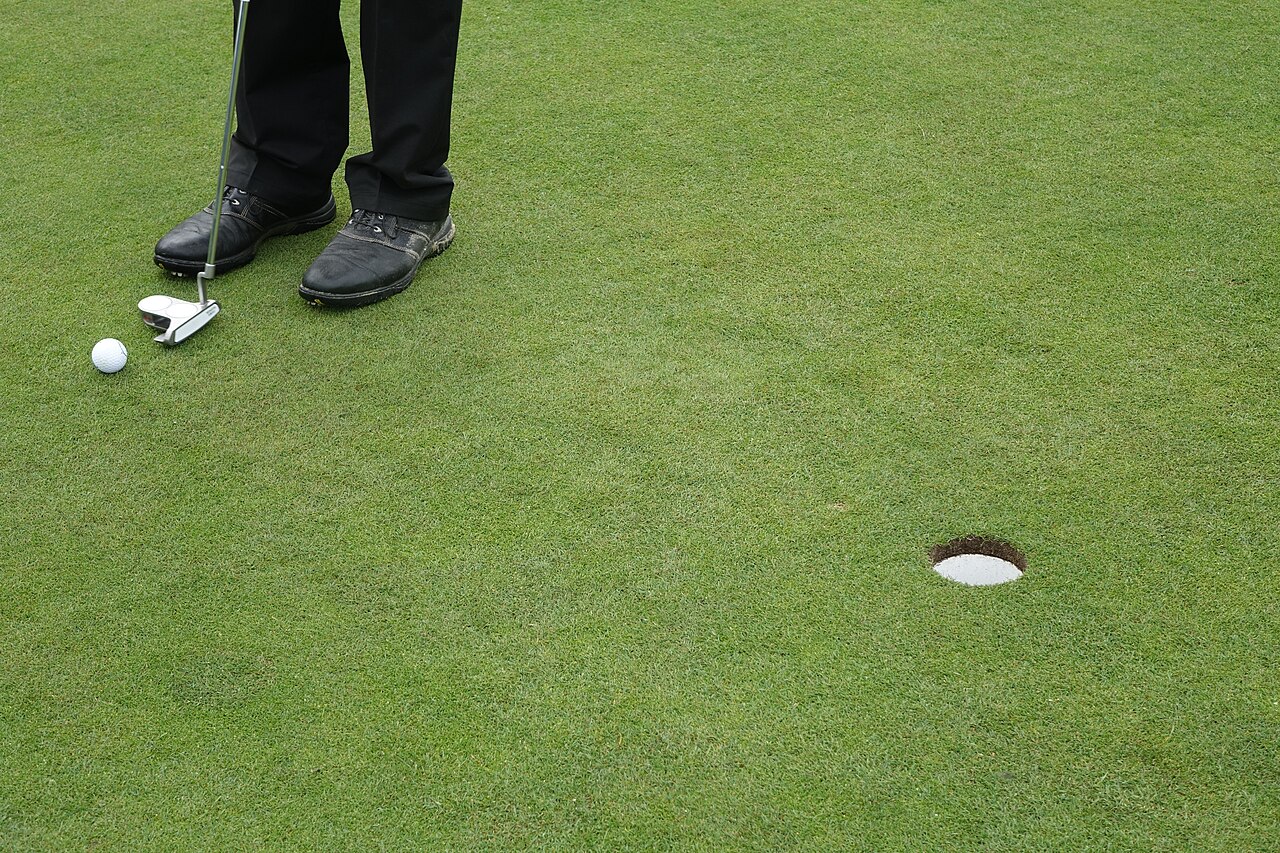
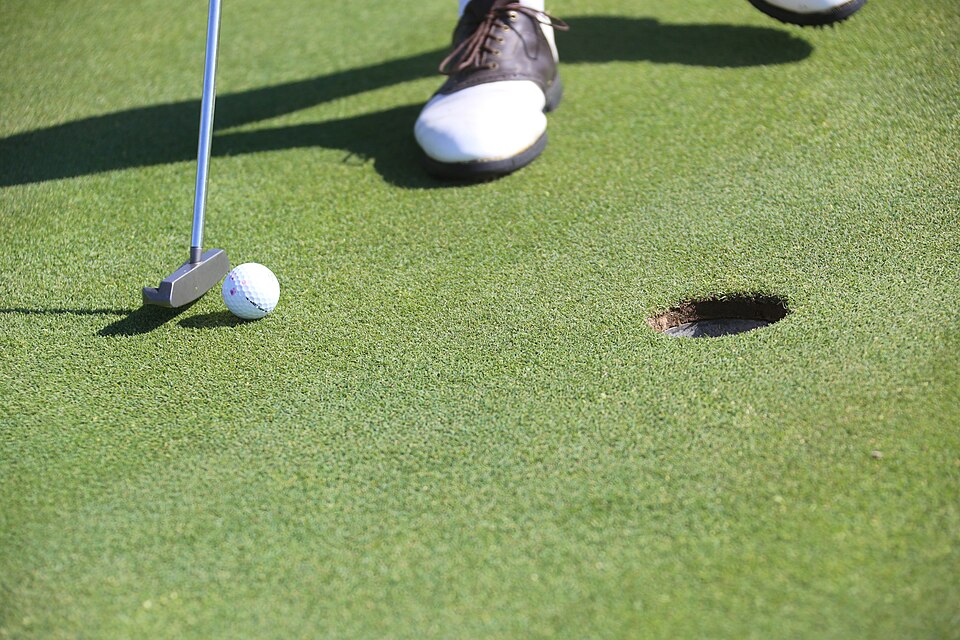
For a self-directed practice comparison, not a medical test, find a relatively straight putt of about 1–1.5 metres. Hit several balls with your normal grip, then the same number with the claw. Observe starting direction and centre-face contact as well as the number of putts holed. Keep your stance, ball position and putter unchanged; altering everything at once makes a comparison meaningless.
Repeat at a longer distance to see whether speed control changes. An unfamiliar grip may change how a backswing feels. This sequence is an editorial practice suggestion, not a clinical trial or a claim that a particular number of repetitions guarantees success.
How elite players make individual choices
Scottie Scheffler told the PGA TOUR that, after work with putting coach Phil Kenyon, he explored the claw mainly for shorter putts. On longer attempts he was more inclined to retain his conventional grip because he trusted his distance control. That is an example of selecting a technique by task, rather than automatically copying a tour player.
MyGolfSpy also recounts different responses from DiMarco, Calcavecchia and Langer. Their hand positions and equipment choices are not identical; it would be inaccurate to present every alternative as the same claw grip.
Grip changes are not treatment for the yips
The yips may involve an involuntary jerk, tremor or brief freezing during the putting motion. The Mayo Clinic explains that causes vary and may include performance anxiety or, in some cases, a neurological movement disorder. Adjusting the grip might help an individual adapt their putting action, but it neither establishes a diagnosis nor guarantees relief. Persistent involuntary movements warrant medical advice; technical stroke questions can be addressed with a qualified golf coach.
Takeaway: test the claw against your usual grip in practice, including both direction and pace, before deciding whether it belongs in your game. A single successful or unsuccessful putt tells you very little.
Sources: MyGolfSpy (4 Nov 2026): https://mygolfspy.com/news-opinion/instruction/what-are-the-yips-why-calcavecchia-dimarco-and-langer-changed-how-they-held-the-putter/; PGA coach Alex Elliott in Golf Monthly: https://www.golfmonthly.com/videos/putting-tips/claw-grip-for-putting-how-it-works ; Scottie Scheffler’s comments, PGA TOUR: https://www.pgatour.com/article/news/latest/2024/12/05/scottie-scheffler-seen-using-new-claw-saw-grip-on-short-putts-putting-stroke-taylormade-change ; Mayo Clinic (25 Sep 2026): https://www.mayoclinic.org/diseases-conditions/yips/symptoms-causes/syc-20379021.