Why the swing plane is not one fixed line
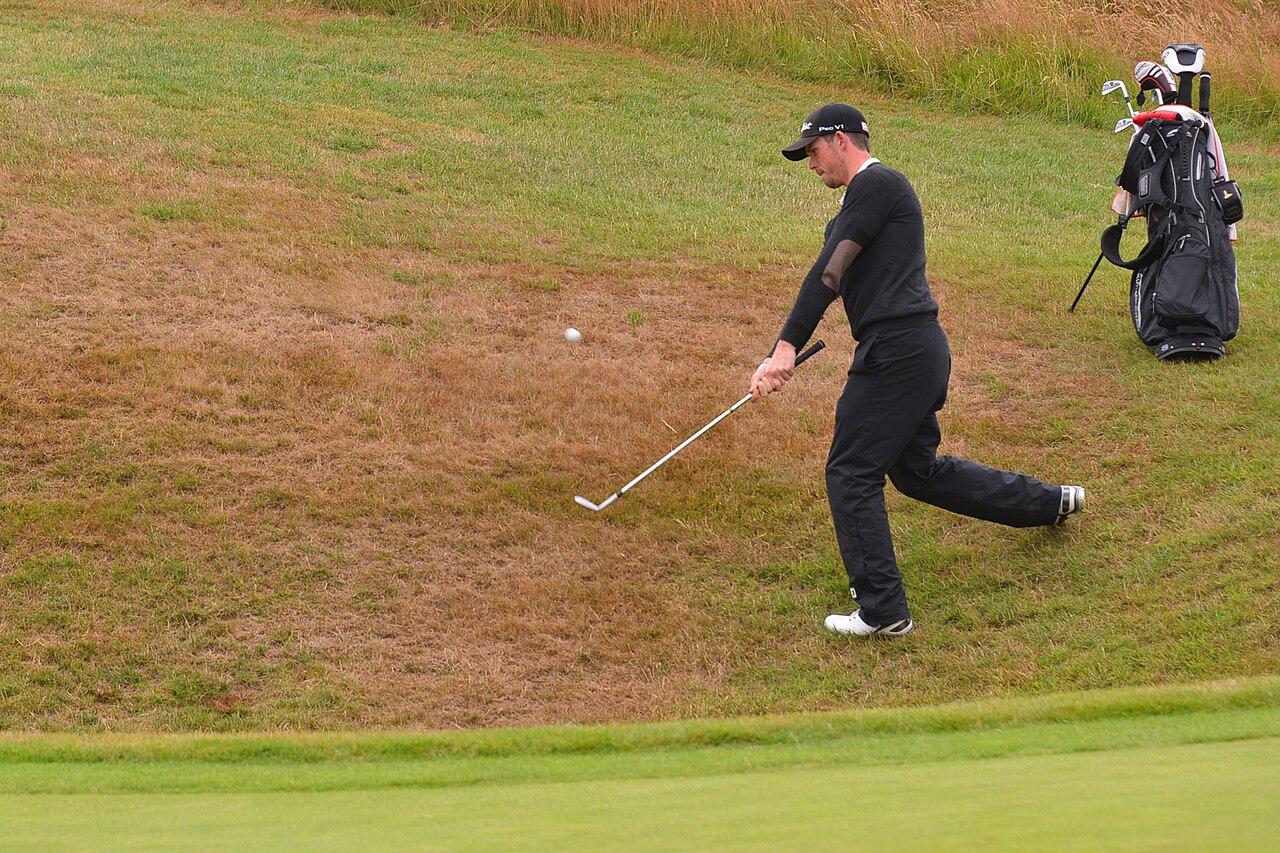
Drawing a line along the shaft at address and asking the club to follow it throughout the swing is an appealing but incomplete coaching model. Biomechanics coach Chris Brook proposes paying attention to the path of the hands relative to the torso, as well as how the shaft changes orientation during the transition into the downswing.
Brook's article, Golf Swing Plane Explained: Why Hand Path Controls Delivery, was first published on 4 March 2026 and updated on 4 October 2026. It is an expert coaching interpretation illustrated by player examples, not a newly published controlled trial.
Several planes, not a single track
The shoulder rotation plane, lead-arm plane, shaft plane and delivery plane describe different aspects of the motion. They need not coincide. The hands are the connection between the rotating body and the club. Their movement relative to the chest can be comparatively consistent even when the shaft changes its angle as the player changes direction.
Brook describes how torso rotation, the trail elbow, wrist conditions and the club's mass distribution interact in transition. In his coaching model, deliberately dropping the hands far below the established path or trying to pin the shaft to a drawn line may create compensations near impact. That does not establish one correct hand path for every golfer; nor is every change in shaft angle automatically beneficial.
What to examine on video
Record one view down the target line (down-the-line) and another face-on, leaving enough room to capture the entire club. Keep the camera position, target and club consistent. Look at the sequence rather than judging a single freeze-frame: address, the top of the backswing, transition, the approach to impact and follow-through.
Notice whether the hands make an abrupt extra movement downward or away from the body as the downswing begins, and whether body rotation continues. Then relate these observations to outcomes: strike quality, initial ball direction and shot dispersion. A single two-dimensional video does not accurately measure a three-dimensional hand path, and appearance alone is not a diagnosis.
An 18-shot observation session with an iron
This is an editorial practice exercise, not a scientifically validated intervention or a promise of improvement. Use a safe practice area and an iron you know well.
Shots 1–6: Swing normally. Record contact quality, initial direction and how far each shot finishes from the intended target.
Shots 7–12: Use a comfortable slower tempo. Avoid forcing the shaft onto an imaginary line; notice whether the hands and torso move together smoothly. Do not impose a fixed elbow position or identical hand trace on every swing.
Shots 13–18: Return to your usual tempo. Compare strike consistency and dispersion with the first set. If you have a launch monitor, also note carry and start direction, without treating those numbers as the whole story.
Eighteen shots are too few to demonstrate a lasting technical change, and normal variation can influence the result. Stop if you feel pain; persistent contact problems merit an assessment by a qualified coach.
The takeaway
The more informative question is not “Did the shaft stay on my line?” but “How consistently was the club delivered, and how did hand path, torso movement and strike relate?” Brook presents hand path as one useful coaching reference, not a universal rule.
Source: Chris Brook, Golf Swing Plane Explained: Why Hand Path Controls Delivery (published 4 March 2026; updated 4 October 2026): https://www.chrisbrook.co.uk/golf-articles/optimum-biomechanical-swing-plane/