Ball position and distance from the ball are different parts of golf setup. You can place the ball correctly between your feet yet still feel cramped or reach for it. In a lesson published on 31 October 2026, Meredith Kirk, an LPGA Class A teaching professional based in Myrtle Beach, South Carolina, offers a quick way to check the space at address: use your own palm instead of a tape measure.
Measure the right gap
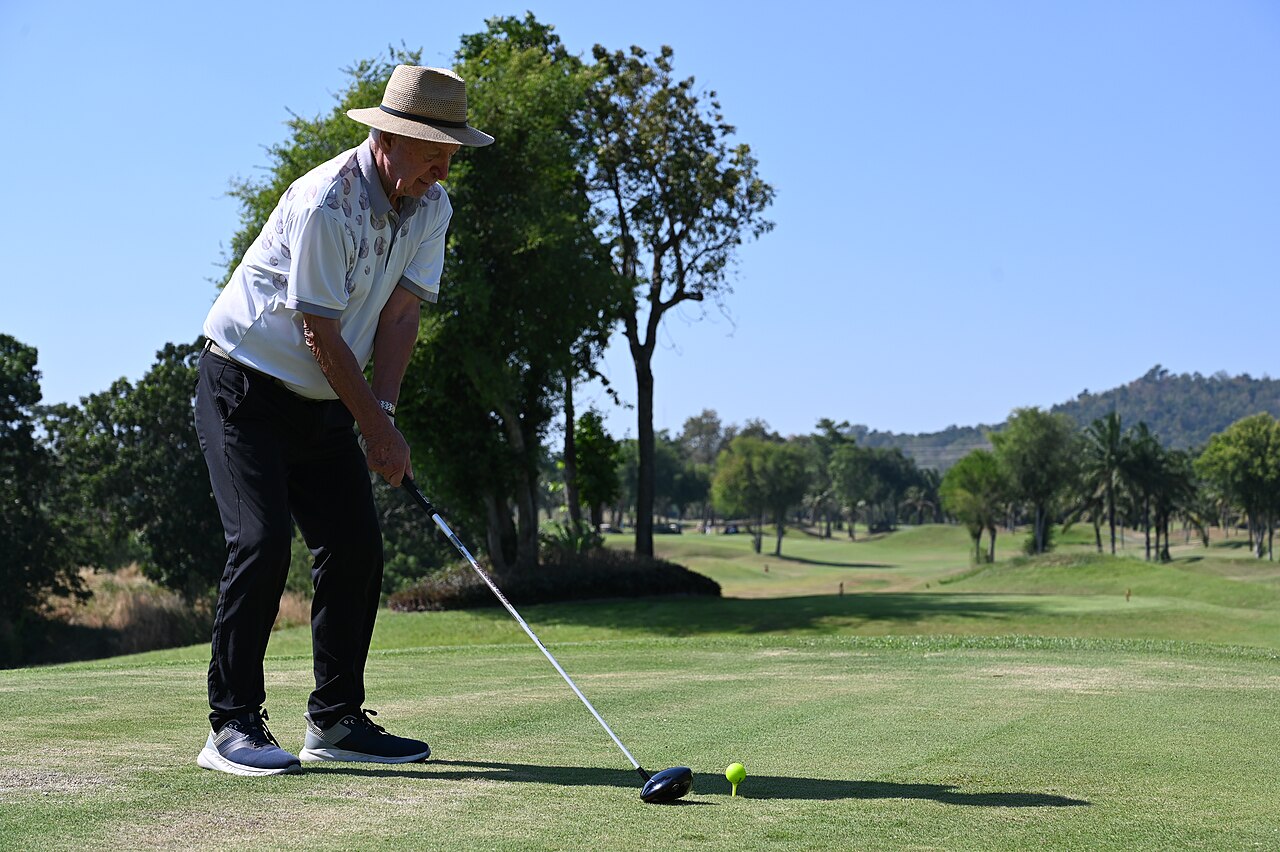
This is not a test of stance width or how far your shoes stand from the ball. Kirk looks at the space between the inside of the lead thigh and the butt end of the club's grip once the player has settled into a natural address position. The lead thigh is the one nearer the target: left for a right-handed golfer, right for a left-handed golfer.
With an iron, her reference is about one palm-width. With a driver, it becomes roughly two to two-and-a-half palm-widths. The longer club generally calls for a different setup and more room. These are coaching reference points, not mandatory measurements for every height, arm length or set of clubs.
A rehearsal before hitting a ball
- Take a familiar mid-iron, rest the clubhead behind a ball and settle into a balanced address without forcing your arms outward.
- Without shifting your posture merely to hit a number, use your palm to check the gap from your lead thigh to the end of the grip. Compare it with Kirk's one-palm reference.
- Repeat with a driver; the reference space is larger, approximately two to two-and-a-half palms.
- Make a few relaxed rehearsal motions without striking the ball. If your hands feel trapped against your body or stretched toward the ball, reset to a comfortable position and consider having a coach check your setup.
Not a substitute for fitting
Palm width is not a fitting specification. Body proportions, shaft length, lie angle, arm hang and posture all influence a workable address distance. Do not force your feet to move merely to create an exact numerical gap. Balance, natural arm hang and the quality of subsequent practice contact matter more than matching a photograph or ruler.
The exercise is useful because it highlights two opposing extremes: a grip crowded into the legs or arms reaching too far forward. It cannot promise straighter shots or an automatic slice cure. It simply gives golfers a practical starting point for testing their setup and discussing it with a teaching professional.
Source: Meredith Kirk, Women & Golf, 31 October 2026. Cross-checked against her earlier handle-distance demonstration published by Myrtle Beach Golf Trips. The no-ball practice sequence is GOLFTWITT's editorial adaptation.