
Tiger Woods’ famous stinger tee shot? Here’s how to hit it with ease
Tiger Woods' iconic stinger shot is a low-flying, penetrating drive that helps control the ball in windy conditions. Golf instructor Craig Harmon breaks down the timeless technique, making it accessible for any golfer.
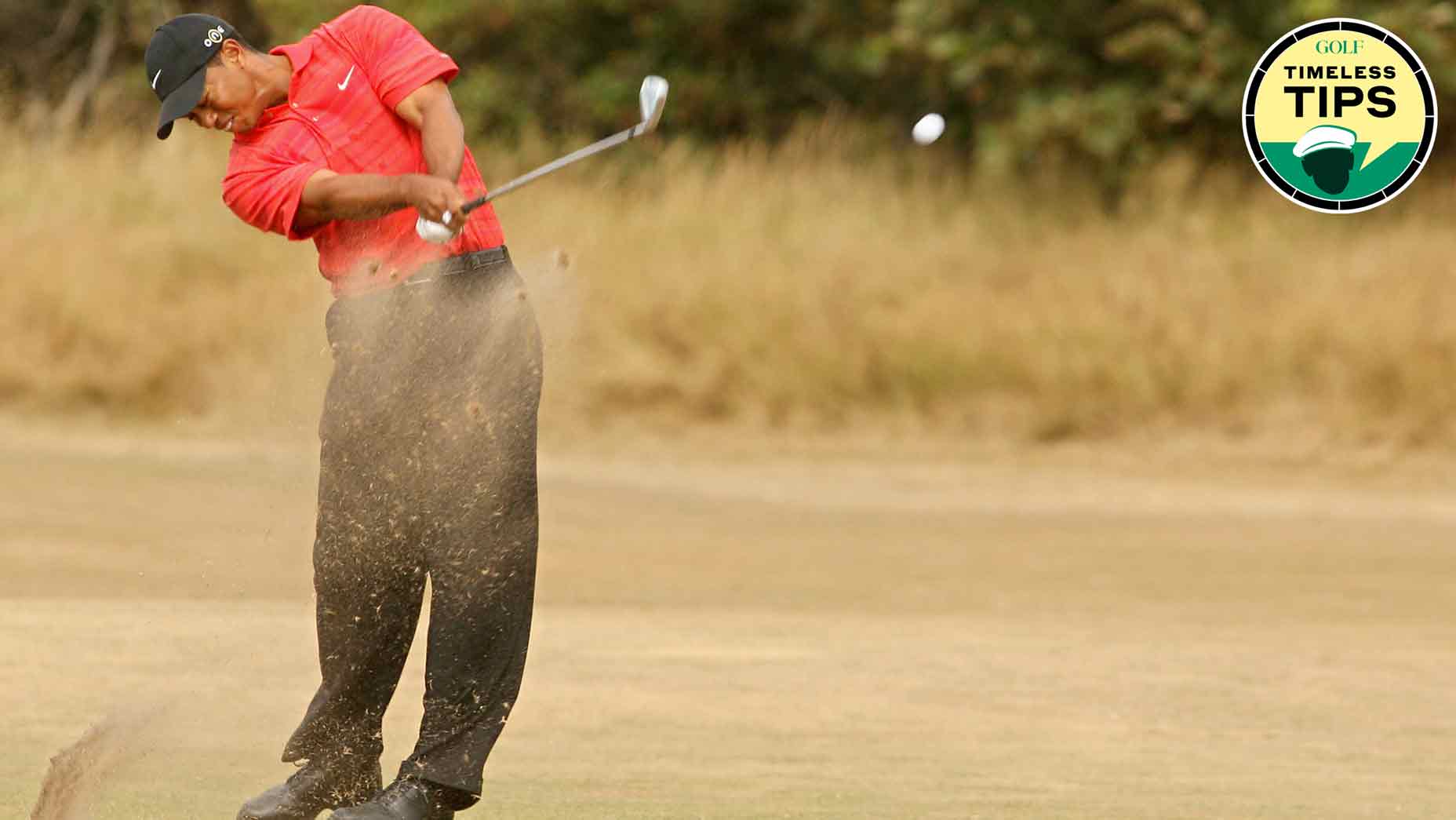
- Tiger Woods' stinger is among the most famous signature shots in all of golf.
- While Woods perfected the shot, its mechanics were known long before him.
- According to Hall of Fame Teacher Craig Harmon, his father, Claude Harmon Sr., taught the shot’s mechanics to many of his students, including his sons.
- In a breakdown from the January 2001 issue of GOLF Magazine, Harmon detailed how to execute the iconic shot, making it accessible to a wider range of golfers.
Tiger Woods' stinger is among the most famous signature shots in all of golf. It’s a low-flying, penetrating tee shot that helps control the ball, especially in windy conditions, making it a staple for links-style golf courses where wind is a constant factor. While Woods perfected the shot, its mechanics were known long before him. According to Hall of Fame Teacher Craig Harmon, his father, Claude Harmon Sr., taught the shot’s mechanics to many of his students, including his sons. In a breakdown from the January 2001 issue of GOLF Magazine, Harmon detailed how to execute the iconic shot, making it accessible to a wider range of golfers.
Why You’d Want to Hit the Stinger
This shot isn’t just for show; it has practical value in several scenarios:
- Windy Conditions: The stinger is ideal for playing in strong winds. Its low trajectory and low spin minimize the wind’s effect, allowing the ball to fly straight and true. Upon landing, the ball tends to roll, providing an extra advantage on shorter to mid-range shots.
- Distance Control: The shot allows for precise control over the ball’s distance, which is crucial on tight fairways or when approaching greens with hazards.
- Versatility: The stinger can be hit with almost any club. While Woods often used a 2- or 3-iron for this shot, a driver or even a fairway wood can achieve similar results. The concept can also be applied to punch approach shots to receptive greens, using clubs down to a pitching wedge.
How to Hit the Tiger Stinger: Craig Harmon’s Technique
The key to successfully executing the stinger lies in proper setup and a sequence of movements. Harmon outlines three main stages:
1. Address: Settle the ‘Y’
- Ball Position: Play the ball a couple of inches farther back in your stance than normal, about 1-2 inches behind center. This will naturally set your hands slightly forward.
- Grip: Choke down about an inch on the grip for added control. This shortens the club and enhances precision.
- The ‘Y’ Shape: With the correct hand and shaft position, your arms and the shaft should form a ‘Y’. This shape should be maintained throughout the backswing.
- Backswing: Make a smooth, full backswing, trying to retain this ‘Y’ position as much as possible. Focus on control rather than speed.
2. Impact: Bow the Wrist
- Wrist Position: The defining characteristic of the stinger is the position of the left wrist at impact. It should be ‘bowed’ (curved toward the target). This means the wrist remains firm and slightly cupped, rather than ‘flipping’ or ‘releasing’ after impact.
- The Feel: To achieve this, Harmon’s father advised students to hit a punch-slice with a long iron, saying, “Hit and stop.” This quick stop after impact is only possible by keeping the wrists firm.
- Maintain the ‘Y’: At impact, your arms should remain in the same relative position to the shaft as they were at address—forming the ‘Y’. This prevents the wrists from flipping or releasing prematurely, which leads to loss of control and unintended ball flight.
3. Finish: Rotate the Torso
- Natural Motion: Once the bowed wrist position is achieved at impact, the finish flows naturally. The trunk and arms continue to rotate to the left, swinging the club around the body.
- Low Draw: Instead of causing a slice, this motion results in a low, controlled draw—a slight curve from right to left. The faster the body unwinds, the farther the ball will travel.
- Different from a Normal Swing: The finish of the stinger is distinctly different from a normal swing. The wrists stay firm, and the left elbow folds down toward the ground. This helps maintain the low trajectory and controlled spin.
Practical Tips:
- Start Small: Don’t try to hit it as hard as possible right away. Begin with shorter, controlled shots, focusing on the technique. Gradually increase swing speed.
- Experiment with Clubs: Try hitting the stinger with different clubs to understand how they behave with this type of shot.
- Practice the ‘Hit and Stop’ Drill: This exercise will help develop a feel for firm wrists and club control.
The stinger is not just a professional’s shot. By mastering it, any golfer can add a powerful and reliable tool to their arsenal for playing in challenging conditions, especially on windy golf courses.
Read more on this topic