
Do you slice the golf ball? This subtle backswing mistake could be why
Many amateurs blame their full swing for a slice, but the root cause often lies in the very first move of the backswing. Top 100 Teacher Joe Plecker shares a simple alignment rod drill to master your clubface control.
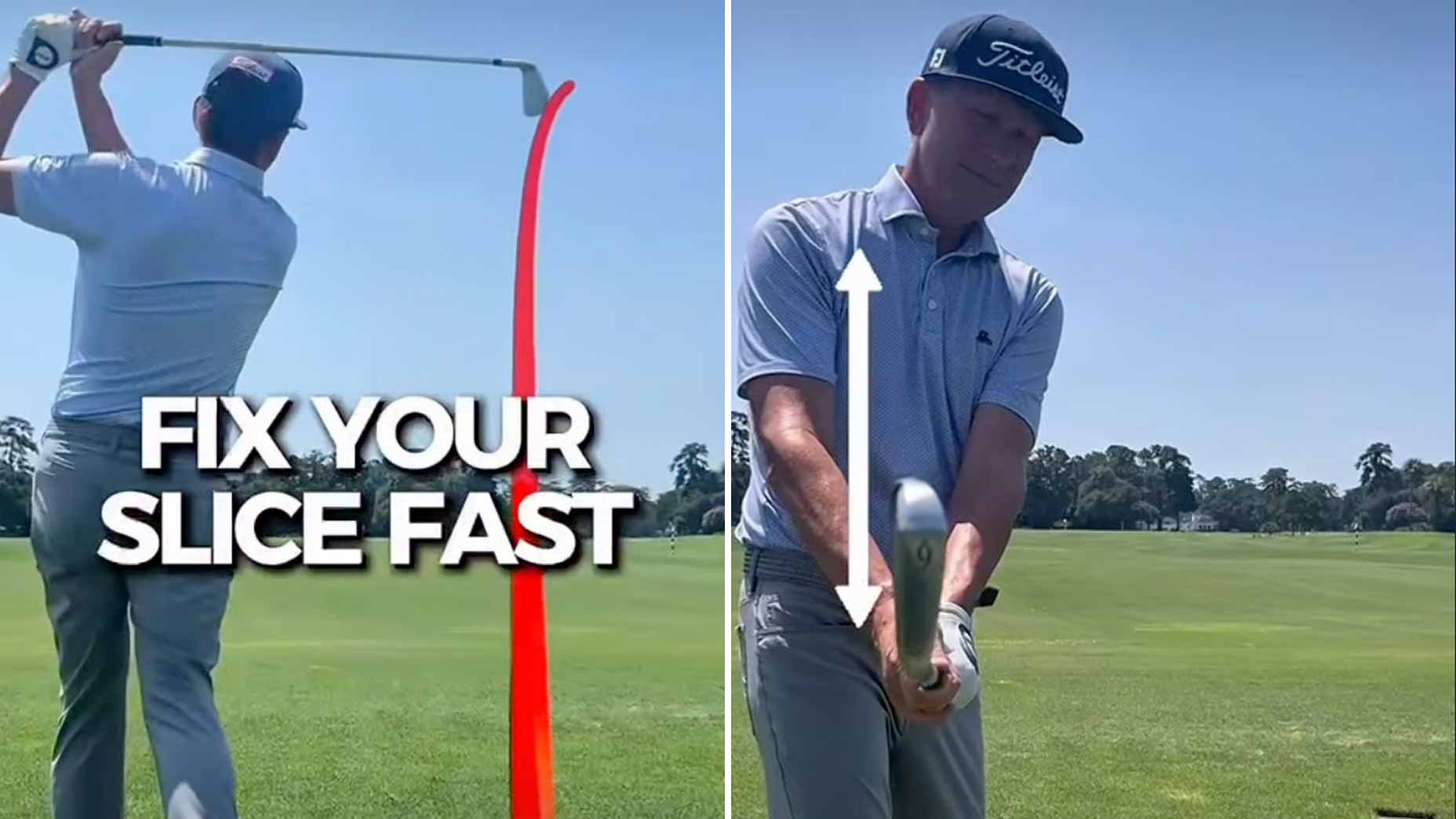
- For many golfers fighting a persistent slice, the instinct is often to overhaul their entire swing, but Top 100 Teacher Joe Plecker points out that the culprit is often much more subtle.
- Joe Plecker emphasizes that most amateurs remain unaware of this error because it occurs during the infancy of the swing, before the momentum of the full motion takes over.
For many golfers fighting a persistent slice, the instinct is often to overhaul their entire swing, but Top 100 Teacher Joe Plecker points out that the culprit is often much more subtle. The core issue frequently lies in poor clubface control during the initial stage of the backswing. As a player initiates the takeaway, the clubface often rotates into a 'toe up' position relative to their posture. While this may look or feel 'square' to the player, relative to their spine angle at address, the face is actually wide open. That small discrepancy in the early movement is enough to cause the ball to slice significantly to the right for a right-handed golfer. Joe Plecker emphasizes that most amateurs remain unaware of this error because it occurs during the infancy of the swing, before the momentum of the full motion takes over. To rectify this, Plecker suggests a simple yet highly effective checkpoint drill utilizing an alignment rod. To set this up, place an alignment rod in the ground just behind the ball at address, angling it to match your spine angle. This rod serves as a vital visual reference point for where the clubface should be pointing during the takeaway. By making small, controlled swings, the golfer can check if the clubface matches the angle of the rod or if it has rotated too far open. This slow-motion phase is critical for the golfer to truly see and feel the difference between the two positions. Plecker advises against rushing into full-speed swings until the feeling is ingrained and consistent. Once the checkpoint position feels reliable, the golfer should gradually progress to larger backswings, eventually building up to a full swing while ensuring the clubface stays matched to the rod’s angle throughout the process. This subtle adjustment can be the missing link for many players, transforming a frustrating slice into a controlled shot directed at their target. In the current era of golf instruction, where the emphasis on distance and speed often overshadows the fundamentals of clubface management, returning to basics like the initial takeaway position remains paramount. This correction is a reliable method for players to move from fighting the mechanics of a slice to hitting the ball with accuracy and confidence.
Read more on this topic


