A winner's words, not just a winning score
On 25 October 2026, Rory Sabbatini closed the Stifel Charity Classic at Norwood Hills Country Club in St. Louis with a nine-under 62, finishing the 54-hole tournament at 14 under (199 strokes). He edged Darren Clarke by one stroke to secure his first PGA TOUR Champions victory. Born in South Africa and competing for Slovakia, Sabbatini became eligible for the senior circuit when he turned 50 earlier in the year.
GOLFTWITT has already reported the tournament result. This follow-up focuses instead on Sabbatini's post-round comments: what he thought when the leaderboard looked discouraging, why he emphasised restraint, and what helped on the decisive final green.
Trying not to interrupt a good round
Sabbatini described the day as a challenge to avoid getting in his own way. Rather than presenting his spectacular finish as something he had willed into existence, he suggested that the task was to let his game operate without unnecessary interference. This is a description of his experience, not a universal instruction for every golfer.
Speaking in the Golf Channel post-round interview, he also stressed how difficult winning remains at every level. Having six PGA TOUR titles behind him did not make a first victory on PGA TOUR Champions automatic. His comments conveyed how significant it felt to cross that line after turning 50.
What the leaderboard showed at the 15th
He started the final day four shots behind co-leaders Henrik Stenson and Mario Tiziani. Sabbatini recalled glancing at the leaderboard before his attempt on the 15th: for a moment the gap appeared to be three strokes, then it widened back to four. At that stage he felt that an extraordinary finish would be necessary.
The ensuing sequence justified that assessment. An eagle at 15 was followed by birdies at 16, 17 and 18. He completed his final six holes in six under par and holed a birdie putt from roughly 40 feet on the last. He also had an eagle at the second, giving him two eagles during the round.
These details matter because the victory was not the product of comfortable scoreboard management. He was still looking for chances while rivals seemed to control the race. Nor do his words imply that he knew the comeback was coming; quite the opposite, he acknowledged how unlikely it had looked.
A putt that helped him read another putt
Sabbatini singled out Vaughn Taylor, his playing partner, for providing a useful read at the 18th. By watching Taylor's ball travel over the green, Sabbatini gained information about the line and pace for his own crucial attempt.
Editorial analysis: this is a revealing detail that can be lost in accounts of a heroic solo finish. The decisive putt required execution, but it also benefited from observing another player's stroke. That is not proof that Sabbatini would otherwise have missed; it is evidence that he himself considered the observation helpful.
What the interview can—and cannot—teach
The win lifted Sabbatini from 23rd to seventh in the Charles Schwab Cup standings ahead of the next playoff event. It also offered a useful illustration of three competitive habits: stay engaged when the leaderboard looks unpromising, concentrate on the next actionable shot, and extract useful information from what happens around you.
A single exceptional round does not establish a scientifically proven mental-game formula. Sabbatini's comments are most valuable as a first-person account of decision-making and emotion under pressure, not a guarantee that the same approach always produces a 62.
Verification: original Golf Channel post-round video dated 25 October 2026. The broadcast comments are paraphrased from contemporaneous reporting by Field Level Media: https://fieldlevelmedia.com/champions_tour/rory-sabbatini-gets-hot-late-wins-stifel-charity-classic-with-62/ . The result is cross-checked against PGA TOUR: https://www.pgatour.com/pgatour-champions/article/news/daily-wrapup/2026/10/25/round-3-stifel-charity-classic-charles-schwab-cup-playoffs-scores-leaderboard-results . Commentary is clearly distinguished from the player's statements.
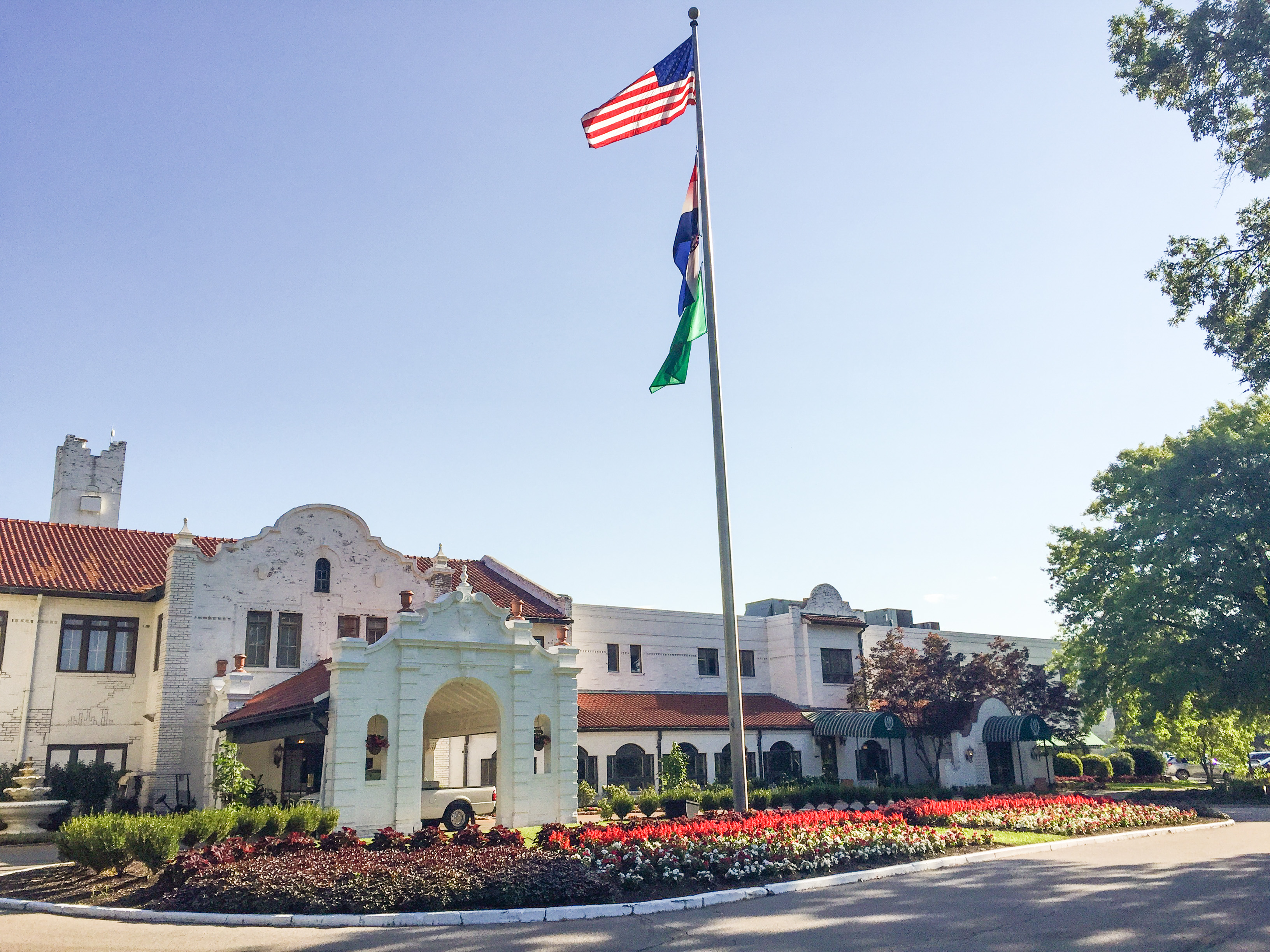
Archive image: Norwood Hills Country Club building, photographed in 2017; neither Sabbatini nor the 2026 event is shown.
Read more on this topic

Yoshinori Fujimoto: a bold swing tweak, a hard lesson in humility and a birthday win
After winning the Fortinet Players Cup on his 37th birthday, Yoshinori Fujimoto explained a risky swing adjustment and the difficult process of accepting life on Japan's developmental tour.

Pornanong Phatlum says she is not done: putting, patience and the desire to win again after Indian Open triumph
After claiming the Women’s Indian Open for a fourth time, Pornanong Phatlum discussed her putting, the difficult DLF course and why retirement is not on her agenda. A closer look at the 65 that completed her comeback.

Sun-Ju Ahn's farewell to Japanese golf: the end of an era, not the end of her career
After 28 JLPGA victories and four money-list titles, Sun-Ju Ahn made her final regular-tour appearance in Japan. Her October 25 remarks clarify that she plans to keep competing on Korea's Legends Tour.

Rory Sabbatini wins Stifel Charity Classic with two eagles and a closing 62
The 50-year-old came from four strokes back to shoot a final-round 62, finish at 14 under and claim his first PGA TOUR Champions title in the Schwab Cup playoff opener.