Rules Guy: Is a dead animal considered a loose impediment?
In golf, rules often put players in awkward situations. What should you do if your ball lands near an unpleasant discovery? Rules Guy explains.
- It is precisely these curious cases that our expert analyzes in the 'Rules Guy' column.
- An Unpleasant Discovery on the Path to Victory Recently, one of our readers, Mickey Boland from California, faced a rather specific problem during his round.
- Mickey turned to 'Rules Guy' with a question: is there a specific provision in the Rules of Golf that governs such situations?
- 'Rules Guy' thanked Mickey for not specifying the animal, so as not to create overly vivid images in the expert's mind.
In the world of golf, where every millimeter of error can be costly, knowing the rules of the game is paramount. However, even the most experienced players sometimes encounter situations that go beyond the ordinary. It is precisely these curious cases that our expert analyzes in the 'Rules Guy' column.
An Unpleasant Discovery on the Path to Victory
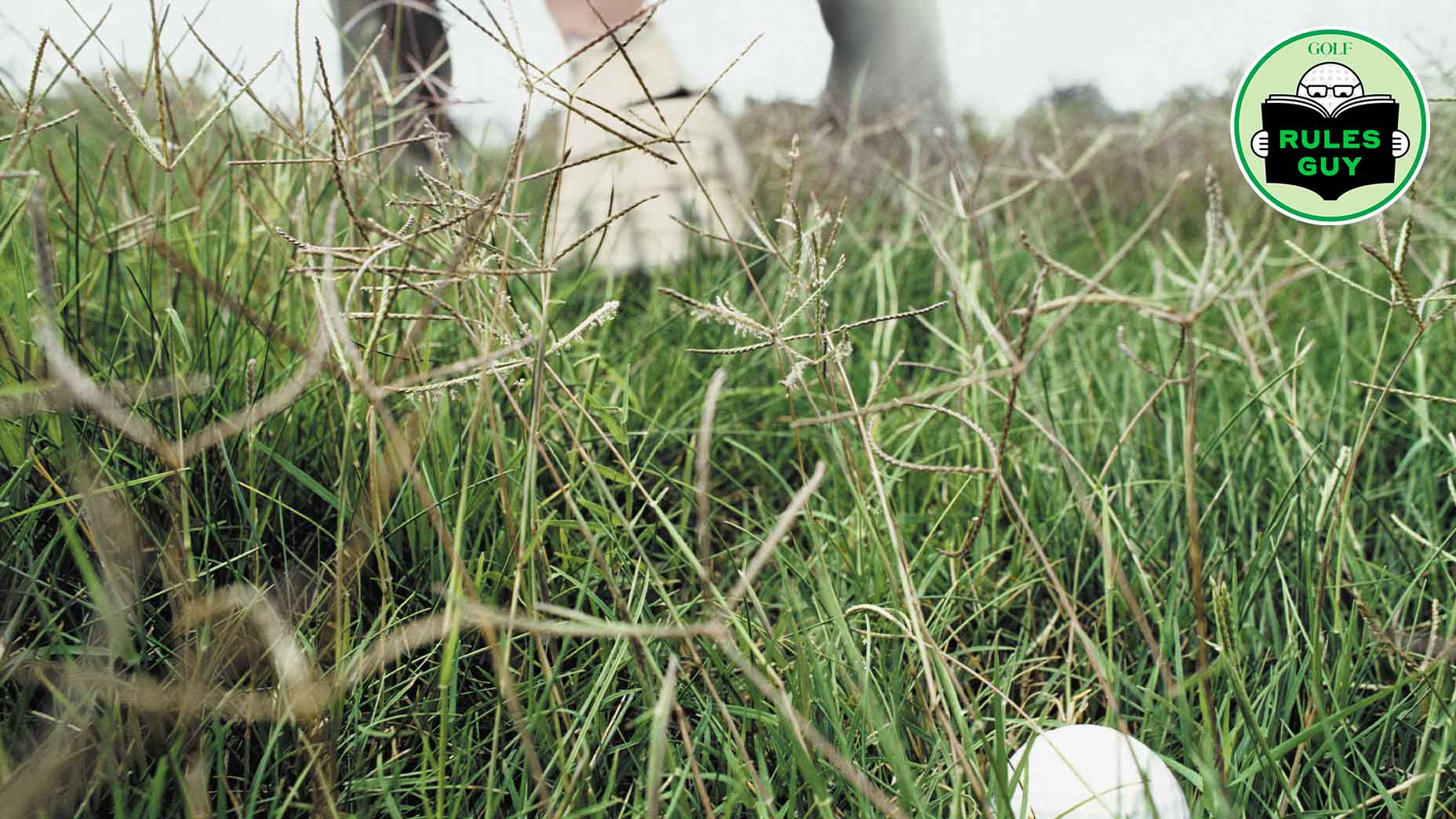
Recently, one of our readers, Mickey Boland from California, faced a rather specific problem during his round. His drive landed near a decomposing animal carcass that, according to Mickey, "interfered with his swing path." The group of players, after a brief pause and, as Mickey put it, "a silent prayer for the dearly departed," concluded that the find was a "loose impediment." However, no one wanted to personally handle the removal of such an unpleasant object, and it was decided to take a free drop. Mickey turned to 'Rules Guy' with a question: is there a specific provision in the Rules of Golf that governs such situations?
Expert Opinion: What Do the Rules Say?
'Rules Guy' thanked Mickey for not specifying the animal, so as not to create overly vivid images in the expert's mind. He confirmed that the group's initial decision was correct – the "deceased" was indeed a "loose impediment."
"Here's where it gets a little... messy," the expert notes. "As a loose impediment, you were allowed to remove it. The rules do not prohibit you from doing so in any way, you don't have to touch it with your bare hands, and so forth. However, a free drop is only granted if the Committee has decided to grant relief for 'ground under repair' (see Definition of Loose Impediment and Rule 15.1)."
"If it were the remains of a larger animal, that might have been the appropriate solution," added 'Rules Guy'. "Regardless, I will pass on the steak tartare tonight."
What is a 'Loose Impediment'?
According to the Rules of Golf, a "loose impediment" is a natural object that can be removed without difficulty. These include: stones, fallen leaves, branches, dung, and, as it turns out, even dead animals. It is important to understand that a player is allowed to remove a loose impediment if it interferes with their play. However, if removing such an impediment poses a health risk or causes extreme disgust, as in the case of a decomposing carcass, players often resort to the free drop rule, if permitted by local rules or a Committee decision.
Related Obstructions and Ground Under Repair
The Rules of Golf clearly distinguish between "loose" and "related" obstructions. Related obstructions, such as tree roots protruding from the ground or immovable artificial objects, cannot be removed. In such cases, a player may receive relief by taking a free drop if the obstruction interferes with their stance or swing area.
The situation with "ground under repair" also provides an opportunity for a free drop. If the Committee has declared a certain area "ground under repair" (e.g., due to construction, flooding, or damage caused by animals), a player may take full relief without penalty. In the case of a dead animal, if it is located in an area declared "ground under repair," the player is entitled to a free drop.
Winter Rules and Worm Casts
In another situation encountered by reader Mike Dearden, the discussion involved "winter rules" and "worm casts." Mike inquired whether a worm cast could be used to place the ball to improve its lie before a shot.
'Rules Guy' admitted that he had to look up the meaning of "worm cast" but eventually provided an answer. "Winter rules," or the preferred lies local rule, allows a player to place the ball within a specified distance from its original position. However, this rule does not override the fundamental principle of playing the course as you find it. If a worm cast (which is a loose impediment) is within the permissible area for placing the ball, a player is free to place the ball on it. The key is not to use casts from other areas of the course or from your pocket for this purpose.
The expert also reminded that if the ball moves before the stroke is made due to natural forces, it must be played as it lies, without the possibility of re-placing it on the worm cast. "And with that, 'Rules Guy' hopes and expects never to type 'worm cast' again," he concluded.
These examples clearly illustrate how diverse and sometimes unexpected the situations that arise on a golf course can be. Knowing the rules and applying them correctly is the key to a fair and enjoyable game.
Read more on this topic


