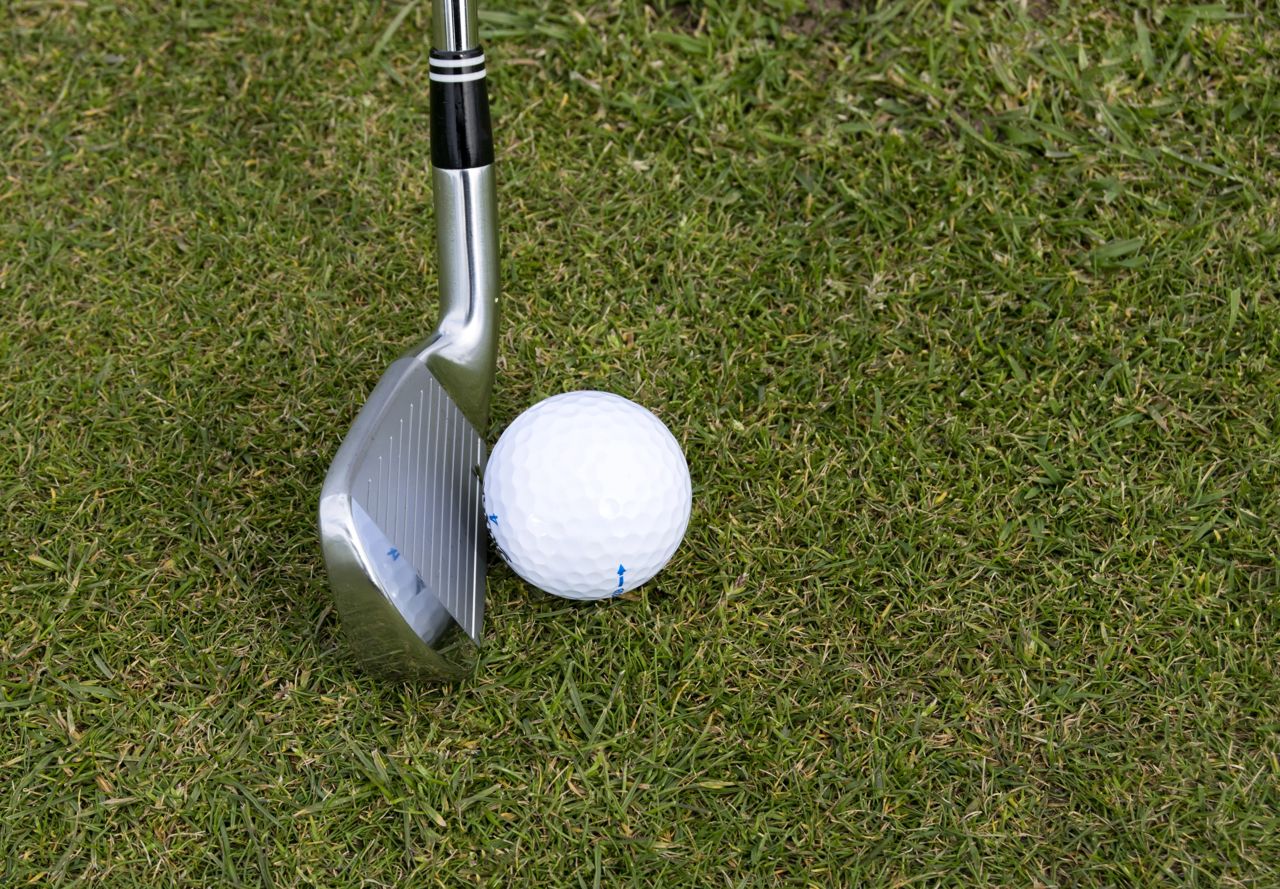
Long irons are often dismissed as too difficult for golfers with slower swings. Yet a more useful question is whether a 5-iron actually gives you a distinct shot compared with your 7-iron. On October 22, 2026, MyGolfSpy published an analysis suggesting that shrinking carry-distance gaps—not a sudden collapse in strike quality—may be the bigger problem.
WHAT THE DATA REALLY MEAN
Brittany Olizarowicz reported findings from MyGolfSpy iron testing across 2017–2026. The sample covered 495 “tester-years”: one golfer taking part in a particular season counts once, so the figure does not mean 495 unique people. Median 7-iron clubhead speed was 82.6 mph, with the fifth-to-95th-percentile range around 68–93 mph. The analysis compared 5-iron and 7-iron performance.
Contrary to a popular explanation, the researchers did not observe a speed-related deterioration in 5-iron strike efficiency relative to the 7-iron. The 5-iron showed slightly less consistent carry than the 7-iron, but that difference remained broadly similar across speed levels. This is a pattern in this testing dataset, not proof that all players find long irons equally easy.
THE DISTANCE-GAP PROBLEM
Carry is the distance to the ball's first landing point, excluding roll. It matters when you must clear a hazard or land beyond the front edge of a green. Comparing total distance alone can make a low-flying club look more useful than it is.
In the MyGolfSpy dataset, the average 5-iron-versus-7-iron carry advantage was approximately 20 yards for a golfer swinging a 7-iron at 90 mph; approximately 15 yards at 75 mph; and approximately 11 yards at 65 mph. Individual outcomes vary.
The proportion of observations where a 5-iron carried LESS THAN 10 YARDS farther than a 7-iron was: • Below 70 mph of 7-iron speed: 42%. • 70–75 mph: 31%. • 75–80 mph: 18%. • Above 80 mph: about 2%.
Those percentages describe the observed groups; they cannot predict a particular golfer's results. MyGolfSpy suggests a carry gap below 15 yards as a reason to investigate alternatives, not as a compulsory replacement rule. Also, a 6-iron normally sits between the two clubs: a useful bag review should consider every adjacent distance gap.
LANDING ANGLE AND GREEN HOLDING
Carry is only part of the story. A shot that arrives on a flatter trajectory may roll farther on a firm green. Across the MyGolfSpy tests, 5-iron descent angles averaged roughly 4.6 degrees shallower than 7-iron angles. Both tended to get shallower as clubhead speed fell. The mean 5-iron descent angle moved below 40 degrees when 7-iron speed was approximately under 84 mph.
That 40-degree figure is a descriptive reference point, not a universal stopping threshold. Ball spin, the green's firmness, wind and course conditions also influence how a shot behaves after landing.
TRY THIS: A 24-SHOT BAG CHECK
This is an editorial self-assessment exercise, not a validated research protocol or a guaranteed way to improve scores.
- Warm up. Use your current 5- and 7-irons, the same ball model, and preferably a launch monitor that measures carry rather than just total distance.
- Hit eight blocks of three shots, alternating clubs 5–7–5–7–5–7–5–7. That gives 12 shots per club. Do not cherry-pick the best strikes.
- Record every shot's carry distance, start direction, contact quality and, if available, descent angle or peak height. Note clear mishits without hiding them.
- Compare the MEDIAN carry for each club and the overlap between your ordinary shots. One exceptional shot is less informative than your typical pattern.
- If the 5-iron offers little extra carry or an unhelpfully broad spread, test a hybrid or higher-lofted fairway wood under comparable conditions. Check 5–6–7 gaps too if you play a 6-iron.
WHAT WE CANNOT CONCLUDE
This was an analysis of accumulated equipment testing, not a randomized fitting trial. Club models, loft specifications, balls and conditions can change the results, and a speed cutoff cannot determine your ideal setup on its own. The practical lesson is to give every club a job: assess real carry, trajectory, repeatability and the next club in your bag before deciding whether a long iron earns its place.
Source: Brittany Olizarowicz, “At What Swing Speed Do Long Irons Stop Making Sense?”, MyGolfSpy, October 22, 2026. https://mygolfspy.com/news-opinion/at-what-swing-speed-do-long-irons-stop-making-sense/
Read more on this topic
Putting and neurofeedback: what 12 trials involving 424 golfers really found
A review of 12 randomized trials (424 participants) found encouraging putting-training results, but 94% heterogeneity makes sweeping claims unsafe. We examine EEG neurofeedback and a practical 24-putt observation routine.

Driver vs. Irons: Four Resistance-Band Drills to Explore Different Body Movements
Golf fitness coach Ben Shear contrasts lateral shift and torso rotation for iron and driver swings. Here are four band exercises, their limits, and a measured practice check.

Is There a Perfect Putting Practice Difficulty? What a Trial of 150 People Found
A randomized putting study involving 150 people found no single optimal practice difficulty across three success-rate bands. We explain the limits and offer a careful 30-putt observation routine.

More Driver Speed Without a Violent Lunge: Coordinating Feet, Body and Hands
GOLF Top 100 teacher Joe Plecker explains the link between foot pressure and arm action in generating club speed. We unpack the swing sequence, a commonly misunderstood 'slow the hands' cue and an 18-ball self-check.