
What makes U.S. Open host Shinnecock Hills so special? An expert explains
Shinnecock Hills, one of the oldest and most prestigious golf clubs in the U.S., is once again preparing to host the U.S. Open. Architectural historian Wayne Morrison discusses the genius of William Flynn and the unique characteristics of this legendary course.
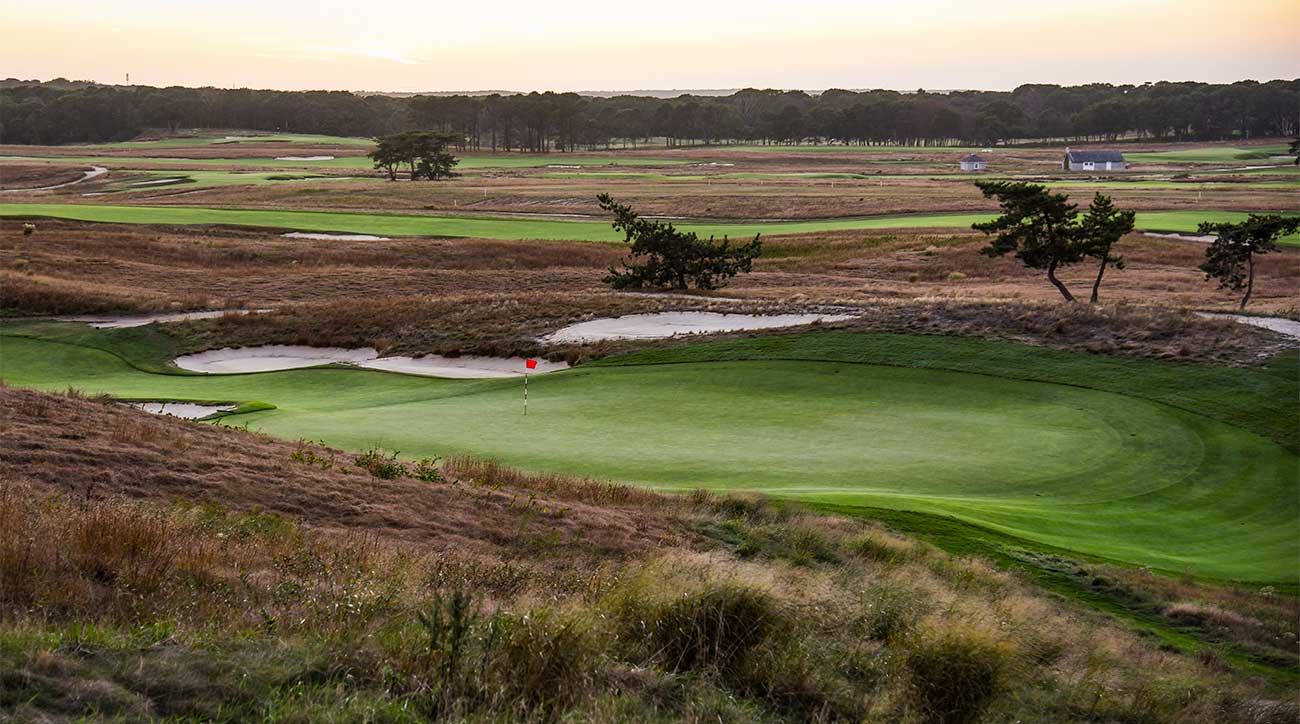
- Shinnecock Hills, located on Long Island, New York, is more than just a golf club; it's a living legend.
- Established in 1891, it boasts one of the world's finest designs by William Flynn, ranking 5th on GOLF's Top 100 Courses in the World list.
- Open in 1896, the club has welcomed 10 USGA championships, including five U.S.
- But what exactly makes Shinnecock Hills so exceptional?
Shinnecock Hills, located on Long Island, New York, is more than just a golf club; it's a living legend. Established in 1891, it boasts one of the world's finest designs by William Flynn, ranking 5th on GOLF's Top 100 Courses in the World list. Since hosting its first U.S. Open in 1896, the club has welcomed 10 USGA championships, including five U.S. Opens. The sixth U.S. Open is set to begin this week, capturing the attention of the entire golf community.
But what exactly makes Shinnecock Hills so exceptional? To understand this, we turned to Wayne Morrison, author of "The Nature Faker: William S. Flynn, Golf Course Architect" and the architectural historian for Shinnecock Hills. Ahead of another national championship, we asked him to explain what elevates Shinnecock within Flynn's designs and its place in his extensive legacy.
GOLF.com: Flynn was part of the so-called "Philadelphia School" of golf course architecture. What were its core principles, and how did they differ from other great architectural schools of the time?
Wayne Morrison: The so-called "Philadelphia School" emerged as a response to the significant losses Philadelphia golfers suffered in inter-city competitions against teams from New York and Boston. Philadelphia was late to golf; the region was a bastion of cricket, and even baseball's growth was delayed due to deeply ingrained cricket traditions. The friends who formed the core of the "Philadelphia School" included Hugh Wilson (Merion), George Crump (Pine Valley), A. W. Tillinghast (Philadelphia Cricket Club), George Thomas (Los Angeles Country Club), and Flynn himself. It was a group of visionary architects and turf specialists. The school could also be called the "Pennsylvania School," as William Fownes (Oakmont Country Club), also a member of Pine Valley, had a significant influence.
These friends aimed to create championship courses, believing that such designs would foster better champions. Their collaborative works can be seen at Merion Golf Club, Pine Valley Golf Club, and the city's first municipal course, Cobbs Creek Golf Club. Unlike the penal layouts characteristic of Victorian-era architecture, they promoted courses that offered physical tests for shot execution and strategic planning, considering multiple ways to play each hole. They were known for using natural landscape features in their routings. They weren't interested in fitting sites for template holes. They were not bound by Old World conventions but strove for architectural elements to look natural. They understood that avoiding overly artificial mounds, green sites, and geometric bunkers reduced maintenance costs, thus pioneering principles of sustainability and environmental conservation.
Within that school, what, if anything, set Flynn apart?
Flynn was truly unique. He offered his clients a comprehensive solution: architecture, construction, turf installation, and maintenance practices. He could arguably be called the finest course designer in golf history. Flynn spent a lot of time on-site, developing design iterations on paper before bringing them to life on the ground. His plans were to be executed precisely according to the detailed construction instructions he provided, and none of his construction crews were allowed to deviate from his final plans by even an inch. Overlaying these plans on historical aerial photos clearly shows that the courses were built according to the plans, not the other way around.
What set Flynn apart was the depth and originality of his thinking. He created unique, site-specific hole designs and was a master at creating "perceptual miscues" to throw golfers off balance. He was also the first to propose using multiple tees for play during the day, each intended for players of a corresponding skill level. He built elasticity into his designs, allowing for future lengthening due to advancements in both players and technology. He also promoted the use of triangulation to enhance the effect of wind—a technique he employed on 20 of his courses.
Flynn did not believe in copying Old World hole concepts in American designs, and his green work reflects this independent spirit. His greens require long study; they rely not so much on overt contours as on long interplay of slopes. His design theories also evolved over time—from the mid-1920s onward, he often used short grass areas around greens so that missed approaches would roll further from the hole, offering varied recovery options. Throughout his career, Flynn believed in natural aesthetics in every architectural element, from tee shapes without square corners to bunkers mimicking natural sand dunes, to the greens themselves.
Shinnecock is considered his greatest work. Why?
Flynn was tasked with creating a championship golf test that would be enjoyable for all classes of golfers—the most challenging design task. Shinnecock Hills was created late in his career, shortly after the onset of the Great Depression and before the halt in golf course development due to World War II. All the aforementioned elements that confirm Flynn as one of the finest golf course architects of all time are fully represented at Shinnecock Hills. The amount of triangulation, justified by the large and windy site, is greatest at Shinnecock Hills, with three sets of triangles encompassing 10 holes: 4-5-6, 10-11-12-13, and 14-15-16. It provides a stern test for touring professionals and enjoyable difficulty for all classes of players playing from the correct tee. The design allows for ground game options on some holes and requires specific aerial shot tests on others.
Setting aside the site's uniqueness, did Flynn's approach to working on Shinnecock change in any way?
Unlike some of his peers, Flynn did not sacrifice quality for quantity. He worked on a few projects at a time, almost always with the same construction crew that knew what Flynn wanted and executed the work flawlessly. Spending significant time on-site allowed for design nuances that other architects couldn't provide. Flynn would utilize distant landscape features and replicate them on the course grounds. This created a harmony with the surroundings that resonated with golfers, whether they consciously recognized the effect or not.
Are there any specific holes that fans should look out for this week as particularly interesting or representative of Flynn's style?
There isn't a single uninteresting hole here. This makes it difficult to highlight just a few that are representative of Flynn's design theories and practices. But I'll try.
#1: The offset fairway requires the first shot of the round to be on the correct line and with the correct length. If you try to take on too much and fall short, you'll be in the right rough. If you take on too little, the tee shot will end up in the left rough. From such a distance, approaches to the green, which "sheds" balls front, back, and sideways, become very challenging.
#5: This long par-5 offers a split fairway, with longer hitters able to choose the left side. Players opting for the safer right side of the fairway face a much more difficult angle to the green due to a massive right-side bunker. Approaches from the left can be played either in the air or along the ground, with the left-to-right slope in front of the left side of the green feeding running shots onto the green.
#7: Flynn, along with Harry Colt, was one of the two best designers of par-3 holes. The collection of par-3 holes at Shinnecock Hills is particularly strong. Macdonald's original Redan hole (his 14th) was laid out with the natural left-to-right slope of the ground. The tee was above Macdonald's green. Flynn raised the green by about 4-5 feet, requiring an aerial shot due to the steep upslope in front of the green. Flynn proposed a new tee 7 paces to the left of the original Macdonald tee. This slight difference in approach angle allows for a wider range of shot trajectories, including a slight draw. This is not possible from the original Macdonald tee.
#8: Flynn often challenged golfers' ability to analyze the hole's design and plan a strategy for the best scoring opportunity. Hole 8 is a prime example of how Flynn tests a golfer's ability to understand the challenge the architect presents. Most of Flynn's contemporaries rewarded play that took the shortest route on dogleg holes, cutting the corner. Flynn laid out the fairway, bunkers, and greens in such a way that the ideal angle of play is along the outside of the dogleg. This makes such holes play longer than their scorecard length.
#10: Flynn makes you think on the blind tee shot of the 10th hole. A decision must be made: either play short of the downslope and stay on the plateau at green elevation with a longer approach, or play down into the hollow with a steep upslope approach shot. A short approach hit with too much spin can come back to you. A shot that is too long will run down the back slope off the green, resulting in a daunting recovery shot with the front of the green falling away from you.
#11: This celebrated short par-4 features a green precariously perched on a ridge. The opening to the green was fashioned by cutting into a left-to-right slope. Any shot missed right, left, too long, or too short will be repelled away from the green, often into deep bunkers. This hole, demanding a precise aerial shot, is worth viewing up close, as the scoring spectrum here is very wide—birdies to double bogeys or worse are possible. Wide scoring spectrums are often indicative of outstanding design. This is certainly the case with the short 11th at SHGC.
At the time of Flynn's death, did he have other significant projects in the works? Were there any plans he didn't get to fulfill?
Flynn passed away on January 24, 1945, nine months before the end of World War II. The Great Depression and the economic boom that followed the war had not yet begun. Golf course development was virtually nonexistent. Flynn completed the design and construction of the U.S. Naval Academy golf course and the redesign of Langston Golf Course, a municipal course in Washington, D.C. His last projects, all in the Maryland/D.C. area, included the design of the Indian Spring Country Club course, the design and redesign of the East Potomac Park municipal golf course, and the design and redesign of the Rock Creek Park municipal golf course. I am not aware of any pending projects that might have started after the war's end.
Is it fair to call Flynn underappreciated? If so, why do you think that is the case?
Given that I consider Flynn one of the greatest architects of all time, and most people have never heard of him, I think it's a fair assessment. Part of this is due to a lack of understanding of his significant roles at Merion, Pine Valley, The Country Club in Brookline, and Kittansett Club. Another contributing factor is that Red Lawrence mistakenly took credit for the innovative design of Indian Creek Country Club, and Dick Wilson took credit for the design of the Shinnecock Hills Golf Club course. Flynn was solely responsible for these celebrated designs. Howard Toomey was the managing partner of Toomey and Flynn, Construction Engineers. He had no architectural influence. Red Lawrence and William Gordon were construction foremen. One time, when Gordon was sick, Wilson took over during his recovery period. He deviated from Flynn's plan for a green and was fired on the spot when Flynn returned. It took Gordon and Wilson's brother Wayne to convince Flynn to rehire him. Wilson's green was undone, and a faithful rendition of Flynn's plan was built.
Flynn died young due to chronic nephritis and diabetes. Much of his career was hampered by the Great Depression and World War II. It's interesting to ponder what Flynn's stature in golf would be if those approximately 15 years had provided him with more work.
Flynn's portfolio of designs largely explains the relative lack of recognition. He designed very few public courses, and many resort courses built or planned in Florida were undermined by hurricanes, land bubbles, the Great Depression, and World War II. Flynn's courses tend to be very private and are geographically concentrated in Southeast Pennsylvania. His courses are typically the elite in their respective areas with minimal outside play. Nevertheless, 105 USGA events have been held on courses with some level of Flynn's contribution, with another 18 planned.
Read more on this topic