
7 things you're getting wrong about your Handicap Index
Many golfers misunderstand what their handicap truly measures. GOLF.com's author clarifies the most common myths surrounding the Handicap Index, from its calculation to its real-world meaning.
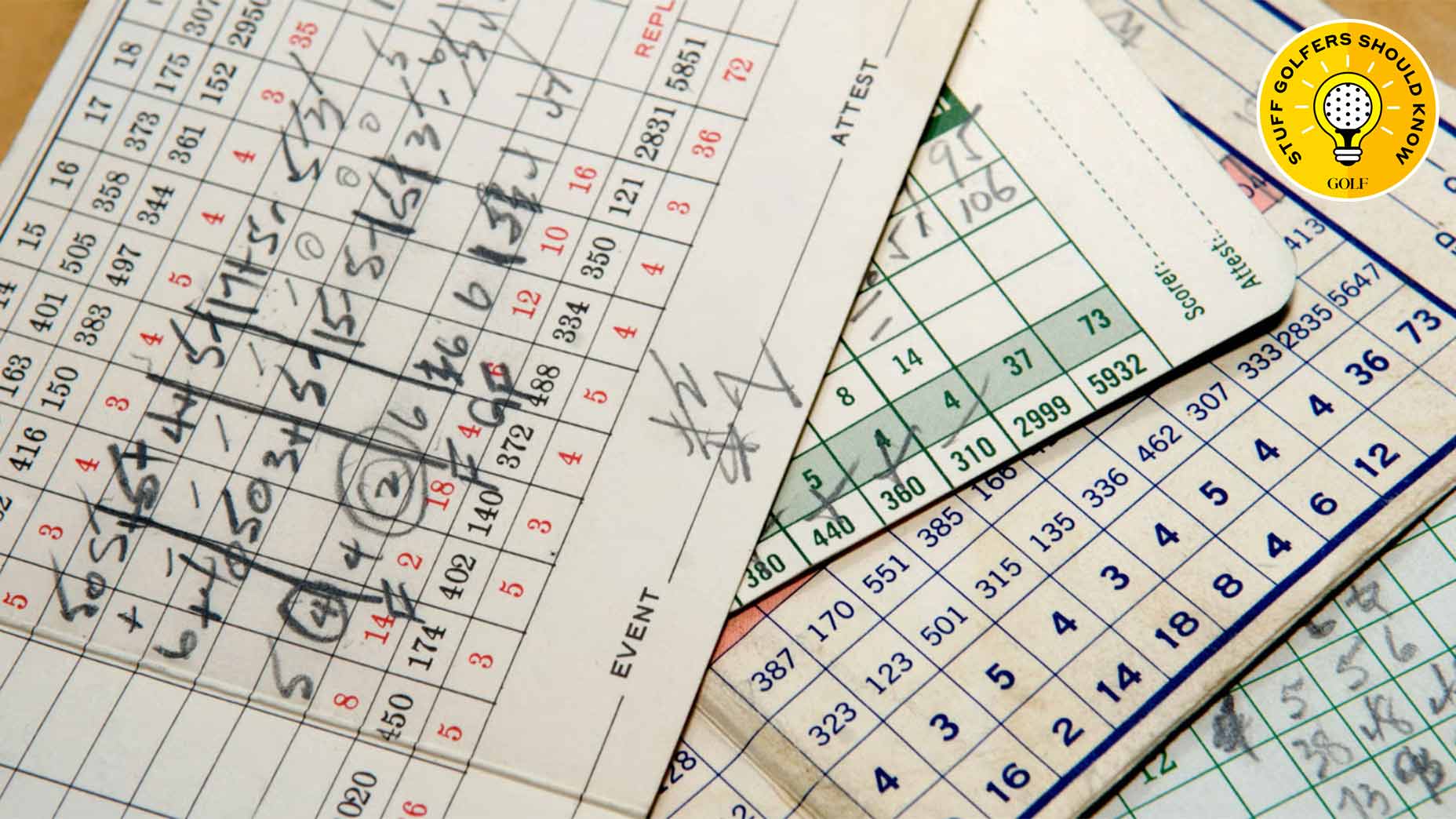
- Misconceptions abound about everything from the calculations behind what’s officially known as a Handicap Index to what those numbers represent.
- It’s calculated using the eight best of your most recent 20 Score Differentials.
- 2: A 10-handicap golfer should expect to shoot 82 It’s nice to be optimistic, but a dose of realism is called for, too.
- A Handicap Index is a measure of demonstrated ability, not a prediction of your next score.
A handicap is much easier to establish than many golfers think. What’s your handicap? And do you know what it actually measures? A lot of golfers don’t. The game’s most useful metric is also one of its most misunderstood. Misconceptions abound about everything from the calculations behind what’s officially known as a Handicap Index to what those numbers represent. Here are seven of the most common myths, clarified. (Don’t have a handicap? You can sign up for one here.)
Mith No. 1: My Handicap Index is my average score
Nope. Your Handicap Index isn’t based on your average round. It’s calculated using the eight best of your most recent 20 Score Differentials. It’s designed to reflect your playing potential — not what you typically shoot on a Saturday morning.
Mith No. 2: A 10-handicap golfer should expect to shoot 82
It’s nice to be optimistic, but a dose of realism is called for, too. A Handicap Index is a measure of demonstrated ability, not a prediction of your next score. According to statistics from the USGA, golfers only play to their handicap every four or five rounds, or 20-25 percent of the time.
Mith No. 4: Handicaps only matter in tournaments
Sure, they’re essential in handicapped competitions. But they’re just as useful for a weekend Nassau, a friendly match with new playing partners or any round where golfers of different abilities want a fair game.
Mith No. 5: A lower handicap means you’re playing better right now
Maybe. Maybe not. Your Handicap Index reflects a rolling record of recent scoring, so it can lag behind a hot streak — or a slump. It’s a useful snapshot of your demonstrated ability, but it isn’t a real-time measure of how you’re swinging it this week.
Mith No. 6: You have to play a lot of golf to get a handicap
False. You only need to play 54 holes to establish a handicap, in any combination of 9- or 18-hole rounds.
Mith No. 7: The score you post accounts for every shot you take
Not necessarily. There are caps. If you’ve already established a handicap, the maximum you can post on any hole is net double bogey, or double bogey plus any handicap strokes. If, for instance, you’re popping (getting a stroke) on a par 4, the highest score you can post is a 7. If you don’t have a handicap yet and are just beginning to post scores to establish one, the rule is different. For those initial scores, the maximum on any hole is par plus 5.
Mith No. 3: My handicap reflects my worst score
No, quite the opposite. As mentioned, your handicap is calculated using your best scores. It’s meant to show your potential, not your worst days on the course. If you have a round that’s significantly worse than usual, it likely won’t impact your handicap unless it happens to be one of your eight best scores in the last 20 rounds.
What is a Handicap Index, really?
The Handicap Index is a system designed to make the game of golf more accessible and equitable for players of all skill levels. It allows golfers to compete against each other regardless of their current ability. The Handicap Index system, managed by the USGA (United States Golf Association) and The R&A (The Royal and Ancient Golf Club of St Andrews), is constantly evolving to ensure maximum accuracy and fairness.
How is a Handicap Index calculated?
The process of calculating a Handicap Index involves several steps:
- Posting a Score: A golfer must post their scores from official rounds. A minimum of 54 holes is required to establish a handicap.
- Calculating a Score Differential: For each round, a Score Differential is calculated using the formula:
Score Differential = (Adjusted Gross Score - Course Rating) * 113 / Slope RatingWhere:Adjusted Gross Scoreis your actual score for the round.Course Ratingis the evaluation of the playing difficulty of a course for scratch golfers under normal course and weather conditions.Slope Ratingis the evaluation of the relative difficulty of a course for players other than scratch golfers compared to the Course Rating.
- Selecting Best Scores: The system takes the eight best (lowest) Score Differentials from your most recent 20 rounds.
- Calculating the Handicap Index: The average of these eight best Score Differentials is your Handicap Index. This number is then rounded to one decimal place.
Why is understanding your handicap important?
Properly understanding your handicap allows golfers to:
- Set Realistic Goals: Knowing your potential helps in setting achievable targets for your game.
- Compete Fairly: A handicap is the key to participating in most amateur tournaments and matches.
- Enjoy the Game: Playing with golfers of different skill levels becomes more balanced and enjoyable.
- Track Progress: By comparing your current performance to your handicap, you can see your improvement.
The Handicap Index is a dynamic measure that changes as you play and improve your skills. It’s important to post your scores regularly and monitor how your handicap reflects your actual game.
Read more on this topic


